

10 Tips You Need To Cook Like Bobby Flay

Celebrity chef and restaurateur Bobby Flay is one of this country's most influential culinary figures, having won three James Beard Foundation awards and a coveted place in the American Academy of Chefs Culinary Hall of Fame. Although many people know him from his television cooking shows — he has racked up more than 2,000 appearances on shows like "Iron Chef America" and "Beat Bobby Flay" — Flay began his culinary career as a 17-year-old high school dropout working bottom-tier restaurant jobs.
Flay's star rose swiftly. In his early thirties, he popularized Southwestern-style cooking across the U.S. through his innovative menu at Mesa Grill. By the time he joined Food Network in 1994, he had built an iron-clad reputation on his passion for bold flavors and culinary creativity. Over three decades of cooking shows, Flay has won five daytime Emmy Awards and is the first chef to have a star on the Hollywood Walk of Fame. With all that, he still finds time to helm a restaurant empire that includes Bobby's Burgers, Amalfi, and Brasserie B.
Watch any of Flay's shows and it's obvious that he's not just a top-notch chef, entertainer, and educator; he is a walking encyclopedia of cooking techniques. Flay can whip up a lemon meringue pie as effortlessly as he sears a steak, and he does it all with confident, laidback charm. Fortunately for us, he is happy to share his culinary know-how with the world. Here are 10 tips you need to cook like Bobby Flay.
1. Cook with two oils, not one
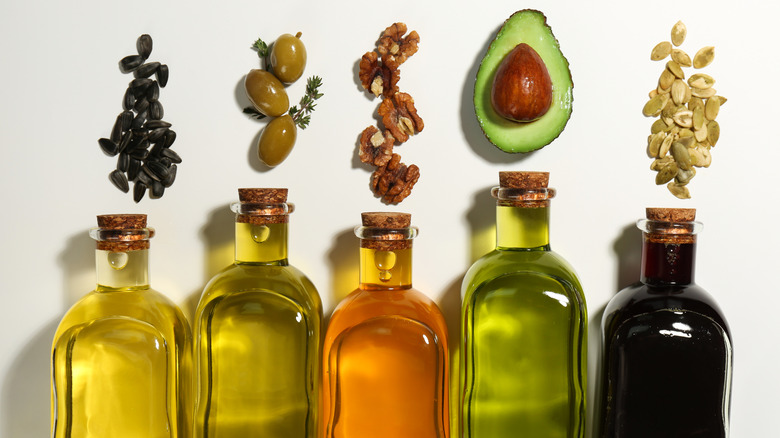
Extra virgin olive oil is the darling of many chefs, but Flay doesn't use it exclusively. The Food Network superstar firmly believes that two oils are better than one, and he stocks different types in his neatly organized pantry. Canola oil is Flay's top choice for cooking, but he leans on extra virgin olive oil for finishing dishes.
Pressed from the seeds of the rapeseed plant, canola oil has a higher smoke point than olive oil. That's the temperature at which it starts to smoke and burn, which impacts the flavor of everything else in the pan. Since a high smoke point can hold up to the demands of a super-hot skillet or oven, canola oil handles frying or roasting tasks with finesse. It also has a mild, almost transparent taste, so it functions well as a cooking medium without altering the flavor of companion ingredients.
Avocado oil is another Flay-approved cooking oil. The chef has praised avocado oil's high smoke point and neutral taste, saying he prefers it for frying aromatics. But when it's time for finishing touches, Flay reaches for extra virgin olive oil, which has a rich, distinctive flavor. The celebrity chef says it's perfect for drizzling over a finished dish, whether it's pasta, fish, steak, vegetables, or a tossed salad.
2. Take a hands-off approach to grilling
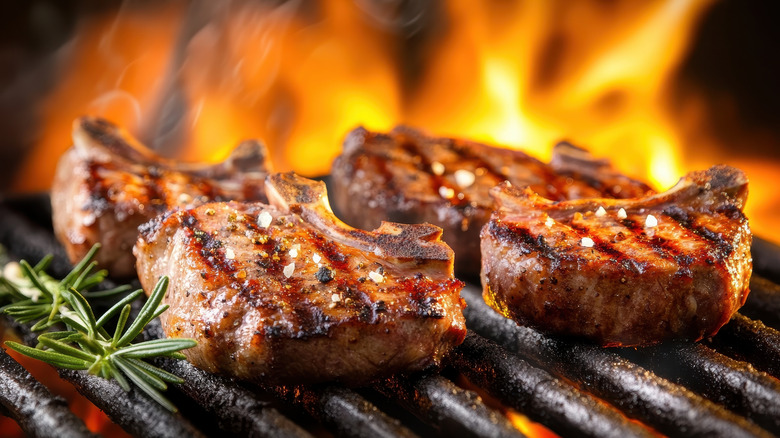
Flay can accomplish just about anything in the kitchen, but many Americans know him for his grilling prowess. Through his Food Network shows "Grill It! With Bobby Flay" and "Bobby Flay's Barbecue Addiction," the chef has taught thousands of us how to grill like a pro. Flay even joined President Obama for a grilling session at the White House.
One of Flay's top grilling tips is the single-flip method. Excessive flipping is one of the biggest mistakes amateur grillers make, Flay says. Like nervous Nellies, we repeatedly turn our burgers (or steak, chicken, or vegetables) again and again. But all that poking, flipping, and meddling leads to food that is steamed, not seared, which defeats the point of grilling. You should flip your food only one time. Leave it alone while it cooks so it has the chance to form a crust.
Over-flipping isn't the only bad grilling habit. Flay says we should also resist the urge to hover over our grills. Every time the hood is opened, precious heat escapes. So stand back, mingle with your friends, and let the grill do its job.
3. Embrace bold and spicy chiles
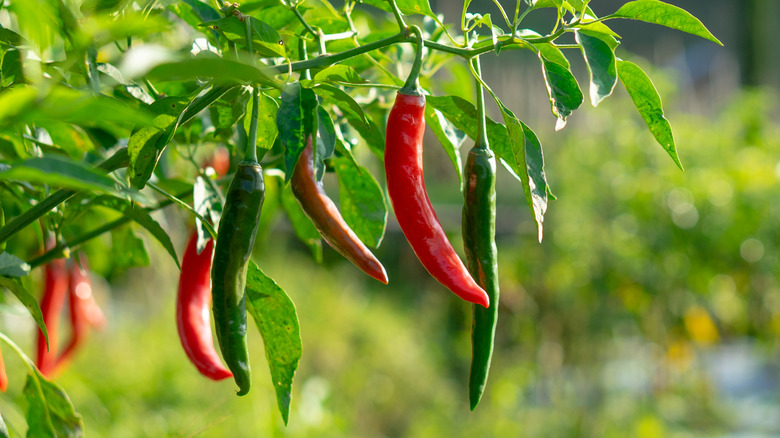
Want to take your cooking to the next level? Enliven your dishes using one of Bobby Flay's pet ingredients, the chile pepper. On his "Always Hungry" podcast, Flay talks about his enduring love affair with chiles. "I've literally written my career on the back of a chile pepper," he says. In the 1990s, the celebrity chef popularized Southwestern chiles at his Mesa Grill restaurants, using poblano, Hatch, and serrano peppers to add complexity and depth to his dishes. Today, he uses French espelette chiles in creative ways at Brasserie B in Las Vegas. "No matter what country I'm cooking from, I can always find a chile pepper," he says in an interview with Tasting Table.
Flay uses chiles in spice rubs. He pickles them. He uses them as a base for sauces and condiments. He adds them to meaty burgers and vegetarian chili. His pantry contains chiles from around the globe: He favors the Calabrian chile from Italy for adding fruity heat to sauces. He chooses aji amarillo, a yellow chile from Peru, to brighten up mayonnaise with smoky and sweet notes. He uses canned piquillo peppers from northern Spain to make pesto — the mild piquillo has a smoky depth and tender sweetness.
If you're concerned that chiles will pack too much heat into your cooking, Flay recommends trying the poblano. "It's a great starter chile. It's not too spicy, and it has a good pepper background flavor."
4. Elevate scrambled eggs with crème fraîche
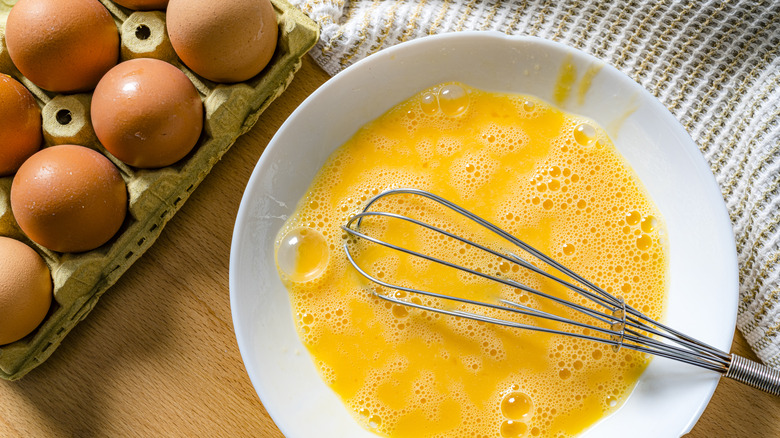
Scrambled eggs are a dish most of us can make with our eyes closed. We roll out of bed, whisk eggs with water and salt, pour them into a skillet, and nudge them around with a spatula. The result is passable, but not memorable.
To glow up the taste of your morning eggs so they linger in your mind all day, Bobby Flay has a simple trick: Add crème fraîche to eggs while whisking them.If you're new to crème fraîche, it's a thick, cultured cream that's sold in tubs. It looks like sour cream, but its flavor is gently tangy, not sour, and its texture is velvety and luxurious (thanks to a wickedly high fat content). Crème fraîche is extremely stable when exposed to heat, which makes it ideal for adding smooth silkiness to scrambled eggs. Just a dollop of the stuff will give eggs a custardy texture and to-die-for mouthfeel.
In addition to adding crème fraîche while whisking, Flay holds off on adding salt until the eggs are mostly cooked. He keeps the heat low and stirs the eggs almost nonstop. The result? Creamy-dreamy eggs with fluffy, soft curds. If your local grocery store doesn't carry crème fraîche, don't despair. You can easily make it at home with just two ingredients: cream and buttermilk.
5. Make fresh pasta with a food processor
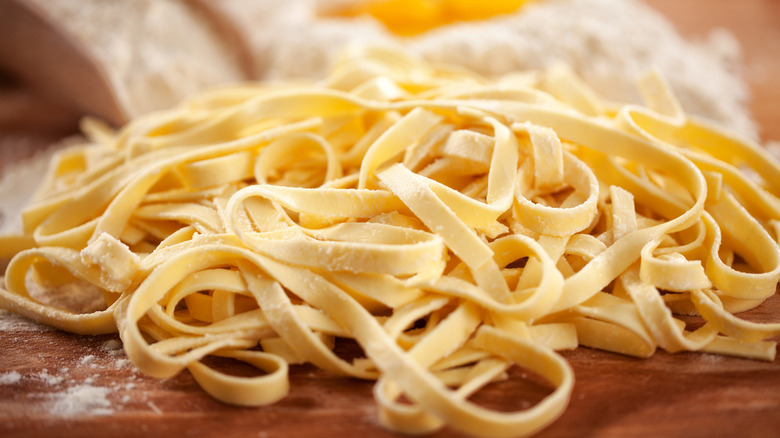
If you don't own a pasta maker, you probably don't bother making pasta from scratch — it requires way too much time and energy for mixing and kneading. But like many top chefs, Bobby Flay insists that certain sauces taste better with freshly made pasta instead of dried pasta, and he shares a simple hack for making it fast in a food processor.
"A purist will tell you that's blasphemy," Flay says on his "Always Hungry" podcast. "But if you watch me on 'Beat Bobby Flay,' I don't have any time to play around." Flay explains that fresh pasta differs from dried because it contains eggs, which give it a silkier texture. But it's also more airy and dainty. Fresh pasta doesn't hold up well to hearty dishes like spaghetti and meatballs, but it's Flay's top choice for delicate dishes, like pasta with a creamy sauce of truffles and butter.
Flay's fresh pasta hack goes like this: He puts eggs and flour in a food processor, then pulses the ingredients together until the dough forms. The blade does most of the kneading, and Flay finishes the job by hand-kneading for one additional minute. For a final step, he lets the dough ball rest before feeding it through a pasta roller for cutting and shaping.
6. Fire up the heat on your skillet
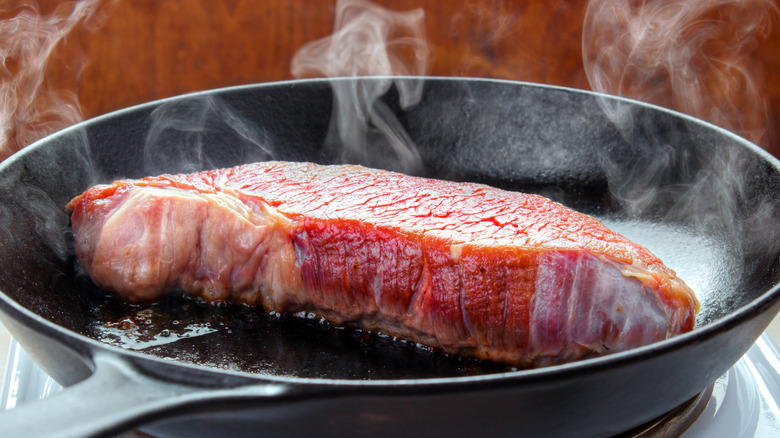
Searing meat or fish is a simple cooking technique, but it requires dialing up the heat, Flay says. In an interview with Bon Appétit, he notes that home cooks often fall short when heating the skillet. "If you don't see a wisp of smoke coming from the oil in your skillet, you'll never get a proper sear on that steak or fish."
The skillet must be hot enough so the meat or fish gets a tasty char or crust on the outside, Flay says. That beautiful browning effect is known as the Maillard reaction. High heat causes the proteins in meat to release their flavors and aroma, and the reaction produces a rich brown crust and sealed-in juices.
Say you're cooking a steak, for example. First, make sure the pan is properly oiled and preheated before the meat touches it. Place the steak in the ripping-hot skillet, and watch how fast it sizzles and browns. If you're concerned about overcooking, rely on your meat thermometer. If your desired temperature is 135 degrees Fahrenheit (medium rare), take the meat out when it hits 128 or thereabouts. The temperature will continue to rise as the meat rests for a few minutes, and then it's time to eat.
7. Stock your pantry with San Marzano tomatoes
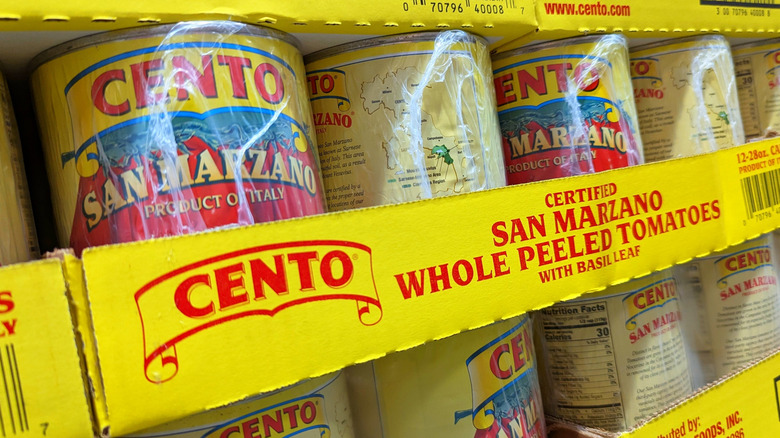
Canned tomatoes are a common ingredient in American pantries, but Flay has a firm opinion about what kind belongs on his shelves. In a partnership with Misfits Market, Flay gave a video tour of his pantry and showed off cans of whole, peeled San Marzano tomatoes. These Italian-grown plum tomatoes are distant cousins to the Roma tomato, but they have thinner skin, fewer seeds, and a sweeter flavor with very low acidity.
The San Marzano's most coveted feature is its texture: The tomato isn't watery, and it holds up well to slow cooking. Flay says he uses the canned tomatoes in slow-cooked, Italian-inspired dishes, especially chunky pasta sauces, soups, and stews.
Authentic San Marzano tomatoes grow only in Campania, Italy, and they're labeled as DOP or Protected Designation of Origin. Flay prefers the Mutti brand, but other Italian brands found in U.S. grocery stores include Cento, Strianese, and Alessi. Cans of San Marzano tomatoes are typically more expensive than "San Marzano-style" tomatoes, which don't have the same terroir or flavor because they aren't grown in Campania. (Hunt's, Delallo, and Contadina sell San Marzano-style tomatoes.)
Keeping company with the San Marzano tomatoes, Flay's pantry staples include expected items like vinegar, oil, mustard, chickpeas, dried pasta, and curry paste, plus a few surprises like anchovies (which he calls his "secret go-to") and store-bought barbecue sauce.
8. Season vegetables like you season meat
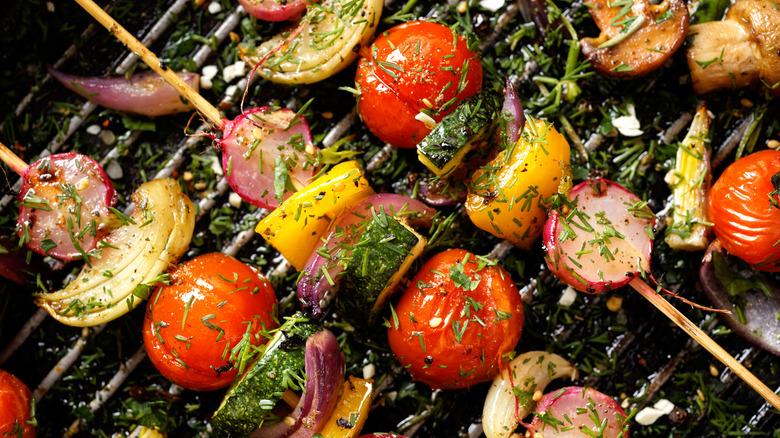
Many people aren't wild about vegetables, but super-chef Flay has a method to inspire even hardcore broccoli haters. He seasons vegetables the same way he seasons meat — with a spice rub. Massaging a spice rub into vegetables gives them a texture-rich crust and transforms their flavor from pedestrian to perfection, according to Flay. Unlike a marinade, which takes hours to impart flavor, a spice rub goes to work immediately to add "oomph" to whatever it's rubbed on.
Most spice rubs are an amalgamation of spices, herbs, and salt, but there are no hard-and-fast rules for what you can put in them. On Flay's Food Network shows, he has made rubs with Spanish paprika, mustard powder, cayenne pepper, and chile de arbol. He has mixed ancho chile powder, coriander, cumin, and garlic powder with a little sugar to help form a caramelized crust. Sometimes he goes back to basics with a rub made of dried herbs like basil, parsley, rosemary, and thyme.
Home cooks can make up a big batch of their favorite rub concoction and keep it in the pantry for months, Flay says. The easiest way to apply it to vegetables is to pour a few tablespoons of rub and some olive oil into a large bowl, then add the vegetables and mix until they're well coated.
9. Reuse that starchy pasta water
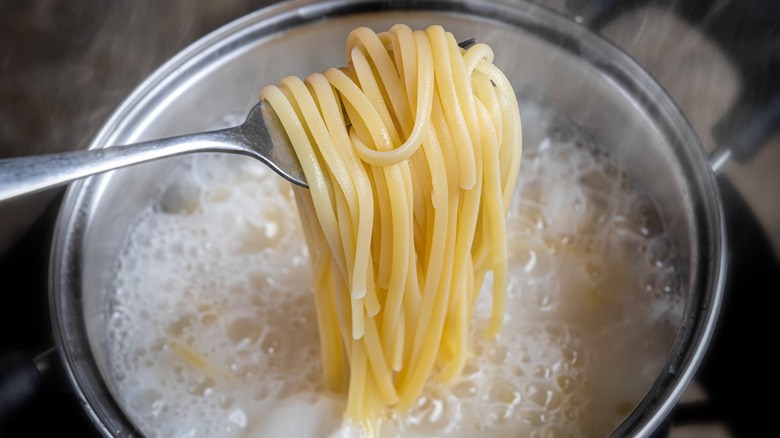
Pasta chefs, listen up: When you're ready to take your cooked pasta off the stove, don't dump the water down the drain, Flay says. The starchy liquid is a secret weapon that will give your sauce a just-right consistency and creamy flavor boost.
In a video made in partnership with Misfit Markets, Flay uses the starchy pasta water to thin the sauce and help it stick to the pasta. There's science behind that stickiness: cooking in water, pasta releases some of its starch. By adding pasta water to a sauce, you're adding starch molecules as well, and they act as an emulsifier to thicken and bind the sauce. Sauce and pasta will cling together, and the dish gains a smooth and creamy consistency.
Here's how to go about it: When boiling pasta, pull it off the heat when it's about 90 percent done. Add the pasta and some of its starchy water to a simmering sauce (which you've prepared in advance). Be sure to add the starchy water a little bit at a time so you can monitor the sauce's consistency. As you stir pasta and sauce together over low heat, the pasta will finish cooking to a perfect al dente.
10. Don't pour salad dressing over greens
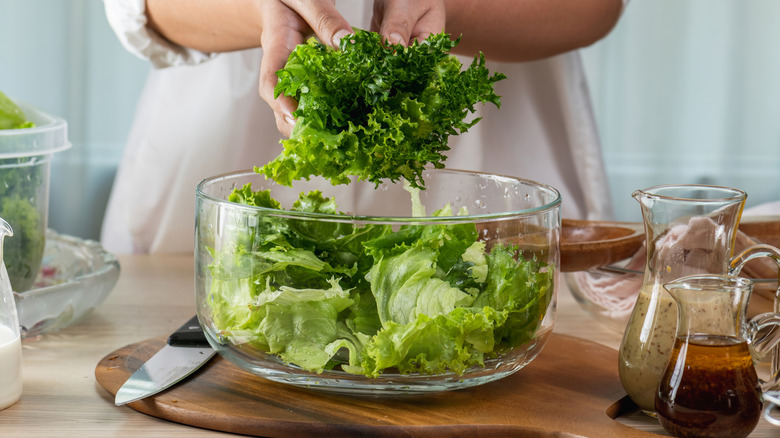
Crisp greens play a starring role in most salads, so it's important to make sure they look and taste their best. We've all been disappointed by salads that are limp, wilted, and/or drowned in dressing. Bobby Flay has a surefire tip to prevent that from happening, and he demonstrates it in this frisée salad video produced in partnership with GreenPan. As Flay prepares the vinaigrette, he explains why he doesn't just pour it over the greens. "I put the dressing around the side of the bowl because I don't want to overdress the salad," he says. "I push the greens and all the other ingredients into the dressing, so they pick up just the right amount."
Flay's salad-dressing method is his savvy take on an old Italian technique, which dictates that dressing should lightly coat greens so they glisten. By pouring the salad dressing just inside the bowl's perimeter, rather than dumping it in the middle, the greens stay crisp, and the dressing doesn't overwhelm them. While Flay eyeballs how much dressing to use, home chefs can start with a conservative pour, push the greens into the dressing, then decide if they want to add more.
Flay offers two other salad-making tips that will elevate your salads from so-so to sublime: Make sure to season your greens with salt and pepper before dressing them, and add a little crunch to every bite with seasoned panko breadcrumbs instead of big croutons.