

Osteria Vs Trattoria: What's The Difference Between Italian Restaurant Styles?
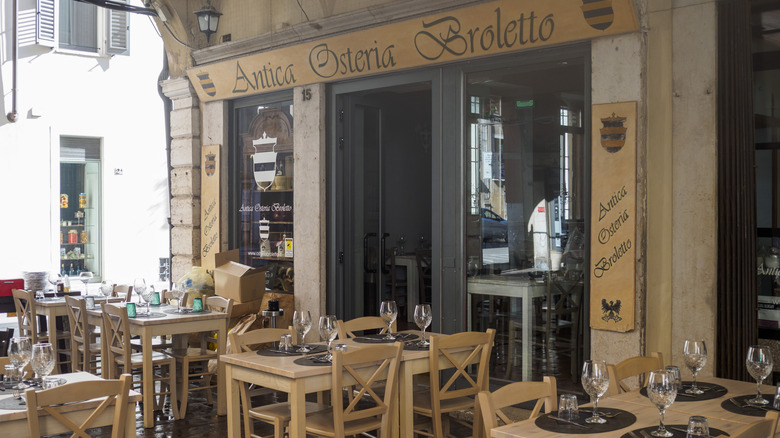
Depending on where you are in the world, the restaurant landscape might have enough cuisine categories, occasion classifications, and mealtimes that you never need to dine at the same Sichuan spot for your anniversary dinner twice. There are also degrees within these categories, like what makes a place a bistro versus, say, a brasserie. Aside from the implied promise of deliciousness, first-timers might puzzle at the difference between an osteria and a trattoria, too. And the best way to file these Italian restaurants is into contemporary use cases.
An osteria is essentially a destination for light bites or between-meal snacks that you might pair with an Italian red wine like Barolo or a white like a trebbiano. The reason for your visit is more likely to imbibe than to dine. Some osterias might even allow you to bring your own prosciutto, capicola, Parmesan, or whatever other nibbles you can conveniently consume (meaning you might want to leave the pan of lasagna at home). None of that de facto picnicking, however, would be appropriate at a trattoria, which serves larger plates (like maybe that lasagna!). So while you might actually slink into an osteria and trattoria in the same ambitious night, they won't traditionally replace one another.
These designations date back to some of the oldest osterias and trattorias in Italy, and they're fairly predictable all over the globe today. However, unlike a tangible item like say, Champagne, there isn't any governing body regulating either's provenance, not to mention their aesthetics or ingredients. So the delineation comes down to vibes and appetites.
What to expect when visiting an osteria or trattoria

Language is often fluid, and a place calling itself an osteria might seem more like a trattoria, while a trattoria might have what feels like an osteria spirit, particularly around its bar. One Michelin-starred osteria in Italy serves a whole darn tasting menu in lieu of the expected picky bits, for example, so the categories are hardly immutable. Plenty of other ostensible osterias have more everyday menus beyond the historically more petite picks. Check in advance if you're going on an empty stomach, or plan to pile on what might amount to appetizers to fortify yourself for what will probably be more abundant wine varieties than entree options.
The trattoria is where you can more assuredly expect to dive into deep dishes of tomato sauce (or what you may know as gravy). It'll have wine, too, but you're also more likely to find all manner of pasta plates — made with love, or at least every appearance that they were.
And speaking of amore, romance offers another way to keep track of the difference between an osteria and trattoria. An osteria is where you go for a low-stakes outing on something like a first date when you're testing the waters. You can have a sip and a snack and either escape or make a night of it. A trattoria is where you go when you're ready to commit to a strand of shared spaghetti like a couple of canines in love.