

For More Flavorful Dishes, Ask Your Fishmonger For This Cut Of Salmon

If you are a seafood lover, your local fishmonger should be one of your best friends. They know their fish, and if you are looking to cook up the tastiest, most flavorful seafood dishes, they can help you with everything from descaling a whole fish to picking out the best cut for the menu you have planned. Sometimes, however, that best cut of fish might surprise you.
Salmon is well-known for its plethora of health benefits and striking color, but it's also known for its rich flavor, so it's an obvious choice for many menus. It can be served up just about any way imaginable, from sliced raw for delicate sushi to oven-baked with a Parmesan crust, but if you want to get the most flavor out of a salmon, ask your fishmonger for a part that often gets discarded — the head.
Salmon, like all fish, consists of many different types of cuts, but the head is known for having a ton of flavor, and your fishmonger will undoubtedly agree. This particular cut works great in soups, with many cultures leaving the head whole in recipes so diners can pick out their favorite parts — there are so many great edible bits found in the head, from the eyeballs to the meat of the cheeks and collarbone. In soups, the head imparts its own umami-rich flavor and gives you lots of great textures in each bite, but you can also try grilling it to get a beautiful smoky char on the skin. You can even roast it until the skin is crispy and the meat is tender, or simmer the head in a broth or sauce that relies on layers of complex flavors as a base for another dish.
Tips for fish head success
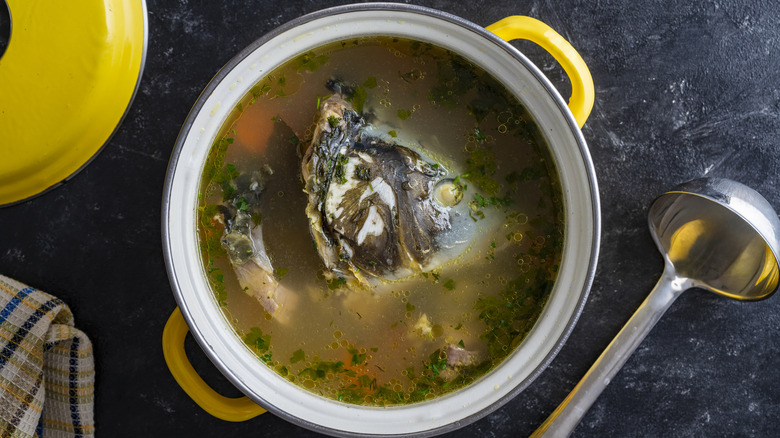
Salmon heads don't just give you great flavor. They also contain omega-3s, protein, and a lot of collagen, which is released when they are cooked. They are also a smart choice for cooks who are concerned about sustainability, since using the fish head is a great way to reduce food waste and make the most of the whole animal.
To choose the best salmon heads to cook with, making friends with your fishmonger will once again come in handy. They'll know which ones are the freshest, but you can also check on the eyes and the smell — an overly fishy smell and cloudy eyes mean the fish heads aren't the freshest.
When it comes to cooking them, you can easily leave them whole and then pick out the best parts for flavorful bites of protein. But if you want to cook them into a stew or soup, as the chef, you may want to do the hard work for the people you are cooking for. That means simmering the heads until the meat is cooked through, then removing them and harvesting all the edible parts until you've got a pile of tender, succulent flavorful meat. While this step can be tedious, salmon makes it a bit easier than other types of fish might, since the head of a salmon is large enough to give you big chunks of meat and larger bones that can be separated. Once you've got everything separated, you can add the meat back to the pot and toss the inedible parts, leaving you with a delicious fish head soup or stew.