

5 Tricks For Unclogging Your Kitchen Sink You Need To Know
We may receive a commission on purchases made from links.
When it comes to kitchen maintenance issues, nothing is quite as frustrating as a blocked kitchen sink. But before you go calling a plumber at those expensive premiums, there are many ways you can try solving this issue yourself. Whether it's a combination of the best natural ingredients, a heavy-duty chemical solution, or another hack for clearing a drain, there are many ways to resolve a stubborn clog.
To effectively tackle the issue at hand, make sure to check the pipes, as older homes and plumbing systems may not withstand certain unclogging methods. It's also important to ensure you have the right materials to guarantee safety. Chemical cleaners can be dangerous and may cause injury if you don't take the necessary precautions. Think about getting some high-quality gloves, hand towels, buckets (for mixing solutions), as well as other materials like a snake tool you can fish down into the drain.
Clogged sinks are not uncommon and could be the result of improperly disposing of grease and oil, which can solidify and cause issues over time. Your problem could also be a buildup of food, faulty pipes, or the damaging kitchen mistake that many overlook: produce stickers. All of these problems can also be responsible for that lingering kitchen sink stink we've all unfortunately dealt with. The good news is, before you start worrying about how big your maintenance bill is going to be, you could try fixing it yourself with any of the following methods.
Using boiling water to unclog a drain

For dense clogs caused by built-up grease, boiling water might be your best bet. Flicking the kettle on or boiling water in a pan on your stovetop is a great way to naturally combat the issue without having to pour acid-based products down the drain. Sometimes, all it takes is hot water to loosen up hardened grease that is preventing proper flow through your pipes, acting as a natural degreaser.
Boiling water can also break apart compact food and other things stuck in your drain, as the heat loosens organic fibers in the pipes. This is a great first step to solving your blocked drain, as it costs you essentially nothing to try. If you try this trick, don't pour boiling water down the drain all at once. Instead, give the water some time to slowly flow down into the pipes to melt any grease buildup and loosen the clog at a consistent pace. This step is important because if you pour the water too fast, it could temporarily cut through the blockage, only for it to resettle elsewhere as the water cools. Before you start, though, double-check if your plumbing has PVC piping, as the boiling water can slightly melt this material.
Clearing your sink with baking soda and vinegar

Making a baking soda and vinegar solution is an effective, natural way to jostle a stubborn clog. There are many recipes out there to try, so see what works best for your specific issue. Some recommend using a 1:2 ratio of baking soda to vinegar. Meanwhile, on the side, you'll want to mix a 1:1 solution of hot water to vinegar. First, pour the dry baking soda down the drain, followed by the vinegar and water mixture. Let your mixture settle for anywhere from 15 minutes to overnight (depending on how intense the clog is).
This method works best when it is able to sit and break up any lingering materials or bacteria stuck in the pipes. Using the drain plug, enclose the mixture; this allows the solution to coat stuck materials and the pipes, making it more likely to solve the issue. Vinegar and baking soda creates an acid and base reaction when mixed. Essentially, this means that either component combines to create a fizzing reaction that can move debris along, effectively shifting the clog and allowing it to be washed away.
This non-toxic combination is comprised of common household products that are well known for their odor-neutralizing, antibacterial properties. So not only will you be clearing your pipes, but this method will also help with strange lingering odors or smells. If you find that baking soda and vinegar alone aren't working well enough, you could incorporate salt as well. This ingredient can boost your solution with its coarse qualities, making it more likely to unclog the pipes.
Plunging debris from sinks
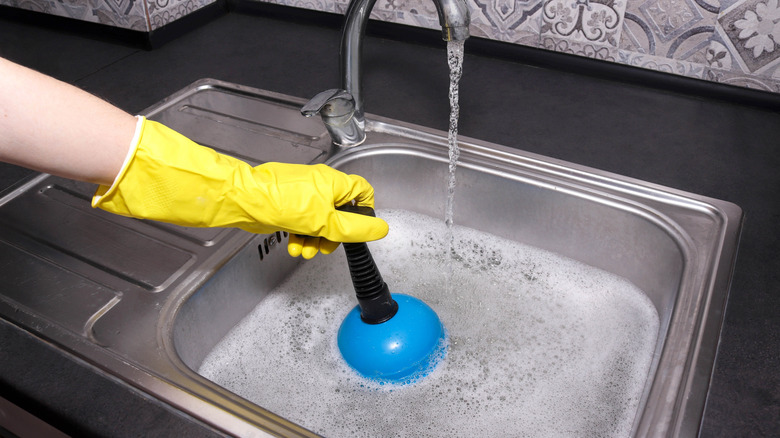
If your clog does not seem to be going anywhere and water continues to fill up, it may be time to try a plunger. Of course, make sure you use a plunger designated exclusively for the kitchen to avoid cross-contamination. This option is great for built up blockages, as the physical pressure helps loosen materials you cannot access deeper in the pipes.
This forceful way of shifting debris and getting things moving may be your next best bet after trying other options to no avail. For those who have a two-drain sink, the plunger will only work if the pressure is coming from the top with resistance. This means if your other sink drain is open on one side, the plunger won't be able to work effectively. In order to ensure this method works properly, be sure to note where the overflow is situated and block the drain in the second sink. This can easily be done with wet rags, kitchen towels, or tape. Another important step is to add water to the sink, around the plunger; this will help balance out the pressure and force the water above the clog to rush down when the block is shifted.
Using a pipe snake
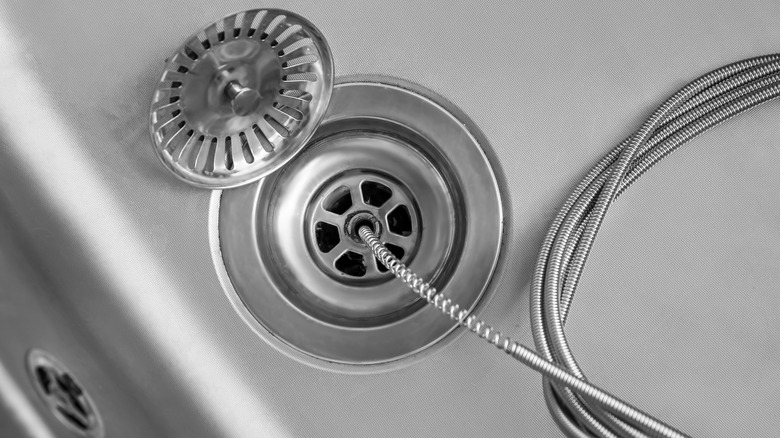
If your topical and above-drain options haven't quite worked out, the next option would be to try a drain snake. This tool is great for getting to the root of the issue. This method can also be combined with the previous tips to help loosen the clog before you introduce the snake tool. The movement from boiling water and other natural remedies can help soften the blockage before you shuffle the snake down to try to remove what's stuck.
In order to effectively use this tool, you'll need to remove any drain covers that might block access deeper into the pipes. When using it, make sure to start on the clog slowly; you don't want to haphazardly shove the snake down into your pipes, as this can worsen the issue or cause damage to the plumbing. Drain snakes come in many different shapes and sizes, and are made of various materials. If you don't know where to start, check out the myriad options online and do some research before you buy. Some have a hand drill feature that will allow you to reach deeper into the pipes, like this Ackweng Drain Snake from Amazon — or you could get a simpler option like this Amazon Basics Drain Clog Remover Tool, which will also do the trick.
Chemical solutions to unclog drains

When all else fails, it may be worth trying a chemical drain cleaner. Though useful, there are some necessary precautions you'll need to take. Acid-based cleaners can corrode pipes made of aged metal and plastic, leading to holes and leaks that could damage your septic system. These types of cleaners chemically react with organic material, breaking it down so that blockages clear. But they don't always solve the problem, and simultaneously pose the risk of damaging your plumbing if you aren't careful.
Caustic cleaners work by emitting heat, which breaks up clogs. These cleaners usually have a denser mass than water, which allows them to sink down to the problem area, even in standing water. Corrosive cleaners should be handled with care, as they can emit toxic fumes and tear through pipes if they sit for too long. Oxidizing drain cleaners generally contain compounds like bleach and peroxides, which infiltrate the problem area with oxygen. These cleaners produce heat and pressure meant to jostle organic materials in your pipes.
Regardless of which chemical cleaner you use, each comes with its own manufacturing guidelines, so make sure you follow precautions closely. It's important to assess the extent of the clog beforehand. Some issues cannot be solved with chemical cleaner alone, resulting in health risks and further compound plumbing disturbances. You can find popular cleaners like Drano, Liquid-Plumr, and Green Gobbler on Amazon. But if it's gotten to the point of needing a chemical drain cleaner, some recommend calling in the help of a professional instead.