

Here's How Often You Should Actually Clean Your Garbage Disposal
When it comes to keeping your home clean, the importance of a sanitary kitchen can't be overstated. Not only is cleaning your butcher block countertop the right way crucial to avoiding cross-contamination and foodborne illness, it's a really good way to make your home smell better naturally. All-natural, homemade room sprays made with fresh rosemary are great for reducing stale cooking odors, but they can only do so much. Scrubbing all the hidden nooks and crannies in your kitchen is the only way to keep bacteria growth at bay, foster food safety, and keep your space smelling fresh and clean.
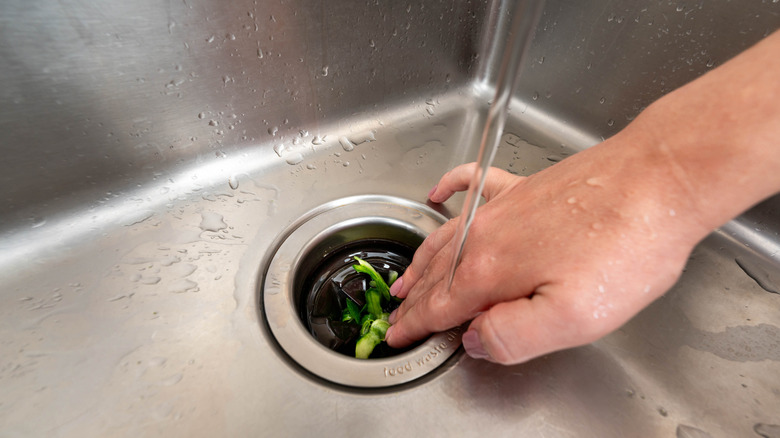
Anyone with a garbage disposal knows these handy little mechanical monsters are useful in terms of reducing kitchen trash and keeping your sink from getting clogged, but constant exposure to bits of food leaves residue, which is prime breeding ground for bacteria. To avoid bad odors and the spread of germs in your kitchen, you should clean your garbage disposal weekly, perhaps by folding it into your regular kitchen deep-clean.
As for cleaning method, there's some debate about this, with some insisting that citrus peels are the answer. However, lemon peels are far from the best way to clean your garbage disposal since they can eventually ruin the unit. Instead, it's recommended to use a clever combination of ice and baking soda. The steel blades easily crush the ice and soften residue while baking soda acts as a soft abrasive that gently scrubs everything nice and squeaky clean.
Giving your garbage disposal a 5-star spa day
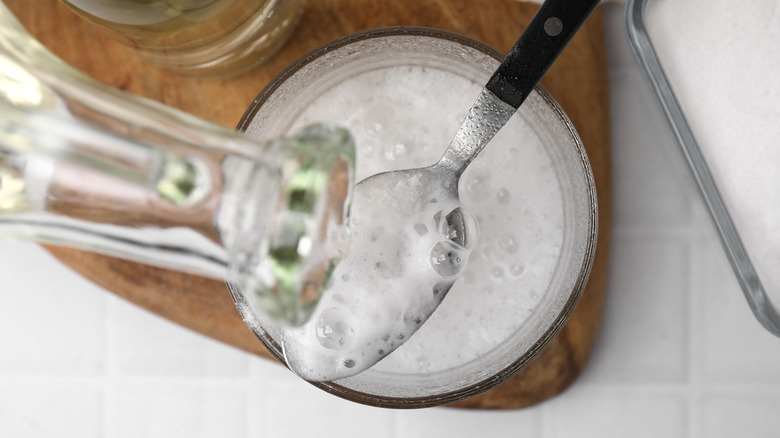
While the combination of ice and baking soda should be enough to scrub away most of the grime, you may need to employ a few other techniques if it's been a while between cleanings, or if your disposal is particularly stinky. Baking soda and vinegar is always a winning combination; the chemical reaction between them creates a fizzy cloud of foam that seeps into all your disposal's nooks and crannies to loosen and cleanse debris. Vinegar is also fairly effective at killing germs and can help eliminate bacteria.
To flush away the loosened grime and wash the lingering baking soda and vinegar off the disposal blades before they corrode, simply fill your sink with hot water and soap (Dawn is amazing for degreasing surfaces), whisk it until bubbly, and turn the disposal on to create a cleansing vortex. Never, ever put anything caustic or corrosive in this mix — it could splash onto your skin or into your eyes and leave toxic residue in your sink.
After employing one (or more) of these cleaning methods, run clean water down your disposal for a minute or two. Even if you've already flushed it with soapy water, clean water is the best way to rinse the blades of soap scum, or any lingering baking soda, that could act as a foundation for grime to establish itself.