

How To Identify A Meat Recall, According To The USDA
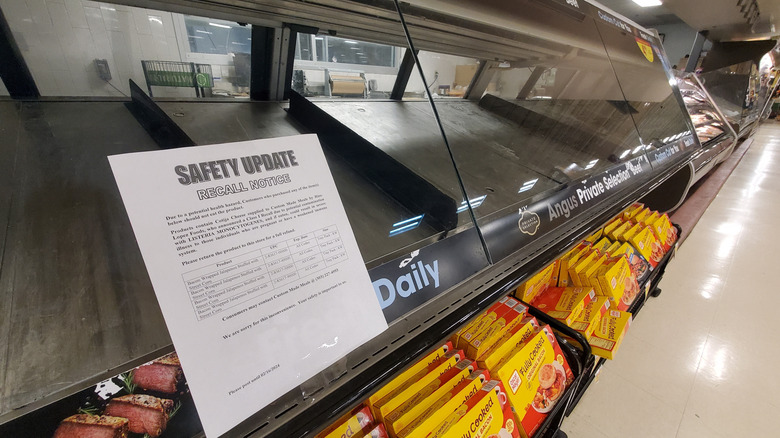
From the controversial Costco recall that led to 172,000 pounds of beef disposal to the Tyson chicken case that impacted millions of pounds of product, food recalls seem to happen regularly. So how do you stay in the loop when it comes to the safety of the chicken, eggs, and meat that you buy? The Food Safety and Inspection Service (FSIS), part of the U.S. Department of Agriculture (USDA), makes sure food items are safe and properly labeled. FSIS also shares recall information directly with consumers, helping you stay up to date on any products that might be affected.
You can regularly check the FSIS website to see the latest recalls, or sign up to receive recall notifications and alerts. These alerts usually share details that include the brand name, "best by" or "use by" dates, and photos to help you determine if what you bought is part of the recall.
If you've checked these details and are still unsure whether your meat is on the list, look for the USDA mark of inspection and establishment number (EST), which indicates where the meat was produced. This number can appear inside the seal, on a lid, a metal clip, or the tray, but it's a standard identifier on all meat packaging. If your product matches, follow the FSIS instructions for next steps, whether that means returning the product or discarding it safely.
How are recalls discovered?
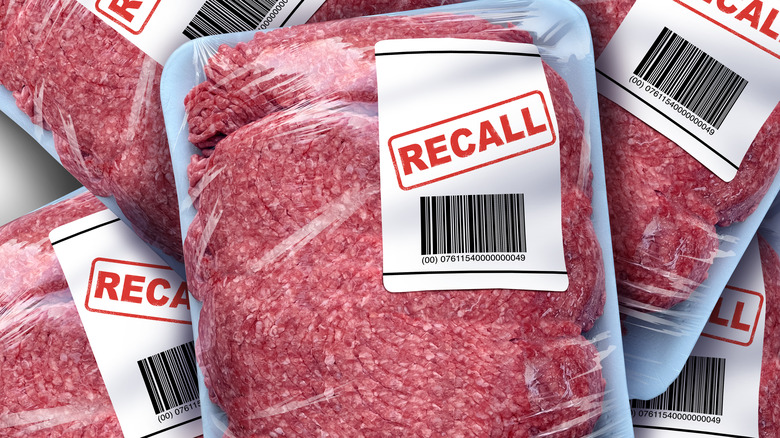
There are a few ways the FSIS can discover unsafe foods like tainted meat. A contaminated or mislabeled item might be found during routine inspections, testing at a food manufacturing facility, or the company itself may become aware of a danger and notify the FSIS directly. Other agencies, like the Centers for Disease Control or local health agencies, can also alert FSIS to potential issues. Once FSIS is notified, an investigation is launched. This can include analyzing food samples and contacting affected consumers to determine whether a recall is necessary. If a recall is issued, the information is then shared with the public and the press.
So how do you stay safe from contaminated meat? Since illness-causing bacteria don't usually change the look, taste, or smell of the meat, it can be hard to tell if a product you bought is bad — so it's worth staying in the loop with FSIS alerts. And it goes without saying that you should cook meat thoroughly and promptly to avoid the risk of bacteria. Follow guidelines for how long ground beef is safe in your fridge, raw or cooked. Finally, if the meat has a bad odor or taste, it's a good idea to avoid eating it, even if there is no recall.