

How Sustainable Bamboo Countertops Really Are For Modern Kitchens
If you're on the market for new kitchen countertops, you may have noticed one material becoming more popular among the already-common laminate, classy-but-pricey stone, and wooden countertops: bamboo. But is the supposed sustainability of bamboo just marketing speak, or is it actually an environmentally decent option?
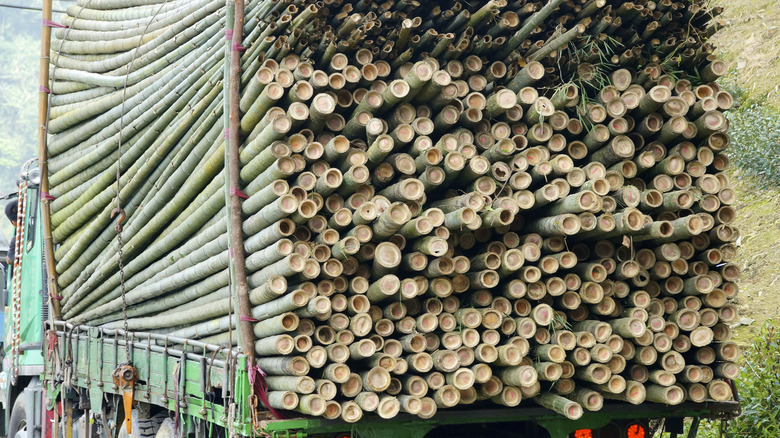
The short answer is yes: Some species of bamboo reach maturity in three to five years, compared with decades for the hardwood trees used for wooden countertops. (Side note: Bamboo is technically a grass, not a wood, although it's considered functionally fairly similar.) On top of that, bamboo roots regenerate the plant's stalks after harvesting, so it doesn't need replanting. This can reduce soil disruption and erosion. So, if you're worried about using a renewable resource for your countertops, this makes bamboo more sustainable than slow-growing woods like maple or walnut that are often on the market.
However, there's a "but" to bamboo's environmental friendliness: It also depends on how it's processed and transported. Since most bamboo used for building materials is grown and manufactured in Asia, there's a carbon cost compared to locally sourced wood products. You can look for certifications like an FSC approval, which indicates better forest management and manufacturing standards, but this doesn't necessarily erase the transport emissions.
As for their processing, bamboo countertops are made by laminating strips of bamboo together with adhesives and pressure. The binders used here can (but don't always) contain formaldehyde, which can impact the air quality in your home (so, perhaps more a direct health issue than a broader sustainability one). That said, formaldehyde can appear in other places, like flooring, in greater quantities than those used in bamboo countertops.
So, is bamboo a good choice?
Naturally, if you're installing a new kitchen, sustainability might be important, but the question of whether bamboo is actually a good material for a countertop surface is probably more important. Fortunately, it is reasonably practical, but not without drawbacks (although some of these are similar to the general cons of wooden counters).
Bamboo is harder than some traditional hardwoods, which can make it more resistant to dents and wear and tear. It also has a uniform grain when laminated, giving it a clean, modern look that appeals to homeowners who want something warmer than quartzite or granite counters but less rustic than butcher block. Like wood, bamboo countertops can be sanded and refinished, which helps extend their lifespan.
However, bamboo shares many of wood's drawbacks in a kitchen setting. If it's not properly sealed, moisture damage is possible, especially if you have it near the sink. Its heat resistance is limited, so you can't put hot pans straight onto it. Plus, you'll need to maintain them: We mentioned sanding already, but you may sometimes need to reseal them, too, to keep them from absorbing water. So, overall, bamboo countertops can be a solid choice both environmentally and practically, but pay attention to the environmental trade-offs and potential maintenance requirements.