

10 Midwest Comfort Foods Everyone Should Try At Least Once
The Midwest isn't exactly known for its cuisine. The South is known for barbecue and flavorful cooking, the Southwest has Tex-Mex, and the Northeast is a seafood haven. The majority of the Midwest's Michelin-star restaurants are in Chicago. If anything, the Midwest gets teased for having food that's sub-par, bland, or super processed.
Sure, in some cases, that can be true. I'm a Minnesotan, born and raised, and I've seen some dishes that have made me raise my eyebrows. But we also have some really great food, too. A lot of Midwest dishes are hearty comfort foods; after all, the weather can get pretty cold and windy in certain parts of the Midwest. There are also several unique, innovative dishes, often developed by immigrants to the area, out of necessity, or just for fun.
Now, I could name a dozen Minnesota-specific dishes, but the Midwest is a big place. According to the U.S. Census Bureau, it includes 12 states: Illinois, Indiana, Iowa, Kansas, Michigan, Minnesota, Missouri, Nebraska, North Dakota, Ohio, South Dakota, and Wisconsin. I set out to compile a list of the best comfort foods in the area, featuring some options that are more state-specific, as well as those that are generally popular in the Midwest.
1. Chicago-style deep dish pizza
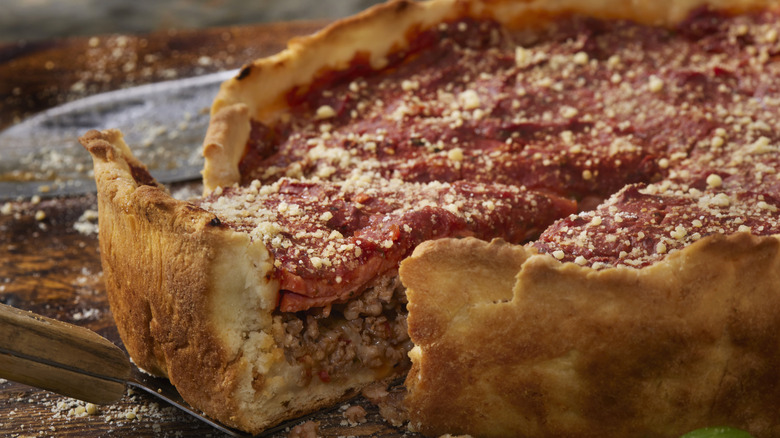
Chicago is the third-largest city in the U.S., behind New York City and Los Angeles, so it's no surprise this historic Midwestern hub is responsible for several contributions to American cuisine. One of the most iconic is Chicago-style deep-dish pizza.
Now, when we say deep dish, we mean DEEP dish; the crust for Chicago-style pizza, made from a yeasty dough, is usually about half an inch thick. The dough lines a cast iron pan and is then filled with mozzarella cheese, sprinkled with toppings, and then covered with a layer of tomato sauce, an inversion from what you get on most other types of pizza. The tomato sauce for Chicago-style deep dish pizzas is thicker than a typical pizza sauce, and you'll probably need a knife and fork to dig into a slice. Comedian Jon Stewart once joked that Chicago-style is less like a pizza and more like a casserole.
According to pizza historian Peter Regas, Chicago-style deep-dish pizza was invented in 1943 by Ric Riccardo, an Italian immigrant and businessman who ran a pizza shop called Pizzeria Ricardo. The original pizza used standard dough and was nearly an inch tall. Eventually, a cook at the pizzeria would develop the more fortified dough used today. After Ricardo died, the sole owner of the shop, Ike Sewell, renamed the place Pizzeria Uno. Now a chain, Pizzeria Uno still touts itself as the inventor of Chicago-style deep dish pizza today.
2. Chicago-style hot dog
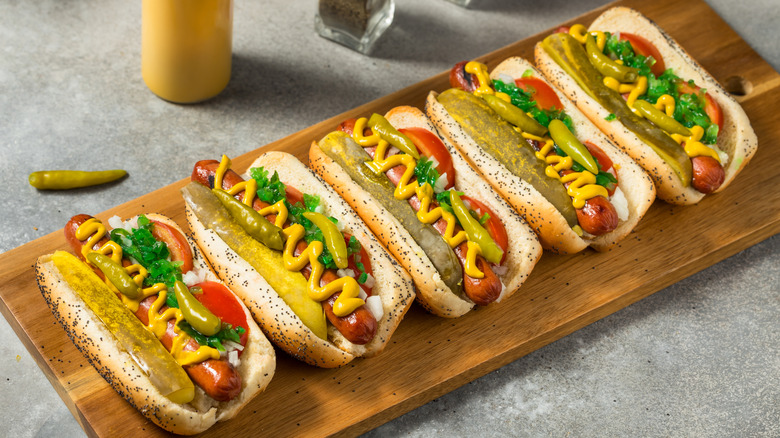
As we said, Chicago is responsible for a lot of culinary contributions. In addition to Chicago-style deep dish pizza (and tavern-style pizza, the lesser-known type of Chicago-style pizza), it's known for Chicago-style hot dogs, a type of hot dog with a very specific recipe and storied past.
The very first iteration of the Chicago-style hot dog goes back to 1893, when two Jewish immigrants from Austria-Hungary introduced a Vienna frankfurter topped with mustard and a pickle at the Chicago World's Fair. By 1920, street foods were pretty common in Chicago, especially with the influx of immigrants that provided a wide variety of food options. Hot dog stands, in particular, became especially popular. And then the Great Depression hit.
To help feed a starving population, vendors began adding vegetable toppings to create a more filling meal; at the time, this was called a Depression Sandwich. Today, a true Chicago-style hot dog is served on a poppyseed bun and is topped with white onion, sweet pickle relish, a spear of dill pickle, a tomato slice or wedge, pickled sport peppers, celery salt, and yellow mustard. This creates a savory, tangy hot dog that's a step beyond your basic ballpark frank.
3. Cincinnati Chili
Traditional chili is a quintessential Tex-Mex dish, but it has many of the hallmarks of Midwestern cuisine — it's hearty, and it warms you up. Ohio has its own take on chili, though, with Cincinnati chili. As with many of the cuisines on this list, Cincinnati chili was created by immigrants. In 1920, brothers Tom and John Kiradjieff came from Macedonia, now part of Greece, to join their brother. Argie Kiradjieff was a grocer in Cincinnati, an area that had seen a large influx of immigrants from Macedonia prior to World War I.
Tom and John opened up Empress Chili Parlor, but they weren't serving typical chili. Instead, it was something of a hybrid between chili and a Mediterranean stew, and included spices like chili powder, cloves, nutmeg, and cinnamon. This dish became a hit with the Macedonia immigrant community, but also with the rest of Cincinnati's residents, who had never tasted anything quite like this before.
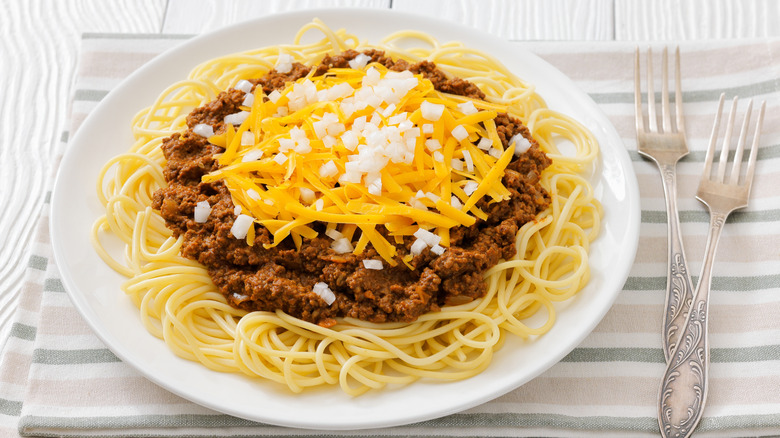
Today, Cincinnati chili is commonly served over spaghetti or atop hot dogs. One of the most popular spots for this type of chili is Skyline Chili, a chain started in the '40s by a Greek immigrant. The chain is primarily based in Ohio, but has a few locations elsewhere in the U.S.
4. Funeral potatoes
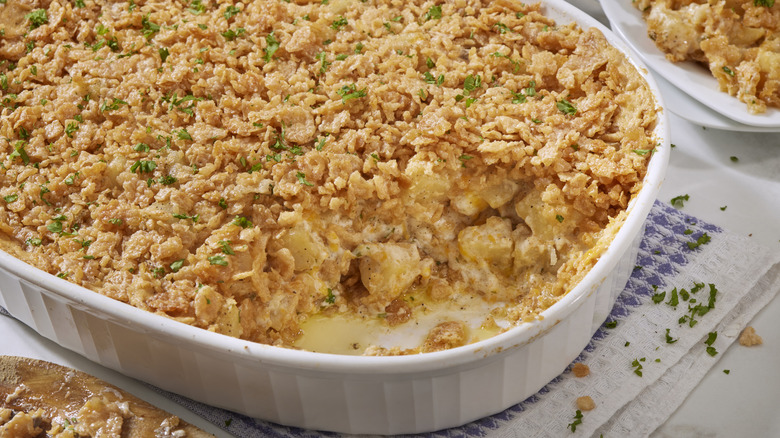
Technically, funeral potatoes are credited as coming from Utah, which isn't in the Midwest. While no one knows exactly who "invented" this dish, it's extremely popular in The Church of Jesus Christ of Latter-day Saints (LDS or Mormon) circles. However, Utah doesn't have dibs on it, and it's pretty popular in the Midwest as well.
Now, despite the name, funeral potatoes are not exclusively for funerals. They're great for any large gathering — funerals, yes, but also baby showers, grad parties, or family holidays. "Cheesy potatoes," as we called them growing up, are a staple of almost every holiday dinner in my extended family. They're easy to make and pretty much a guaranteed hit wherever you bring them.
This is basically a casserole (or hotdish, depending on your local — more on that later) made from hashbrowns, butter, condensed cream of chicken or mushroom soup, sour cream, and cheddar cheese, spread in a pan and topped with cornflake cereal or potato chips, then baked. It creates a salty, cheesy, slightly crunchy dish that warms you from head to toe.
5. Gooey butter cake
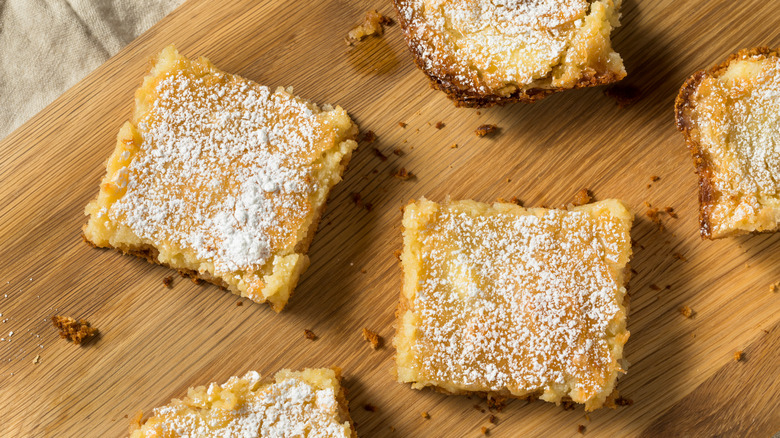
Next, we head to the southern Midwest to St. Louis, the home of gooey butter cake. The true origins of the cake are muddled, but sources agree that it was invented in the 1930s or '40s by a baker in St. Louis. It was possibly an accidental creation, brought about when the baker used the wrong ratio of ingredients, but no one can say for certain. Either way, the end result was a tasty, gooey creation.
Gooey butter cake typically has a shortbread-like crust with a creamy, custardy center. The recipe uses a yeast or dough base, but many simplified recipes today just use yellow cake mix. You'll also need eggs, butter, cream cheese, and powdered sugar. It needs to bake until nearly firm, and then sprinkled with powdered sugar. This method is what creates that baked-through crust on the outside, but preserves the gooeyness on the inside. Despite the simple ingredient list, the cake is pretty decadent, so most people prefer to enjoy it with coffee or tea.
6. Hot dish
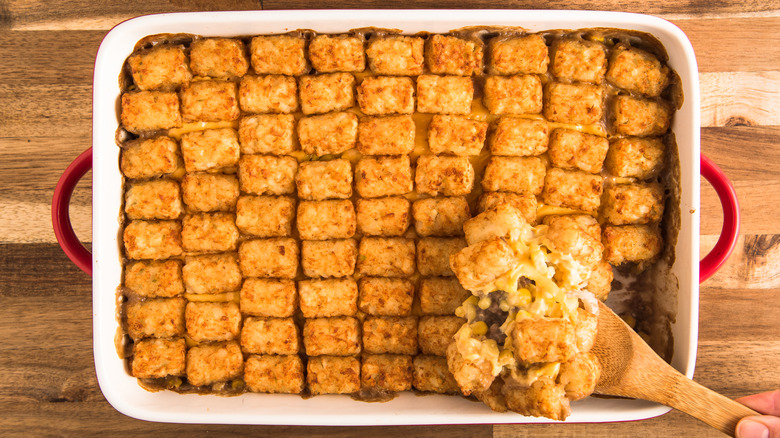
"Hot dish" is primarily an upper Midwest term. It's very similar to a casserole, and if you ask, north Midwesterners will insist there's a difference ... they just may not be able to articulate exactly what it is. But no worries, that's what I'm here for.
Essentially, all hot dishes are casseroles, but not all casseroles are hot dishes. While casseroles may be served as sides, appetizers, or entrees, hot dishes are meant to be main dishes. They're heartier, usually with a protein and a starch and/or vegetable, and typically use cream of chicken or cream of mushroom to blend it all together.
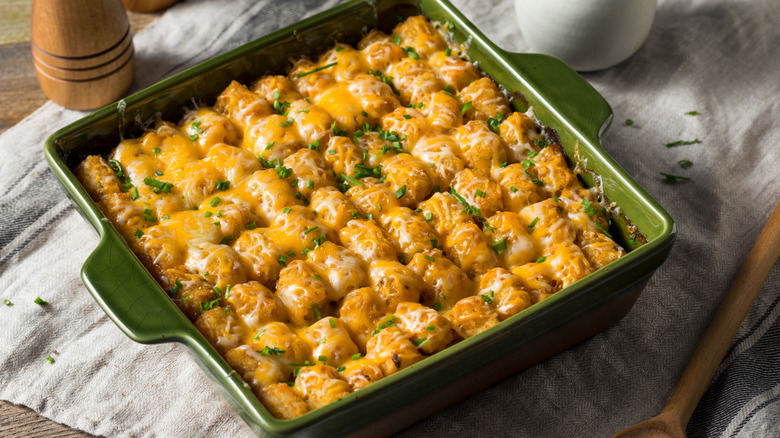
One of the most famous hot dishes, especially in Minnesota, is tater tot hot dish. This classic was created during the Great Depression, like a lot of casseroles and hot dishes, to help ingredients stretch further. Most tater tot hotdish recipes include ground beef, vegetables, cream of mushroom soup, and cheese mixed together and topped with rows of tater tots. This provides us northerners with a savory, filling dish that helps us survive the long winters up here.
7. Juicy Lucy
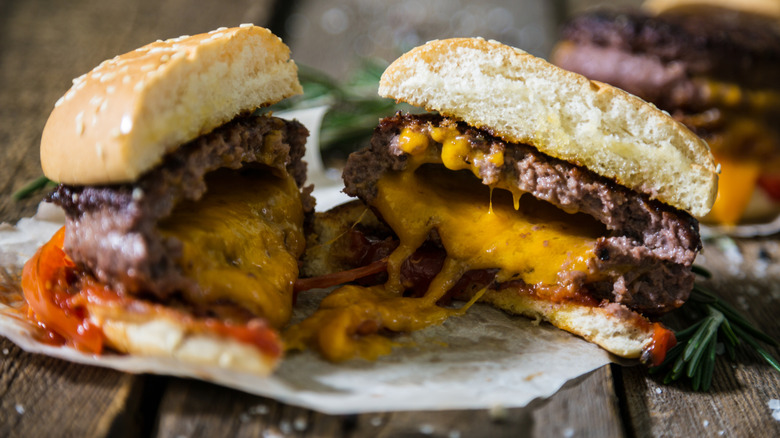
If you're a burger lover, you haven't lived until you've tried a Juicy Lucy (also spelled Jucy Lucy). The Juicy Lucy is a cheeseburger with the cheese stuffed inside the burger rather than (or in addition to) on top of the burger patty. This allows the cheese to melt more evenly and ensures that every bite provides the perfect amount of savory, salty goodness. Sealing the cheese inside also releases steam as the burger cooks, contributing to the juicy factor of a Juicy Lucy. American or cheddar cheese is most commonly used, but there are no rules on what kind of cheese you can stuff inside a Juicy Lucy.
Ask Minnesotans where the Juicy Lucy originated, and they'll say either Matt's Bar or the 5-8 Club – or possibly something like, "Ope, I'm not getting in the middle of this debate." Both Minneapolis bars claim to have invented the Juicy Lucy, or Jucy Lucy, as Matt's Bar spells it, in the 1950s. We may never know the exact origins of this legendary burger, but in truth, it doesn't really matter. Several bars and restaurants now offer Juicy Lucy burgers, both inside and outside of Minnesota.
8. Puppy chow
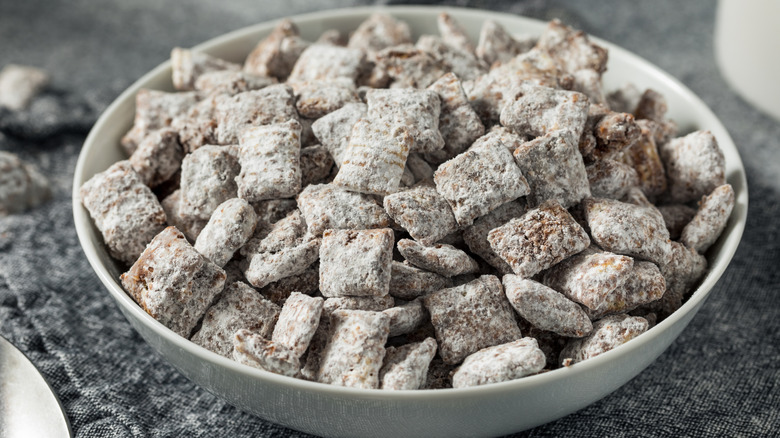
We may not be the coastal elite, but don't worry, we're not actually eating dog food. Puppy chow is a snack that is very much not for dogs. If you're unfamiliar, you may know it by another name: Muddy Buddies. The Chex brand sells these in stores (although now that I think about it, I can't guarantee they're sold outside the Midwest, since General Mills is a Midwest company). However, most Midwestern kids grew up calling it puppy chow. No one knows the exact origins of the treat; it appears to be a recipe passed around the Midwest for decades.
So, what is this treat? You start with Chex or a similar type of cereal as the base. Then, you'll mix together melted semi-sweet chocolate chips, melted butter, peanut butter, and vanilla, and pour this mixture over the cereal, stirring until the cereal is evenly coated. Next is the fun part: The cereal goes into a large food storage bag, and you'll add in powdered sugar. Seal the bag, and shake until the powdered sugar coats the chocolate coating. Pro tip: Spread it on wax paper to cool, otherwise it will clump up.
Is it healthy? Absolutely not, but it is incredibly delicious. These treats are popular snacks at holiday parties, but also great for other types of events, like birthday parties or potlucks, or when you just need a sugary pick-me-up. You can also remix puppy chow to give it fun twists.
9. Scotcharoos
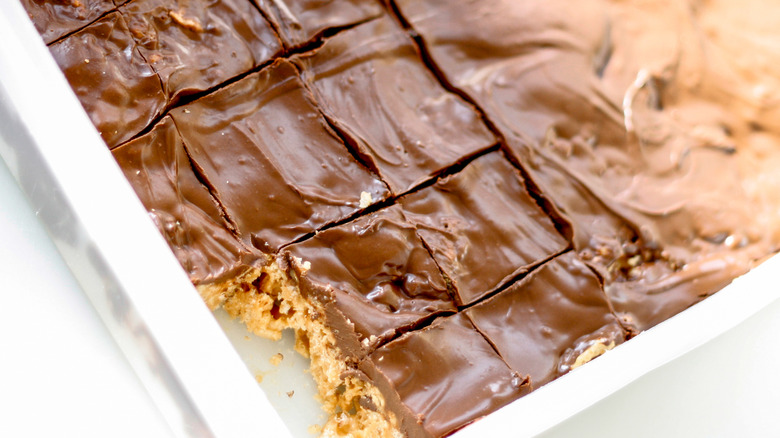
Chocolate and peanut butter are a universal favorite, not limited to the Midwest, but the Midwest sure knows how to bring out the best of these combinations. Not only did we invent puppy chow, but we also invented scotcheroos (sometimes spelled scotcharoos). Like puppy chow, scotcheroos combine chocolate, peanut butter, and cereal, but they're totally different.
If you're from the Midwest, you're probably familiar with these no-bake bars, even if you've never heard the term "scotcheroo." Growing up, we always called them Special K bars, since that was the cereal my mom used, and Special K had published its own version of the recipe. I've heard them called cabin bars, after Caribou Coffee created a cabin bar-flavored drink a few years back (it was delicious). I've also heard many families have their own term for the bars.
Regardless of what you call them, the recipe is basically the same. You'll start by boiling together sugar and corn syrup, then add in peanut butter and the cereal of your choice, usually some variation of Rice Krispies or Special K. After you spread them into a pan, you'll melt together semi-sweet chocolate chips and butterscotch chips, then spread the melty goodness on top of the bars. This creates a treat that's chewy and full of sweet flavors that work perfectly together. As with puppy chow, these are popular at all sorts of events, like barbecues, family reunions, and potlucks.
10. Wild rice soup
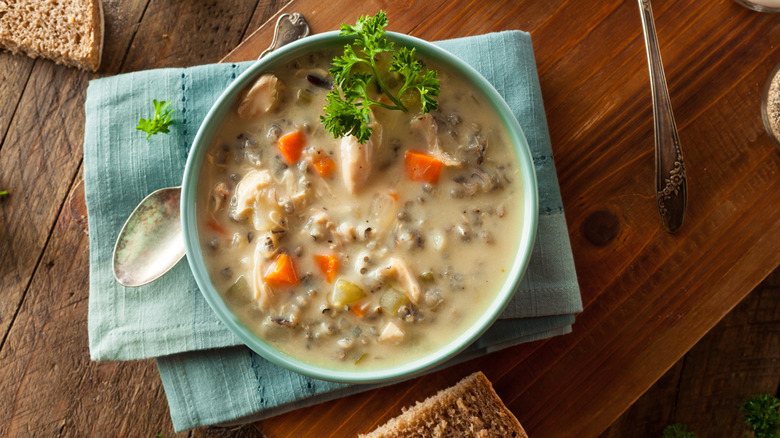
Wild rice (or "manoomin" in Ojibwe) is a crop grown in the Great Lakes region. Most rice in the U.S. grows in the South or in California and the Midwest doesn't have the climate to sustain rice crops, with the exception of Missouri. But wild rice isn't an actual rice. It's a grain that comes from aquatic grass that grows in cooler waters. Wild rice is an ancient crop, and was either a primary food source or downright sacred to many of the area's indigenous peoples.
Wild rice is usually a shade of brown or black, and has a nutty flavor that's both chewy and a little crunchy. While there are tons of dishes you can make with it, the most popular by far is wild rice soup. This creamy, savory soup was invented by a chef at the Orion Room, a high-end restaurant in downtown Minneapolis, in the 1970s. There are tons of wild rice soup recipes available; as it's soup, you can kind of adjust it to your liking. All include a cream soup base and incorporate wild rice, onion, carrots, and celery. Personally, I like to add shredded or chopped chicken, cubed ham, and American cheese to mine. The moment the temperature starts to drop in the fall, I add wild rice soup to my monthly meal rotation, as it's the perfect cozy comfort food.