

The 90-Second No-Boil Hack For Chewy Homemade Bagels
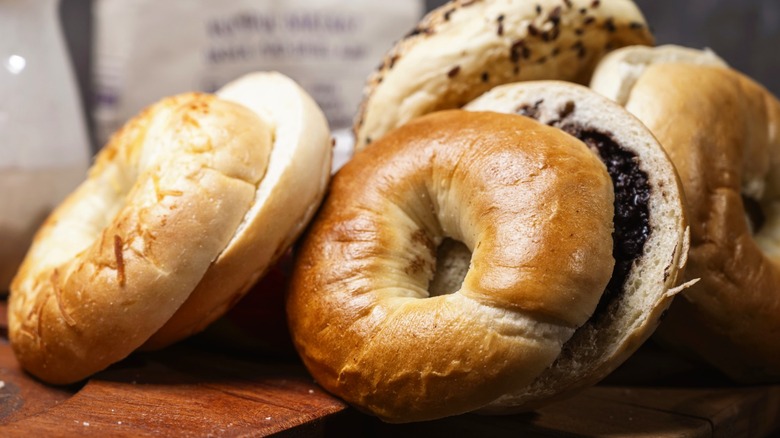
Whether you're a purist who sticks to egg bagels and plain cream cheese or loves lox bagels (despite their hefty price tag), almost no one's going to turn one down. This is especially true when they're from bakeries that understand how the bagel became an American breakfast staple, and boil them in water with a pinch of baking soda. Submerging the bagels in hot water is what gives them a shiny, crispy crust when toasted. Of course, the downside is that the boiling process is both tedious and precise, as boiling them too long will make them tough. Plus, there's the issue of fishing them out of the water without crushing them.
Normally, it's a mistake to skip boiling homemade bagels, but you can make the process a little easier and still get that glossy, beautiful finish by steaming your bagels rather than dunking them in hot water. Not only does the process take just 90 seconds per bagel, but there's also a lower chance of over-saturating them since they'll only be exposed to water vapor. Additionally, steaming may be more accessible to novice bagel bakers, as the process is much more straightforward than boiling. It's as easy as forming the raw dough into bagels, steaming, and finishing them in the oven.
Pros and cons of steaming homemade bagels
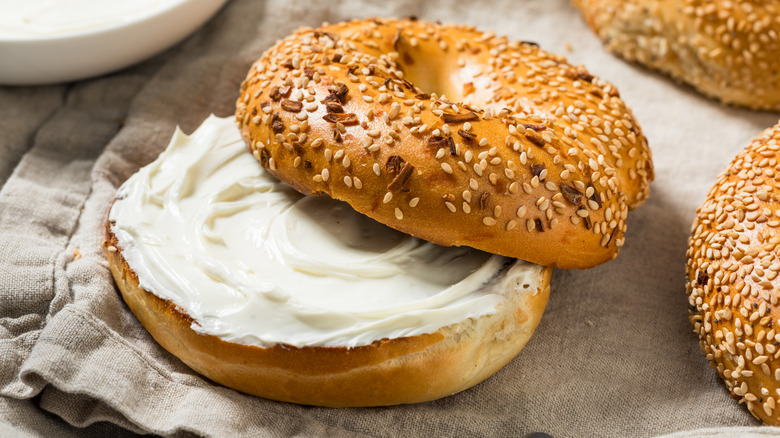
Although steaming is a viable alternative to boiling, it yields slightly different results. Boiled bagels tend to have a chewier, denser texture and a slightly harder, shinier crust from being actively submerged in the water, allowing the dough to absorb more of the water bath. Steamed bagels, on the other hand, still develop a glossy crust, but it's thinner and slightly duller. However, some people prefer the lighter texture of fluffy steamed bagels.
Another advantage of steaming over boiling is that the process is much less complex. Rather than plopping them into boiling water and risking injury, you can simply set them on a perforated steaming rack over the baking soda bath cover, and set a timer for exactly 90 seconds. Afterward, it's fairly easy to use a spatula to gently move them from the steaming rack to a baking sheet, and repeat the process until all your bagels are beautifully steamed and ready for a generous coating of sesame seeds or even homemade Trader Joe's everything bagel seasoning.
Steaming is especially advantageous if you prefer to make bagels with add-ins such as dried blueberries, raisins, or chocolate chips. Since these ingredients are kneaded right into the dough, boiling them risks the fruit falling out, becoming waterlogged, or the chips melting. Steaming reduces the risk that your bagels will lose ingredients or absorb excess moisture from accidentally rehydrated fruit.