

This Retro Diet Soda Was Massive In The '80s (But Lost Popularity Fast)
If you think of '80s snacks and drinks, what comes to mind? Probably a host of colorful, processed treats from big-name brands like Cheez Balls, Doritos, Pizza Bites, and the iconic ice cream treat of the decade — Jell-O Pudding Pops. And to wash it all down? The soda offerings of the era included many big names that are still around, such as Coke, Pepsi, and Mountain Dew, but also one incredibly popular, now-defunct option you've almost certainly heard of — Tab.
First launched in 1963 by Coca-Cola, the dietary beverage was geared toward health-conscious soda drinkers. Over the years, versions were released in bottles and cans, marketed as "2 calories," then "1 calorie," in options like Black Cherry, Ginger Ale, and Strawberry, a caffeine-free version, and the original cola flavor.
By the '70s into the early '80s, the Tab hype was at its peak, with the drink snagging the spot as the best-selling diet soda in the country. Despite the market saturation, as artificially sweetened low-cal sodas grew in popularity, Tab built up a dedicated cult following — even accompanied by kooky branded collectibles like drinking glasses and hand towels.
What caused Tab's downfall
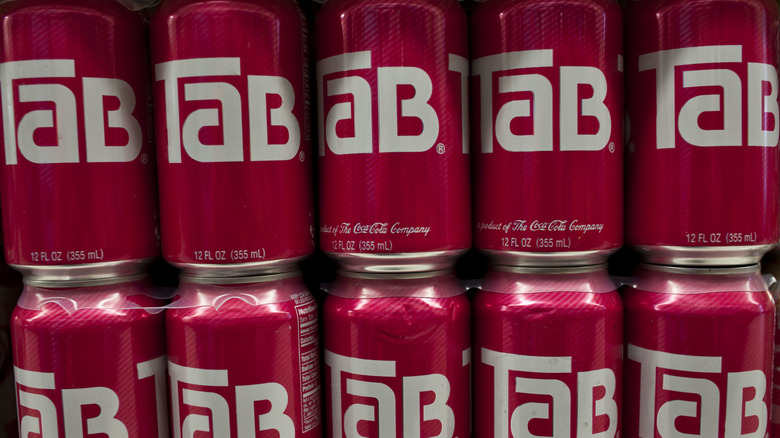
Even if you never had the pleasure of sipping one, chances are you've at least heard of Tab. Unlike other vintage '80s sodas that didn't last – like the spectacular failure that was New Coke, or the totally forgettable 7 Up Gold — Tab managed to hang around until quite recently.
However, its slow death began back in the '80s, and was almost entirely attributed to one competitor. In 1982, Coke unveiled Diet Coke. This new diet soda was marketed toward men, in contrast to Tab, which at the time targeted women with its pink, calorie-conscious branding. Quickly, Diet Coke completely eclipsed Tab in popularity among all drinkers, and the original diet soda could never recover its standing.
Though it had long faded into obscurity, Tab continued to be produced until 2020, when Coke discontinued it due to poor sales. This was much to the dismay of loyal fans, who can still be found mourning on the internet — some have even started a petition to revive the soda. Though it now lives mostly in our collective memory and '80s movies, with loyal fans and articles like this one keeping it alive, this classic firmly belongs in the "gone but not forgotten" camp.