

The Biggest Ground Beef Recall In US History Impacted Over 100 Million Pounds Of Meat
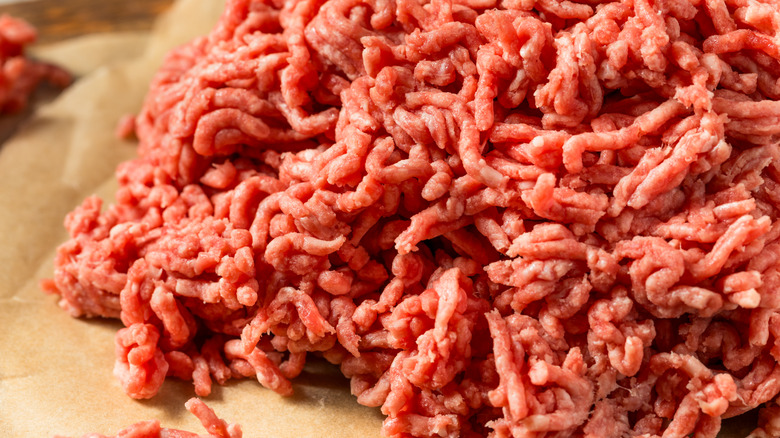
When you hear about a massive food recall, you probably imagine that it's because the food was exposed to a specific contaminant, like E. coli or salmonella. There have been plenty of beef recalls due to safety concerns, like the million-pound Wegmans recall in 2007, but the biggest U.S. beef recall ever was actually triggered by animal cruelty.
That was the 2008 Westland-Hallmark recall, where 143 million pounds of beef were ordered off the shelves. It included beef that had been frozen and distributed over an unusually long two-year period, and had been incorporated into other products. The recall was triggered by the release of undercover video from inside the California-based meat producer's facility that showed workers forcing sick and injured cattle to slaughter. The recall was then initiated when the USDA determined it could no longer certify that a large portion of the company's meat had been produced under required inspection conditions.
Because federal law requires all cattle to pass a pre-slaughter inspection while standing and walking, any meat processed from animals that bypassed that step is considered unacceptable. The scope of the recall was so broad because investigations showed the same practices had occurred repeatedly over a two-year time period, making it impossible to isolate a smaller batch of affected meat. It also caught consumers' attention because a large portion of the beef was sent to the National School Lunch Program, so it had gone to children.
The fallout for Westland-Hallmark and their use of downer cattle
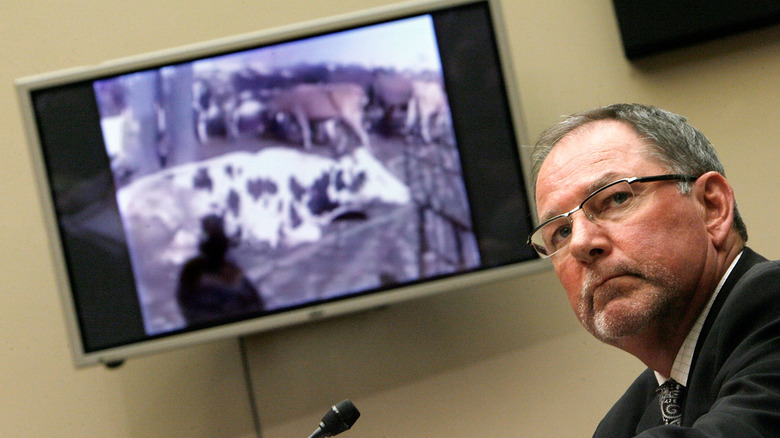
A key part of the recall was the handling of "downer" cattle, a term used for animals that cannot stand or walk unassisted before being slaughtered. These animals can't enter the human food supply because they may be seriously injured or ill, and because their condition can prevent inspectors from conducting a proper health assessment. Downer cattle can also possibly be infected with mad cow disease, as it can prevent them from walking — and despite its peak in the '80s, the disease remains a concern.
The undercover footage of downer cattle being forced to slaughter was released by the Humane Society of the United States, sparking immediate public backlash. Animal welfare groups argued that the issue went beyond cruelty and directly undermined food safety laws. Media coverage and congressional scrutiny followed, pushing the USDA to reaffirm its ban on slaughtering downer cattle and strengthen enforcement at processing plants.
Because of the intense coverage, Westland-Hallmark felt the consequences rapidly. The company lost its eligibility to supply federal nutrition programs, major buyers cut ties, and it filed for bankruptcy within weeks of the recall announcement. Company executives were pursued and had to pay large settlements, and two workers in the slaughterhouse faced jail time. Then in 2012 the company was hit with a nearly $500 million settlement, but bankruptcy meant the CEO only ended up paying about $300,000, giving one of the largest beef recalls in U.S. history an unexpectedly muted conclusion.