

Why You May Want To Rethink Throwing Out Expired Salad Dressing

We've all been there. You come home from the grocery store with a new salad dressing that you're pumped to try, but the area in the door of your fridge is packed to the max. To make space, you start checking the expiration dates on the dressings to see what you should toss. Often, this process leaves you with a bare-bones dressing collection, especially if you're someone who enjoys several varieties of dressing, and doesn't tend to simply go through bottle after bottle of a single favorite.
While decluttering the fridge is always smart, you may be tossing your store-bought dressings too soon — they can actually be safe to eat for a couple of months after the "best by" or "sell by" date on the container. Oil-based dressings like Italian, French, and honey mustard can last for three months or so after they're opened. Dairy-forward dressings (think ranch and bleu cheese) have a shorter shelf life, but are still typically good for a month or two. Unlike homemade salad dressings (which are super easy to make, but typically good for only a few days after they're mixed up and stored properly), store-bought dressings typically contain preservatives that can help it hold up over time in your fridge.
How to tell if a salad dressing is spoiled and needs to be tossed
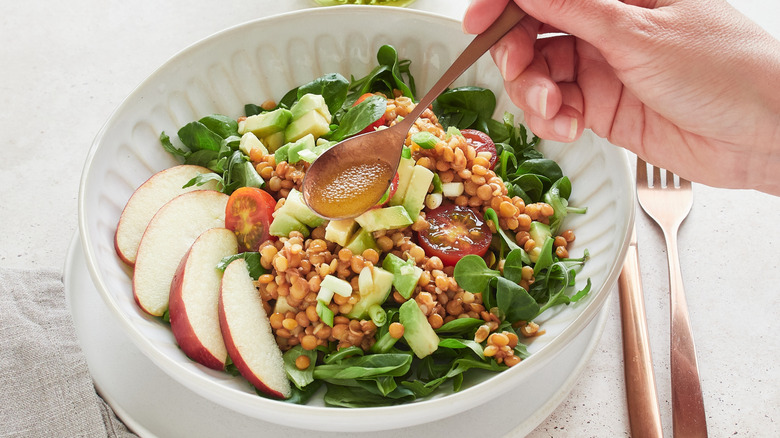
While the flavor of your dressing may not be as strong after the "sell by" or "best by" date passes, it won't automatically become unsafe to eat. If you have a bottle of salad dressing that you're unsure whether you should keep or toss, look for signs of spoilage. First, take a look at the salad dressing when you open the bottle. If the consistency has changed, it's time to toss it. Oil on the top of a dairy-based dressing (like bleu cheese or ranch) or signs of fermentation (bubbles) mean that a dressing is no longer safe to eat. And if your dressing smells strange, get rid of it.
There are a few steps you can take to help your dressing hold up over time in the fridge. First, be sure the container is totally sealed. Wipe up any drips or grease on the cap and lid to ensure a good seal. While it's convenient to store salad dressings on the shelf on the inside of the refrigerator door (guilty!), it's not necessarily the best choice. The items stored in the door of your fridge experience more temperature fluctuation than items stored elsewhere, so you may want to put dairy-based dressings in a different area of the fridge since they're especially prone to spoilage.