

Recycled Glass Countertops Look Stunning, But You Should Think Twice Before Installing Them
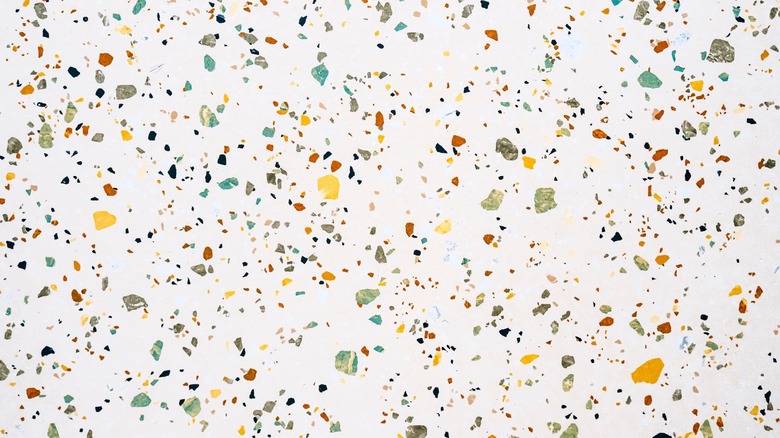
Kitchen countertop trends come and go, but ultimately it all boils down to two things: your personal taste and how much work you're willing to do in terms of routine maintenance. For example, the main reason behind the Farmhouse-style kitchen countertop trend starting to die out is because those wood butcher blocks require a ton of extra work to prevent staining and cracking. But they're not the only visually-stunning countertops that come with hidden caveats. Recycled glass kitchen countertops are undeniably striking and they've experienced a resurgence in popularity thanks to their sustainability. Made from crushed glass set in epoxy resin or concrete (though the glass shards may be melted down and formed into one large slab on rare occasions as well), these counters save bottles from landfills while also creating sparkling, often colorful visuals in your kitchen. However, these eye-catching surfaces come with some major trade-offs that might make you want to think twice before going all in.
The main issue is that recycled glass counters can be surprisingly prone to damage despite seeming so durable. This includes chipping or cracking under the weight of heavy items, especially along the corners. Plus while the glass itself is generally heat-resistant, the counters can still be sensitive to high heat and may crack or scorch if you set a very hot pan or lid directly on them. Concrete-based versions tends to be more durable than their resin counterparts, but the downside is that they are more porous and therefore more susceptible to staining.
Why recycled glass countertops are so tough to repair
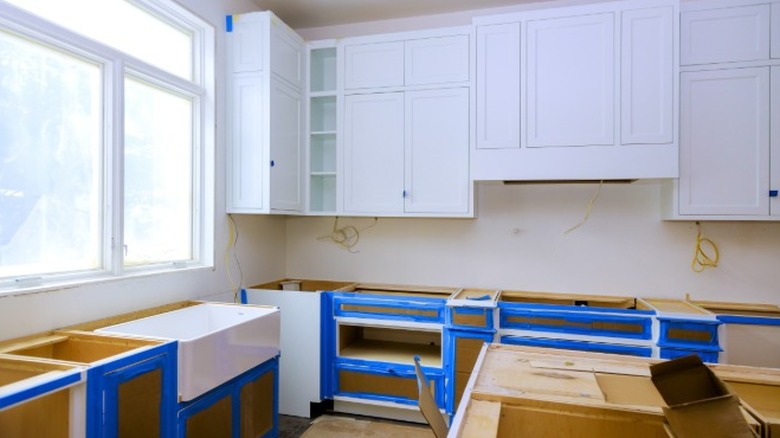
Obviously nobody likes chipping, cracking, or staining on any type of countertop, but some materials are easier to fix than others. The thing with recycled glass counters is that, once damaged, they can be very tricky to repair. For one thing, matching your counter's original glass pattern isn't always possible since most of these countertops are composites rather than solid slabs. Because the glass is embedded in cement or resin, even minor damage can affect both the glass pieces and the binding agent at once. This means you'll need to try to match the affected glass piece shape and color in addition to the binding material, or resort to just patching the whole area with resin or cement, which will look off. Then there's stain damage to consider; while the glass pieces themselves are stain-resistant, any cement they're set in that isn't sealed properly can stain permanently from food spills.
Even when the counter is done as a solid slab (just a reminder; this is when the glass pieces are melted down and re-formed into one solid piece), it's incredibly tricky to repair damage without repeating this process with the exact same materials. This can be both costly and time-consuming in addition to never quite looking right. In many cases, damage to recycled glass countertops is considered irreversible.
You can make recycled glass counters last with some care

If you still have your heart set on a recycled glass kitchen counter, there are things you can (and definitely should!) do in order to keep them looking like new for many years to come. After all, getting counters replaced is a pricey and often time-consuming affair, so the last thing you want is to be considering new ones just a few years down the line. Now, making sure your recycled glass countertops are properly installed from the get-go is the first and perhaps most important step. And, if cement is used, they'll need to be properly sealed to prevent stain damage.
But the job doesn't finish with that. You'll need to put in routine maintenance to help prevent issues and keep them looking their best. For example, avoid setting extremely heavy objects on them, and always cut things using a sturdy cutting board that won't slip so the knife doesn't hit the counter and chip it. And while it's often considered a common mistake with granite countertops, putting a hot pan or kettle directly on any type of counter surface should be considered a huge no-no. It's also wise to avoid harsh chemical cleaners or anything abrasive — use simple, all-purpose cleaners with a damp cloth, and wipe down counters after every use to prevent buildup that can cause damage. Sound like a bit too much to take on? You might want to consider your options for stone kitchen countertops instead, as these may be easier to maintain long-term.