

Please Stop Making This Mistake With Your Leftover Prime Rib
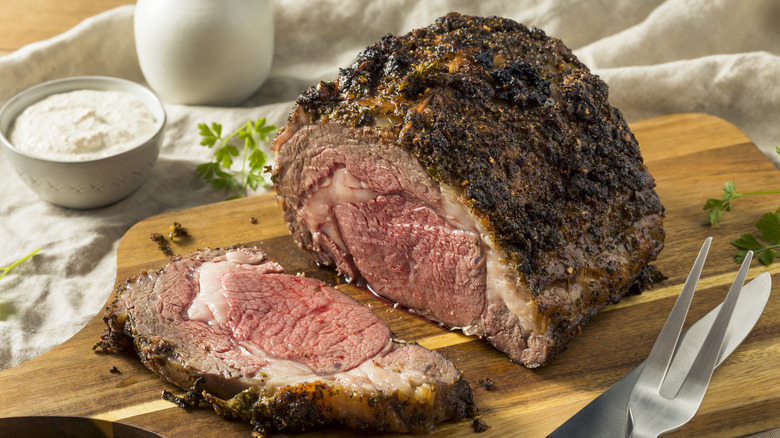
Prized for its tender, slow-cooked deliciousness and prodigious proportions, prime rib is a delectable centerpiece many wait the whole year through to savor at a holiday table. Part of the beauty of this large cut of meat, which is somehow always cooked to perfection at restaurants, is its grand size that can almost be Flintstone-esque, making an ordinary dinner plate seem almost doll-like. The good news for diners is that this hearty main attraction almost certainly guarantees ample leftovers.
The bad news is that many people ruin all of that pricey, well-marbled juiciness by throwing it in the microwave to reheat it. This default high heat method renders prime rib gray and flabby in a few seconds flat by quickly drying out the protein — the same way it can take a steak from an inviting medium-rare to a less tempting medium-well, or a previously juicy chicken breast to stringy and tough. Instead, preserve that hard-earned pink color, silky texture, and critical moisture by steaming it or even using your sous vide. Sous vide is also a great way to revive signature prime rib sides like fluffy mashed potatoes.
Sealing in juices for the win
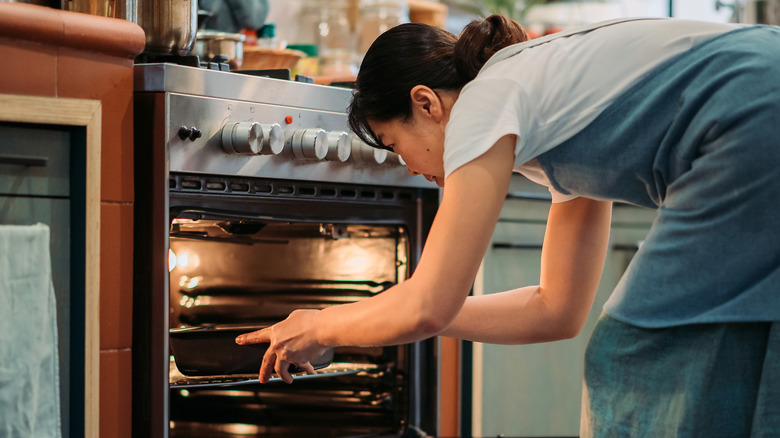
Rather than drying out your spoils with heat that's too high (another common mistake when cooking prime rib), add prime rib slices to a pan with some leftover gravy or broth. Cover tightly with aluminum foil and slide into an oven preheated to 250 degrees Fahrenheit. After about 10 minutes, the meat will be steamed to moist tenderness. Steaming your prime rib is also simple to do on the stovetop. Wrap each slice in aluminum foil, set these in a steamer basket over a couple of inches of simmering water, and cover your pan with a tight-fitting lid for about five minutes.
If you have a sous vide on hand, this handy tool is another surefire method for reheating leftovers without overcooking them for next-day prime rib. Seal the protein in a vacuum or a plastic zip-top bag and immerse it in water heated to around 130 degrees Fahrenheit, or about 5 degrees lower than your original cooking temperature to gently bring it back to life. With a deft hand and a few minutes' dip, you're well on your way to primo leftovers that may taste just as good as they did right off the cutting board.