

9 Types Of Sushi, Explained
Growing up in a Japanese-American household, I've been surrounded by sushi since the day I was born. Whether it was packed in my lunch box or served as a special treat on my birthday, I've been raised with the principle that sushi is far more than a meal — it's generations of laser sharp skills, tradition, and cultural expression all in one bite.
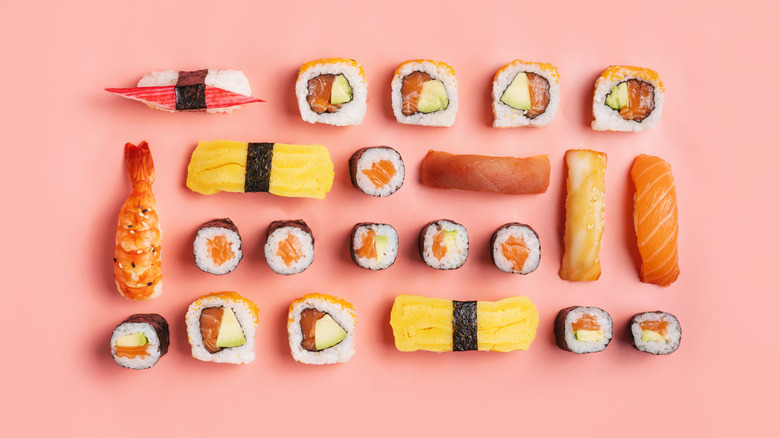
In the United States, we've been plagued by fast casual sushi joints offering cheap sushi and low quality fish. While there's nothing wrong with going to a conveyor belt sushi spot and getting an easy meal, most people often never realize that sushi comes in a wide range of styles — each with its own unique characteristic. That's why I want to talk you through some of the most popular sushi types you'll find, from crispy hand-rolled filled with fried tempura to artfully crafted temarizushi. Come along and let's dive into nine of the most popular types of sushi and discover what makes each one so special.
1. Temaki
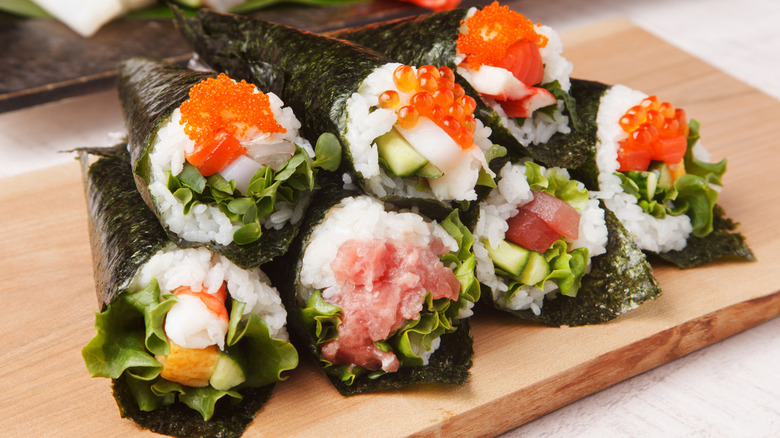
Temaki, which means "hand roll" or "rolling up hand" in Japanese, is a cone-shaped sushi wrapped in nori by hand rather than a traditional bamboo mat. It can contain fillings, such as raw fish, sliced vegetables, seafood, fried tempura, and occasionally cooked meat. Like many sushi types, temaki is meant to be eaten immediately by hand to enjoy the crispy texture of the nori. At temaki parties and some restaurants, the nori and filling are served separately so people can wrap up their own rolls at the table. It's a great way to create a fun, interactive dining experience for your guests without having to stress about getting a whole dinner spread together.
Around Japan, temaki is typically served at house parties, street food stalls, specialized hand roll restaurants, or at convenience stores. It's often served alongside some soy sauce, pickled ginger, and wasabi to balance out the richness of the filling.
2. Nigiri
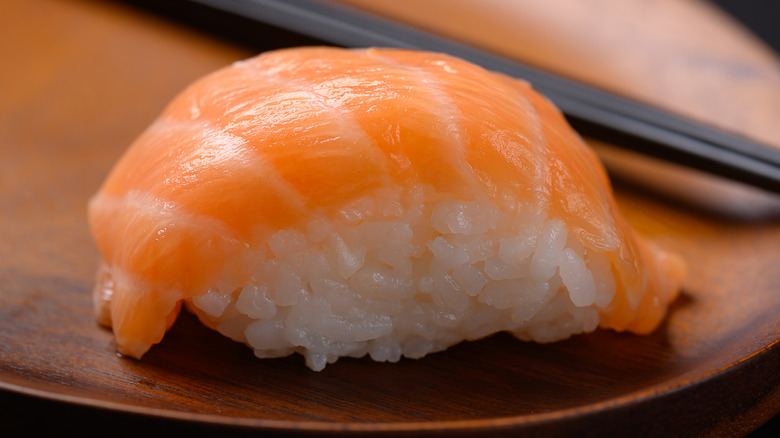
Nigiri is one of the most popular sushi styles featuring hand-pressed oval-shaped seasoned rice topped with a thin slice of raw fish or seafood. Its name "nigiri" means "two fingers" in Japanese, referring to how the sushi is shaped by the chef's hands. It's known for its simple, yet elegant appearance that's meant to showcase the quality of the fish or seafood. Nigiri is served in one bite small dollop of wasabi dabbed between the fish and rice, and it's sometimes secured by a thin slice of nori.
Traditionally, you're meant to eat nigiri directly with your hand — you are supposed to turn the fish side-down and dip only the fish lightly in soy sauce, using pickled ginger as a palate cleanser between bites. Oftentimes, people will pick up the nigiri with chopsticks and drown it in soy sauce, which completely ruins the flavor of the fish. You want to actually be able to taste the flavor of the fish you're eating, rather than mask it with a pool of salty soy sauce.
3. Sashimi
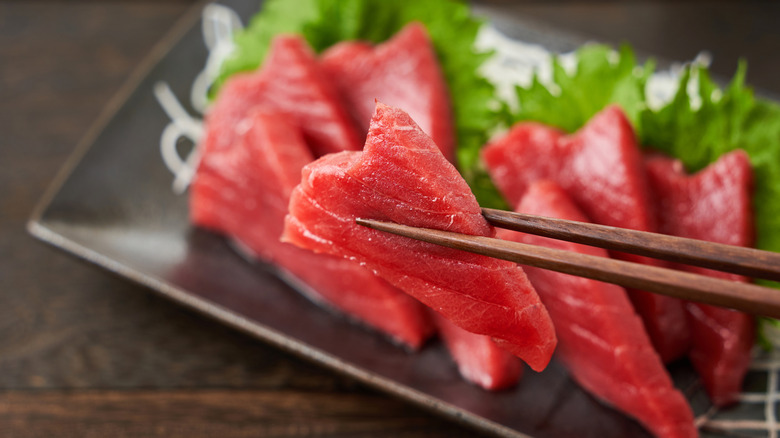
Sashimi is thinly sliced raw fish served without any rice. Beyond nigiri, sashimi is another super popular type of sushi you'll find at most sushi restaurants. Its minimalist preparation is designed to showcase the freshness and quality of the fish. It's typically artfully arranged on a plate and often enjoyed with soy sauce, wasabi, pickled ginger, and — occasionally — grated daikon radish, as accompaniments.
To traditionally eat sashimi, you're supposed to pick it up with chopsticks, dab a tiny bit of wasabi onto it, lightly dip it in soy sauce, and eat it in one single bite. It's best to start with the lighter fishes like sea bream or yellowtail, and then move onto the richer, higher fat content fish like bluefin tuna and salmon towards the end of your meal. While eating sashimi, it's important to eat pickled ginger between each bite to cleanse your palate and can taste the full flavor profile of the fish.
4. Uramaki
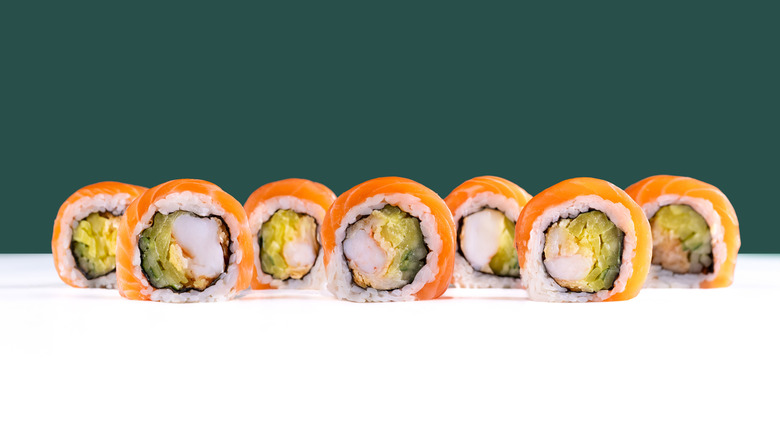
Uramaki, which literally translates in Japanese to "inside-out roll," is a sushi where the rice is on the exterior and nori wrapped around the filling on the inside. This unique style is believed to have been invented in California during the late 1960s by the Japanese chef Ichiro Mashitato who wanted to make a sushi roll that would appeal more to Western palates. He designed it in a way to hide the nori inside the roll to those unfamiliar with it and incorporate American ingredients like cream cheese, avocado, and mayo-based sauces. Mashitato is largely credited for creating the most famous uramaki roll, California roll, featuring seasoned rice, shredded crab mixed with mayonnaise, avocado, and cucumber.
Nowadays, you can find uramaki at most sushi restaurants around the globe. Since it was first invented, uramaki popularity has skyrocketed making it a popular choice for first time sushi eaters and seasoned experts.
5. Futomaki
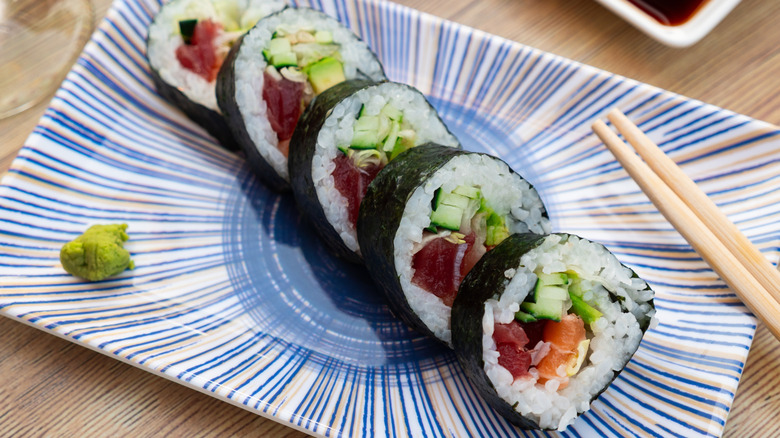
Futomaki means "fat rolled sushi" in Japanese. It's a thick sushi roll that's filled with various colorful ingredients including, sliced vegetables, fish, seafood, and sometimes egg all wrapped together in nori with seasoned sushi rice. These hearty rolls offer a variety of flavors in each bite, and they're cut into thick rounds at cross-section to reveal a vibrant array of colors from its various fillings.
Futomaki are traditionally eaten on special occasions and holidays like Setsubun, where people gather to celebrate the incoming spring season and cleanse themselves of past misfortunes, welcoming in the good luck for the new season. Oftentimes, people will enjoy ehomaki — a specific type of futomaki eaten at Setsubun festivals — where you're supposed to enjoy the whole and uncut facing the year's lucky direction. Beyond Setsubun, people also make futomaki for festive events like weddings, birthdays, and at home as a communal activity during the holidays.
6. Onigiri
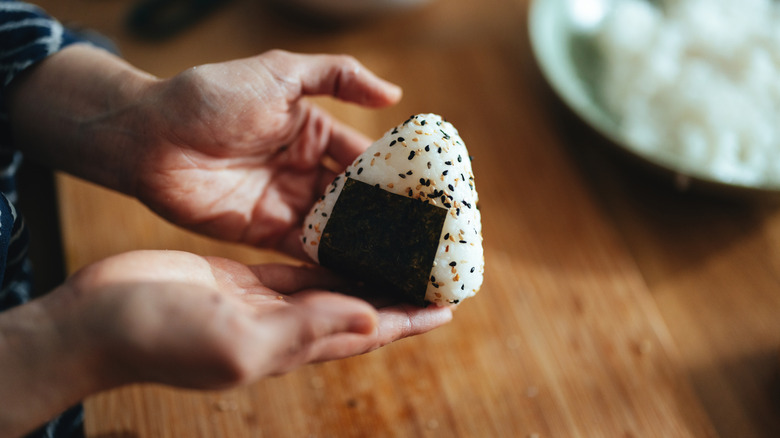
Onigiri is a triangular or oval ball of seasoned rice filled with savory ingredients, such as cooked fish, meat, pickled vegetables, or seaweed. It's often wrapped in nori and can be eaten as a snack, lunch, or as a quick meal. Being such a beloved comfort food in Japan, there are regional variations all across the Island nation featuring local ingredients and traditional shapes. For example, in the Hokkaido prefecture, there is one called tarako butter yakionigiri — the onigiri is filled with cod roe and mixed butter, and then grilled over an open flame. In the Tokushima prefecture along the eastern coast of Japan, you can find sudachi onirgi, where local sudachi citrus is squeezed over the rice for a kick of tart, citrusy flavor.
You can find onigiri being sold at grocery stores and convenience stores across Japan and there are also dedicated onigiri restaurants called "onigiriya". At these onigiri joints, you can find more specialty crafted onigiri rather than the quick, pre-made ones you can find at 7-Eleven.
7. Temarizushi
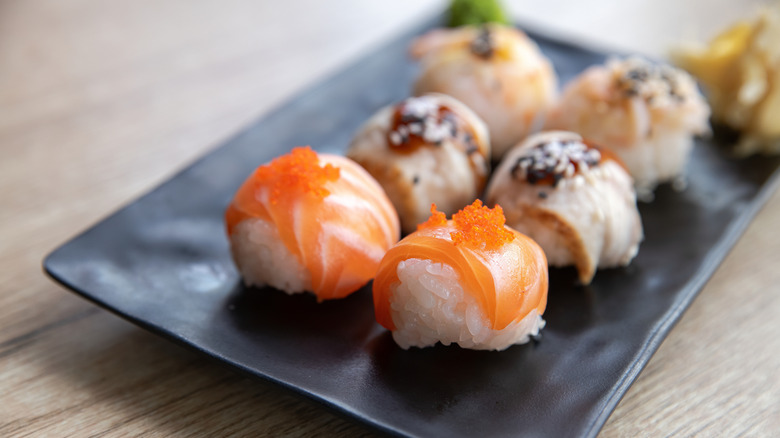
Temarizushi is a unique decorative pressed sushi formed by hand into a small ball or sphere, topped with either fish, seafood, or vegetables. Unlike typical sushi, rolls the toppings are placed over the rice ball in an artful manner, giving it a colorful and beautiful presentation. Temarizushi's name is derived from "temari," a traditional Japanese hand ball made from old kimono scraps that used to be given to children to play during the Edo Period.
Traditionally, temarizushi are eaten on Hinamatsuri or "Girl's Day" on March 3 in Japan to celebrate the health and happiness of girls. On Hinamatsuri, families gather together and display ornamental woven dolls and balls and share temarizushi alongside other festival food. Besides being served on Hinamatsuri, temarizushi are also popular on New Years and themed holidays, like Christmas and Halloween, adding a festive, colorful touch to the table. Each piece of temarizushi is truly a work of art and is definitely a sushi you should enjoy on your next trip to Japan.
8. Gunkan
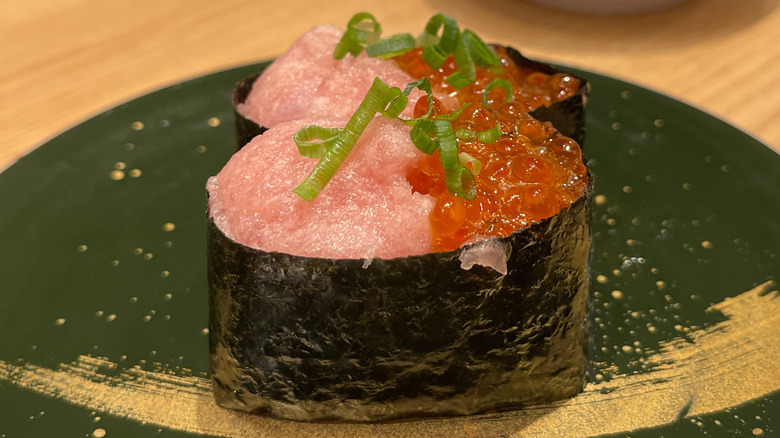
Gunkan is an oval mound of seasoned rice wrapped with a strip of nori around the middle, topped with fish or seafood. The name gunkan literally translates to "battleship" in English due its resemblance to a small battleship. The tight strip of nori around the base of the sushi prevents the toppings from falling off and making it easy to eat with your hands. This style of sushi is especially popular for toppings that don't adhere well to rice alone — like fish eggs.
You'll find that most gunkan rolls are topped with fish eggs like ikura (salmon roe), masago (smelt roe), or flying fish roe (tobiko). The tiny fish eggs burst with salty, fishy flavor, releasing their delicate flavor and adding a unique crunch texture to the roll. If fish eggs aren't your thing, you can also find it topped with uni (sea urchin), chopped sashimi, spicy tuna mixed with mayo, and sometimes, even beef tartare.
9. Hosomaki
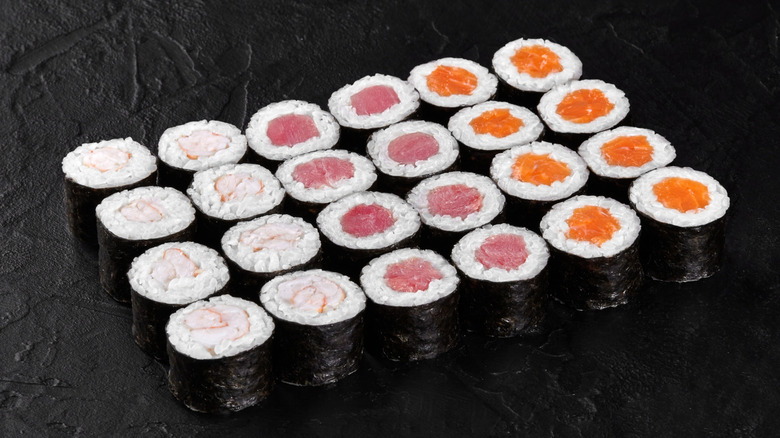
Last but not least, hosomaki which translates to "thin roll" in Japanese and is a sushi that's made with just one filling ingredient wrapped in nori and seasoned rice. They are made with a half sheet of nori and have a light portion of rice to keep the roll slender, and thin. Their relatively small size and focus on one ingredient makes them perfect options for anyone trying sushi for the first time and want to ease themselves into eating raw fish. Some of the most common varieties you'll find include pickled radish (takuanmaki), bluefin tuna (tekamaki), and the most popular, cucumber (kappamaki).
Hosomaki are eaten all over Japan. From train station bento boxes and casual sushi joints to high-end restaurants, you can find at virtually anyplace selling sushi. They are the perfect bite-sized snack and are a great quick lunch if you're looking for something light.