

The Hands-Down Best Batter To Use For Crunchy, Deep-Fried Shrimp
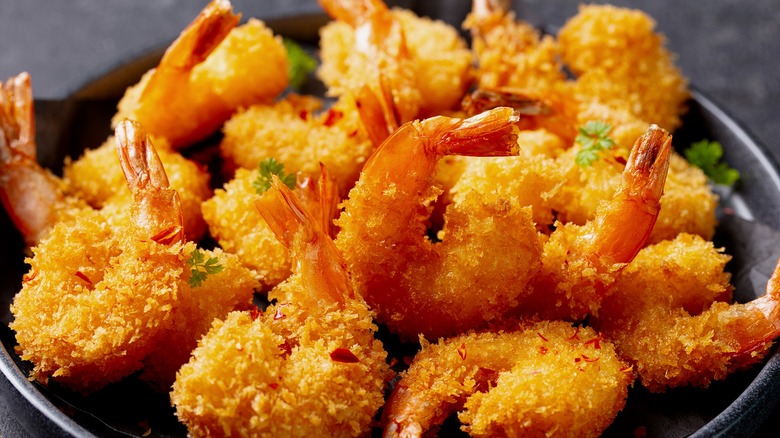
At some point, eating at the many chain restaurants with the best fried shrimp just doesn't cut it anymore, especially if you're obsessed with crunch. Lots of places pull off that compelling combination of perfectly light, airy crust and soft, juicy shrimp, but there's always the feeling you could do more. We've tried all sorts of coatings, from tempura batter to crushed cornflakes to classic buttermilk in pursuit of that crunch. For the best, crispiest fried shrimp, stick with a batter made from ice-cold Japanese beer, all-purpose flour, and cornstarch.
A good rule of thumb is to use a 3-to-1 ratio of flour to cornstarch and match that total with the beer, adding more if necessary. This means you'll typically end up using 3 cups of flour, a cup of cornstarch, and 4 cups of beer for a large batch of batter. When frying, use a neutral oil with a high smoke point for the cleanest flavor — between 325 and 375 degrees Fahrenheit is the ideal temperature range for deep-frying — and you'll have the crunchiest deep-fried shrimp of your life.
To amp up the crunch even further, you can also coat the shrimp in panko breadcrumbs immediately after dipping them in batter. Most importantly, though, is creating that crispy foundation with the beer, flour, and cornstarch, and frying the crustaceans immediately after coating so that the batter is still set and fizzy when it plunges into the hot oil. Stick to this simple plan for ASMR-worthy fried shrimp every time.
Why the best deep-fried shrimp batter always mixes flour with cornstarch
The main reason to use all-purpose flour for your deep-fried shrimp coating is also one of the biggest obstacles to a shatteringly satisfying crunch: gluten. Gluten allows the batter to cling to the shrimp better so it doesn't just slide off while you're cooking or eating. However, the protein also tends to become chewy and absorb a lot of oil, potentially leaving you with a gummy, greasy mess after frying.
Cornstarch, however, is naturally gluten-free, and mixing it with all-purpose flour helps to inhibit gluten formation. Cornstarch also absorbs less oil than flour, resulting in a lighter, crispier coating. Similar gluten-free starches, like rice flour and potato starch (which is also great for frying), work well as substitutes, but cornstarch is a readily available option in most grocery stores.
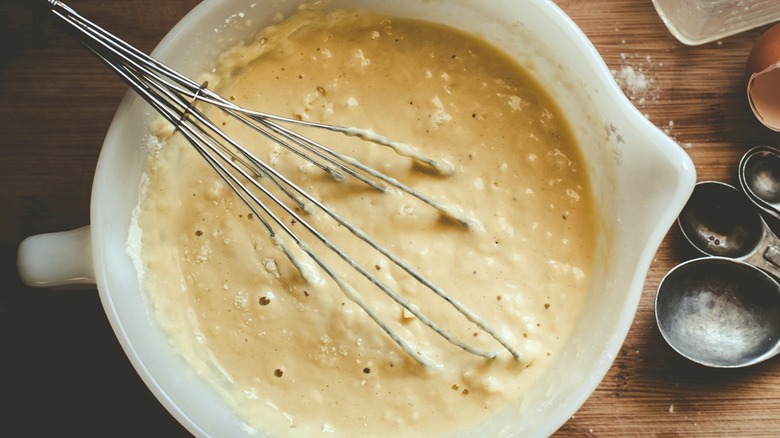
When making your batter, it's absolutely crucial to avoid overmixing it. Mixing allows the gluten strands being developed in your batter to get longer and stronger, making the resulting crust too tough to be enjoyable. Instead, go for a barely homogenous mixture — gently combined and slightly lumpy like pancake batter — to minimize gluten formation and get the best crunch possible.
Another secret to crunchy shrimp batter? Ice-cold beer
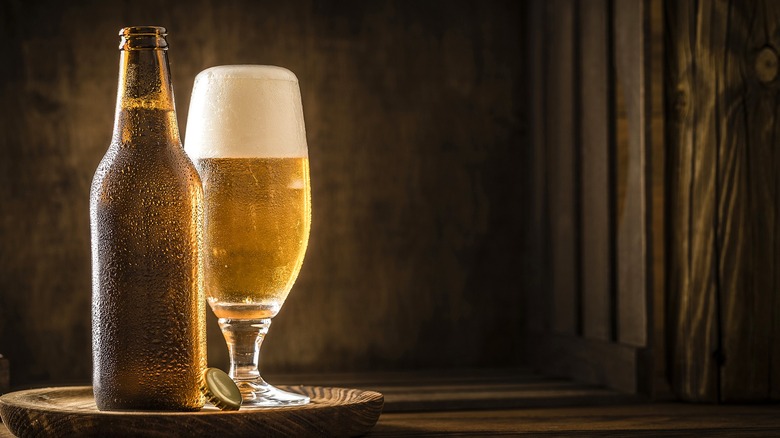
This batter specifically uses Japanese macrobrewery beer — think Asahi, Kirin, or Sapporo — for its crispness, refreshing taste and versatility, which works on multiple levels. First, fizzy, crisp beers tend to be substantially carbonated, and those bubbles create tiny air pockets in the batter that add crunch when fried. Second, the beer's lighter flavor lets the shrimp's brininess stand out more prominently while still adding a touch of malt, rice, and bitterness for balance. If Japanese beer isn't to your taste, there are several other great beer batters to try, like German pilsners or American lagers.
The beer has to be as cold as possible for this batter to work because gluten formation is slowed down at lower temperatures. At the same time, the cold batter gets sizzles as the shrimp hits the hot oil,and the water inside evaporates rapidly, creating a steam barrier that prevents the oil from soaking into the crust.
To keep things as crunchy as possible, chill the batter in your refrigerator overnight. It's how Gordon Ramsay makes his fried fish even crispier, and it works just as well for deep-fried shrimp. Some folks say you can add ice cubes to your batter to achieve the same effect, but this adds more moisture to the mix, which tends to compromise the crunchiness. It's better to just stick with beer, or to use soda water if you want to go alcohol-free.