

What It Really Means When Your Ice Cream Is Labeled As 'Frozen Dessert'
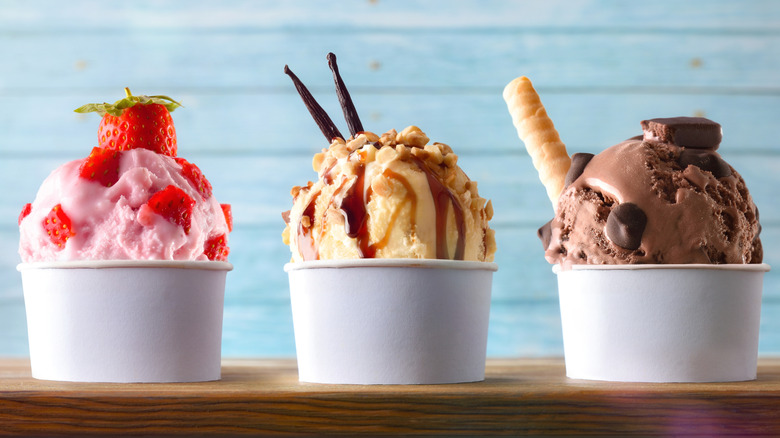
If you've ever noticed products in the freezer section at the grocery store (or maybe even on a menu at your favorite fast food place) that are labeled "frozen dessert," you've probably wondered what exactly it means — and why they aren't called ice cream. These products certainly look like ice cream — they are frozen, creamy, and delicious, after all, but are they actually ice cream? That question has more of a legal answer than you might think, and it all boils down to the ingredients.
The U.S. government is pretty strict on how ingredients are labeled when it comes to selling products to the public. Some fast-food chains, like McDonald's, don't even call its shakes, milkshakes, opting for other names for frozen treats, carefully avoiding the words ice cream and milk. This legal requirement is precisely why. The law is very clear about what can and can't be called ice cream. According to the standards of identity, as set forth by the U.S. Food and Drug Administration, federal guidelines regulate foods like dairy products. If ice cream doesn't have at least 10% fat from milk or cream, and the milk solids don't make up at least 20% of the content, it can't be called ice cream. It also can't have more than 50% air added to its total weight. Under these guidelines, any product that doesn't meet the criteria must use a different name, which is where the label "frozen dessert" comes into the picture.
Milk fat content matters
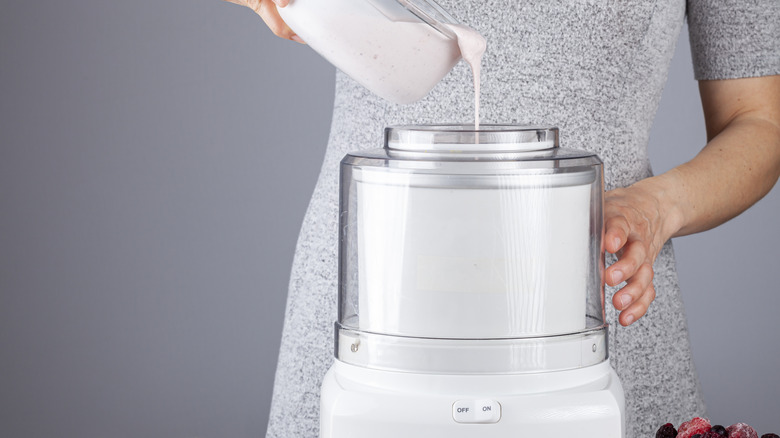
Dairy ingredients have a lot to do with the final result of products. For example, milk fat content matters for your baked goods — dairy products containing higher quantities of milk fat make foods like cake softer and moister. It also affects the taste. Milk fat, also known as butterfat, contributes to the richness and overall flavor, helping to create a smooth and creamy finished recipe with a stronger, more decadent taste. While "frozen dessert" has a lighter, airier texture (the result of increased air during processing), the taste is often milder than its actual ice cream counterpart. When it comes to ice cream, whole milk is going to give you the creamiest, most flavorful option.
Ice cream is surprisingly easy to make — in some cases it's simple to make a delicious frozen treat, like this three-ingredient mango ice cream recipe. It can also be extremely delicious, and you can make just about every flavor imaginable. The "frozen dessert" you'll find on store shelves and many fast food menus contain the same basic ingredients as real ice cream, simply in different amounts (the additives that may be used are a different story and you should review ingredient lists before you make a decision). But if you don't consider "frozen dessert" the real thing, just make your own ice cream at home (without a machine). This option not only lets you control the flavor by adding ingredients that suit your taste buds, but you can also choose your dairy products for maximum taste and ice cream consistency.