

The Lemon Zesting Mistake That's Ruining Your Dishes
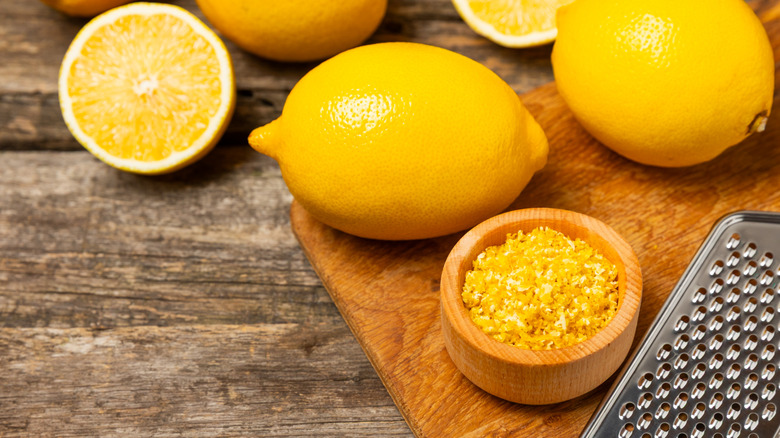
Bright and zingy, lemons have an uncanny ability to lift the flavors (and the mood) of anything they touch. But there is a distinct line where too much of a good thing can go the other way. This is particularly true when it comes to lemon zest. While the vibrant yellow rind becomes a topping that brightens everything from pizza sauce to rice and vegetables, if you go too deep with the microplane, you risk scraping out bitter pith.
Rather than juice or lemon extract, lemon zest is well-suited for baking and reigns supreme for certain applications like cakes, cupcakes, or even pancakes. Tips for top zesting include rotating the fruit continuously and not pressing down too firmly with your microplane (the same rules that apply to lemons apply to other citrus) to ensure you only harvest that top aromatic layer, which is chock full of those fruity essential oils. If you do go beyond the bright yellow layer, you risk over-zesting — essentially weighing down your food, somewhat unpleasantly, rather than amplifying its best notes.
Choosing the best lemons and zest
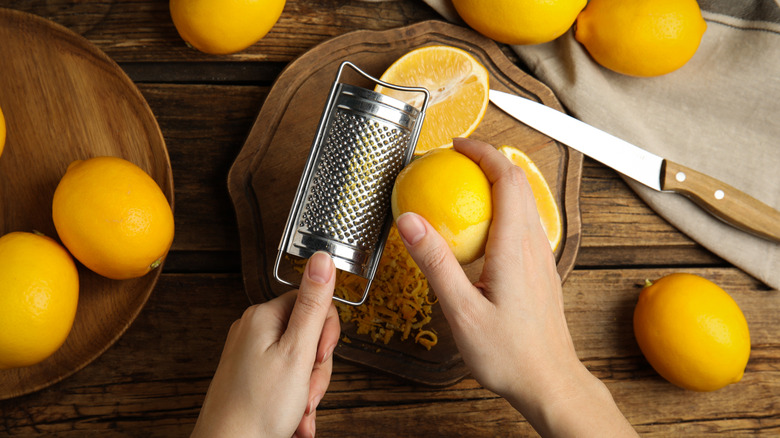
To get the best zest, start with the best lemons, preferably organic. According to chef Erica Wides, aka Chef Smarty Pants, you want to choose lemons with bright, smooth skin and a round shape, rather than an elongated shape with nodule-looking ends. This preferred skin texture and surface yields the best surface for zesting (and the most juice). It is also helpful to let your senses guide you in your lemon quest, as fragrant lemons are often at their peak.
If you have an abundance of lemons and the mood to zest strikes, just be sure to scrape your way around the fruit and then carry on to your heart's (and kitchen scent's) delight. Leftover lemon zest has many uses and makes a welcome addition to everything from icing to flavored sugar, salad dressings, cocktail rims, and even compound butters. What's more, you can always store leftover lemon zest for later use. In an airtight container, lemon zest will last up to a week in the fridge or up to four weeks in the freezer.