

The Bonus Meat That Adds A Burst Of Flavor To Your Favorite Chili
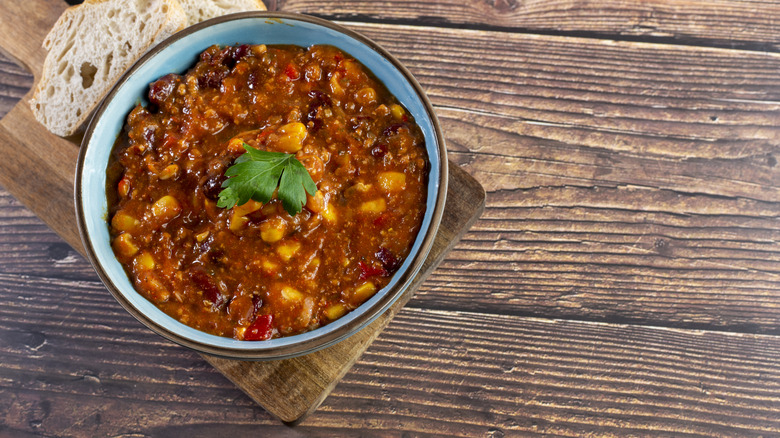
Chili is one of the most important staple foods in American cuisine. The general concept is the same: it's usually a tomato-based stew made with ground meat and beans (unless you live in Texas, in which case your chili might very well be bean-less). However, individual recipes are as unique as snowflakes and as closely kept as the Declaration of Independence. For this reason, you might not be all that keen on adding in any new fixings. But you might want to make an exception for one truly exceptional meat: bacon.
Bacon makes everything better. Just ask any bacon-obsessed millennial (hey, the middle child of generations has to be right about a few things). Its smoky, savory, and sometimes sugar-tinged flavor brings complexity and heartiness to almost every dish to which it is added. This flavor profile also happens to be the perfect pairing for your next bowl of chili. Similar to cooking with a ham hock, the flavor of bacon will suffuse as you simmer it. So how do you pork up your chili? Perhaps the simplest way of doing so is by baking your bacon (to help render out the fat), then cutting it into small pieces and adding the meat to your pot with the other chili fixings. Then, let simmer for about 30 minutes to suffuse the flavor. The amount of bacon you add is totally up to preference, but anywhere from half a pound to a whole pound will work for a pot of chili.
How to bacon up your chili
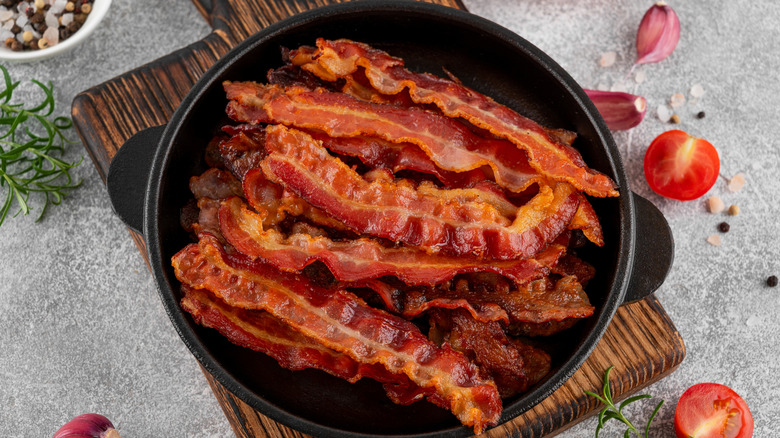
Of course, there is more than one way to do anything, and there are plenty of ways to maximize the bacon flavor in your batch of chili. For starters, you might try first cooking your bacon in the same pot or slow cooker in which you're planning to simmer your chili. Cooking your bacon this way will allow for small bits of browned bacon and its drippings to incorporate with the base of the stew. You'll still want to remove the bacon before cutting and adding it back into your pot in order to keep it from overcooking. Also, make sure to save some of that bacon grease for sautéing your veggies. This will add even more meaty flavor.
Alternatively, you can leave bacon out of the prepared chili and instead use it as a garnish if you prefer a more adjustable bacon taste. One option is to cook your bacon in a second pan and just reserve the grease for sautéing the veggies that will go in your chili. This way, you'll get some of that savory flavor without having any actual bacon in your bowl. Or, if you want both the taste as well as bacon's crunch in the dish, try chopping and reserving half of it for topping your bowl as garnish. The only right answer is the one your taste buds tell you.
More ways to customize bacon chili
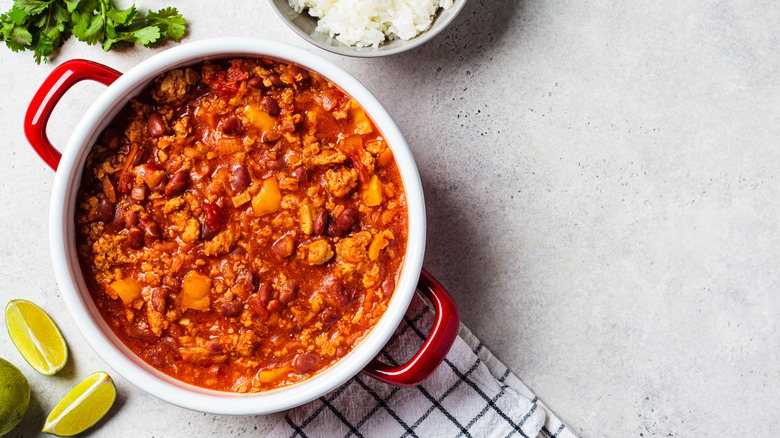
Now as for the bacon itself, there are plenty of types to choose from. Knowing the varieties can help you to make one mean bowl of chili. For example, if you're making a white chicken chili with navy beans, you might want to use pancetta instead of bacon, which is salt cured and not smoked. Pancetta will help give the creamy chili a good bit of heartiness without the smoky element of regular bacon, which might be overwhelming. If you're making a super smoky chili using chipotle peppers or other complex flavors, you can add a mesquite smoked bacon. This type of bacon is quite intense and bold. It's great for home cooks who aren't shy of making an impression.
If you're looking for a more crowd pleasing option, you can use hickory smoked bacon, which is still smoky but not as much so. Applewood bacon is also smoky but more mild in taste. This is the perfect option if you're unsure of how much smoke you or your fellow chili-eaters are looking for. Now, if you want to add a touch of sweetness, go for maplewood bacon, which has a (shocker) maple-tinged taste. You can also candy the bacon and use it for topping your chili. Now, this may be a controversial suggestion, as chili is usually not a sweet food. But then again, Cincinnati chili is famous for using cinnamon and chocolate for a sweet-spicy flavor, and candied bacon certainly never hurt a dish.