

4 Tips For Loading The Dishwasher That Maximize Space
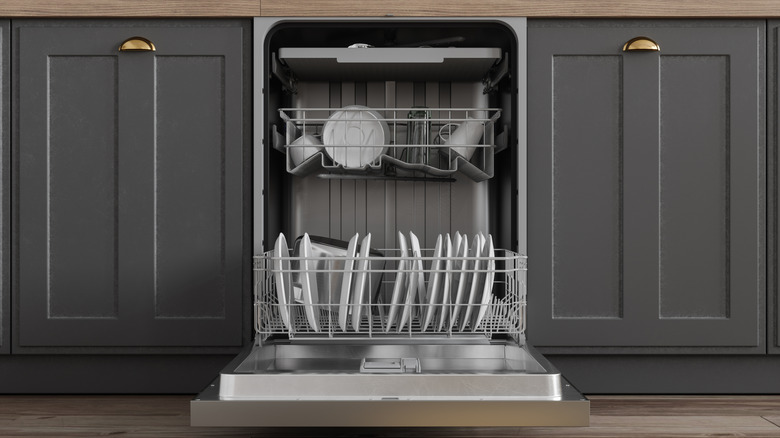
So many of us loved Tetris as kids, but it's not quite as fun when you're an adult stuck playing the dishwasher version. Deciding how to load the dishwasher can feel surprisingly overwhelming. Figuring out what goes on the top rack versus the bottom rack, understanding when (and how) to change the filter on your dishwasher, and knowing when it's time to purchase a new machine altogether are some of the many questions around this kitchen appliance. Thankfully, the what-goes-where game has some solutions that can both make loading the dishwasher easier and result in cleaner dishes.
We took the time to scour the internet and find the best tried-and-true tips for loading your dishwasher with ease. That being said, there are a ton of different types of dishwashers out there, from countertop models to old-school versions to smart models. As you try these tips, be sure to take note of what works well in your kitchen so you can set up a system that ends the endless rearranging. Ready to say goodbye to dishwasher Tetris? Let's get to it!
Start with large items and work your way down
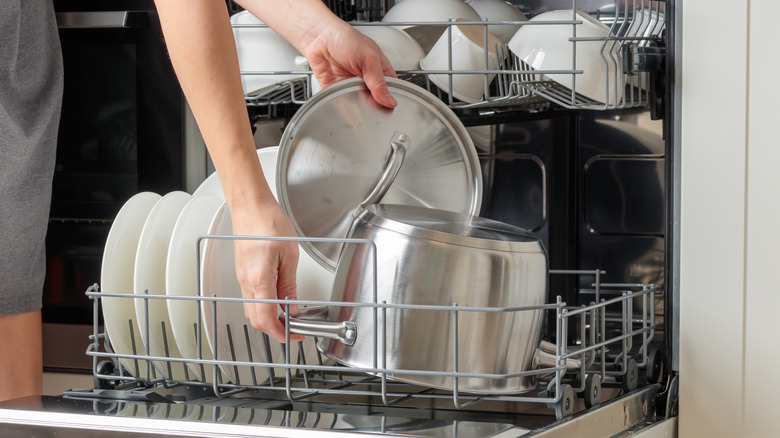
After a dinner party, or even after a standard day of heavy kitchen use, it can be tough to figure out how to get started when it comes to loading your dishwasher correctly. Starting with random dishes is a common dishwasher loading mistake, and taking a moment to organize your dirty dishes by size order can help you load correctly and efficiently. Loading large items first can be a smart step to get things started (and begin the process of emptying out your sink). By placing dishwasher-safe pots, pans, and cutting boards on the bottom rack, you'll get a sense of how much space you have left — and you won't be stuck rearranging plates and bowls as you try to make room for the saucepan you forgot to include.
Usually, it makes more sense to place larger items on the perimeter of your dishwasher racks if you can (obviously, this is easier with plastic cutting boards and pans than with pots). After you place your large items in the dishwasher, work your way down to smaller items. Once you've loaded all of your pots, pans, plates, and bowls (all facing with the dirty side toward the center of the machine), you can fill in the remaining spaces with spatulas, measuring cups, and other smaller, unusually shaped items.
See what the experts on your machine have to say
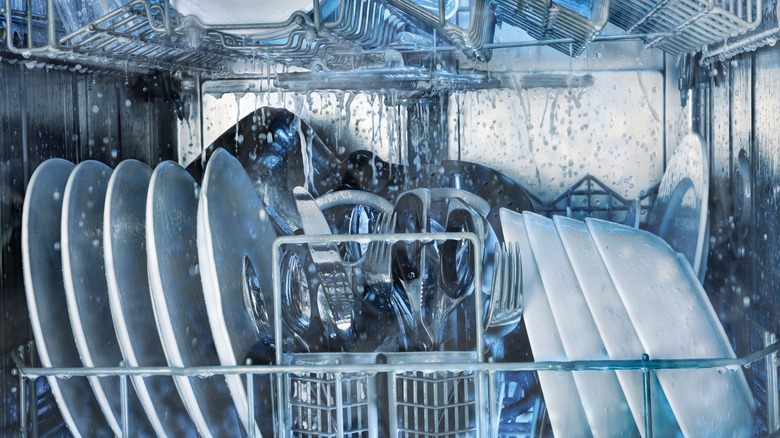
Believe it or not, there are people out there who spend time figuring out the perfect way to load dishwashers — and you can benefit from their hard work. Your dishwasher's instruction manual likely includes a diagram showing you the best way to load your particular model. If you're not someone who keeps manuals on hand, no worries. You can likely find it online by searching for the make and model of your dishwasher.
If you aren't having any luck finding the manual for your machine online, try searching for dishwasher loading tutorials for your machine's make and model on YouTube. While it may not be a perfect fit for your dishes, it will give you a clear idea of how to load your model more efficiently. Sometimes, watching someone take a different approach can open your eyes to new options, especially if it's from an appliance specialist.
Remove your silverware caddy, if you can
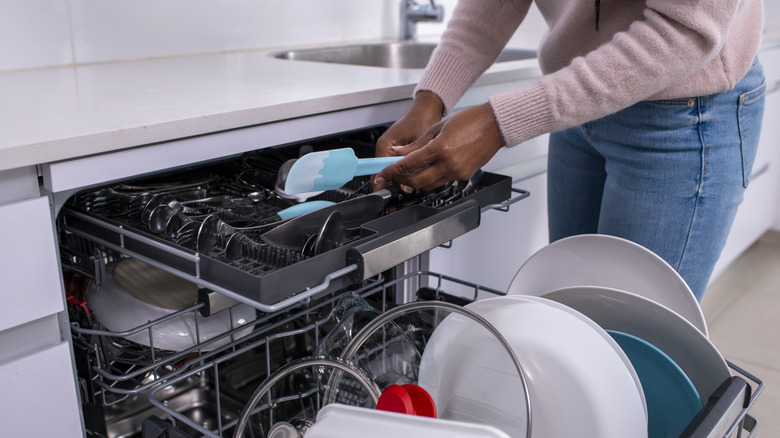
Depending on your dishwasher model, you may be able to remove the silverware caddy, creating a new space for a few additional plates. The key to this hack is having a third rack — a pull-out space typically just above the top rack of the dishwasher (if you've never looked, you may not even know it's there). The third rack is the perfect place for silverware, especially if your forks, spoons, and knives are particularly dirty.
Since each piece of silverware is laid out individually, the jets may have an easier time blasting food off of each individual piece. Place forks, spoons, and butter knives (not super-sharp chef's knives — those should never go in the dishwasher) horizontally on the rack, and you're good to go. Make a mental note that the silverware is on the third rack, as it's easy to forget to empty it when it's out of sight behind the dishwasher door.
Stop trying to overload your dishwasher
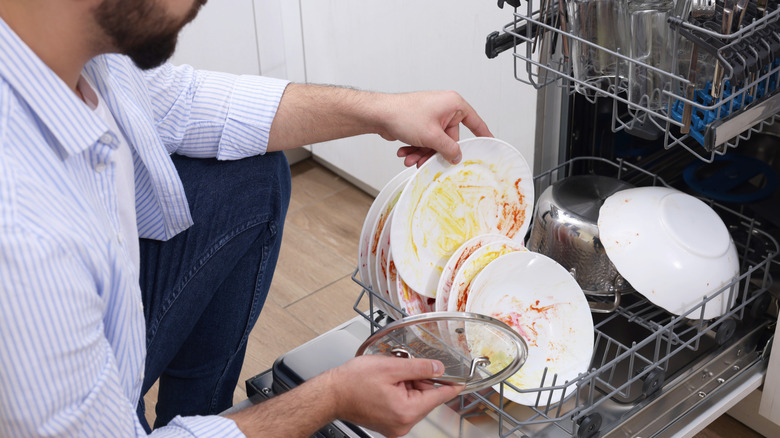
We get it — there are just a few dishes left in the sink, and your kitchen will finally be clean if you can just toss them into the already 99% full dishwasher. However, doing so usually backfires. Overloading your dishwasher stops the jets from being able to reach the surfaces of your dishes, resulting in stuck-on, dried-on food that you'll just end up having to scrub by hand anyway.
To avoid overcrowding your dishwasher, use the separators in your dishwasher racks. Don't try to nestle more than one plate into a space at a time — the racks are designed to ensure the water jets are able to fully clean each dish. The same goes for spaces in the silverware organizer. Just because you can fit multiple forks or spoons into a single space doesn't mean that you should. If you feel yourself trying to cram dishes together, it's better to split the round of dishwashing into two different cycles, or simply remove your largest item and wash it by hand.