

The City Natural Wine Lovers Know To Flock To
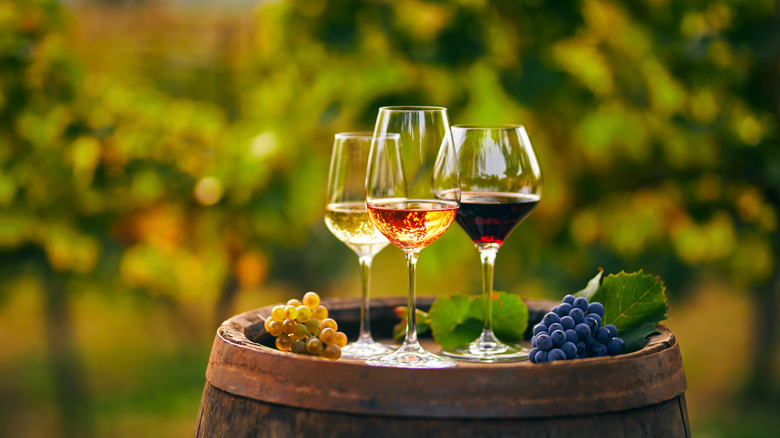
When you think of a premium wine destination, you probably envision a vast winery in Bordeaux, France; Florence, Italy; or even unique wine experiences in the Napa and Sonoma Valleys. While certain cities have garnered international recognition for their thriving viticulture industries, there are plenty of underrated wine regions around the world, and if you're particularly into natural wines, there is one city that needs to be added to that list.
Budapest, the bustling capital of Hungary, offers much more than its beautiful architecture and rich history. Budapest is home to a thriving food and beverage culture and, in addition to being among Chef Andrew Zimmern's favorite food destinations, it is gaining recognition as the "it" spot for natural wines. Natural wines are made with less intervention, contain fewer additives and preservatives, and involve more planet-friendly practices when compared to larger, commercial brands of wine.
Budapest has embraced the rising interest in natural wines with more mainstream cafés and wine bars offering an extensive selection of natural wines that are produced locally and from around the world. If you plan to visit Budapest, consider adding a natural wine tasting to your itinerary to experience the history and evolution of the city and country's winemaking traditions.
A brief history of wine-making in Hungary
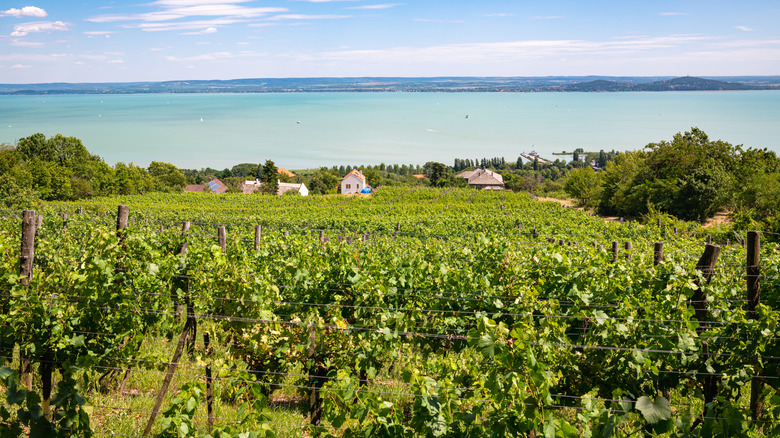
Hungarian winemaking has a deep-rooted history dating back to the Roman Empire. It is also one of Europe's oldest winemaking countries, producing wines that were sipped and savored by leaders all over the world. Interestingly, what is now considered "natural wines" aligns with pre-industrial Hungarian winemaking practices, which were rooted in terroir and heritage.
However, wine production was devastated in the late 18th and early 19th centuries by phylloxera infestations (caused by an aphid-like insect that attacks grape roots), and it experienced further difficulties shifting toward a more industrialized model. Soviet occupation following World War II resulted in the production of wines en masse, at the expense of smaller winegrowers who produced high-quality wines, each with its own character and offering something unique to the palate.
When Hungary abandoned the state-controlled model in the 1990s, winemakers gradually reclaimed their own brands and re-entered the market. Native grape varieties Furmint (white wine grape) and Kékfrankos (red wine grape) re-emerged, and producers began championing quality over quantity. Slowly but surely, Hungary was back on the viticulture map. Today, Hungary is home to about 22 different wine regions with distinct growing conditions and fertile soil that support the nation's comeback as a premium destination for tasty wines. Restaurateurs across Europe have also begun to recognize Hungarian wines — beyond the already famous sweet wine, Tokaji Aszú — by sharing them with their patrons, introducing them to a new world of rediscovered winemaking.