

6 Of The Worst Kitchen Design Trends From The '80s
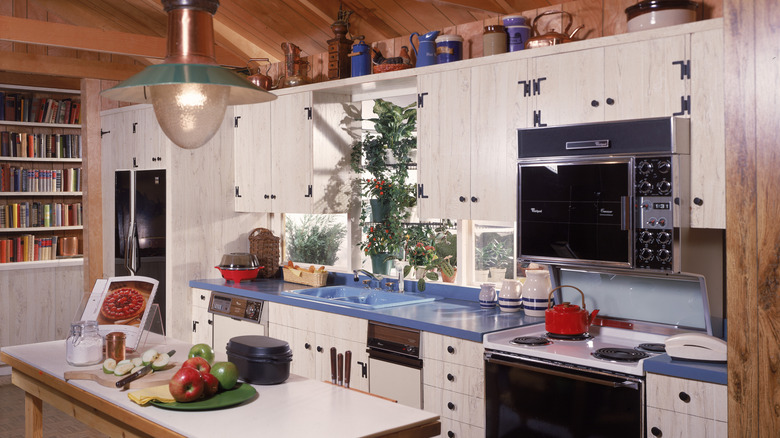
Kitchens, like weddings, aren't timeless. The fact of the matter is that aesthetics are mutable. Millennial brides were charmed by thrifty Mason jars, for example, and homeowners of the 1970s were nutty for knotted pine cabinetry. These little quirks of time are often deeply nostalgic, and even the cheesiest of trends (puffed sleeves, we're looking at you) are looked on with fond memories. But, while wedding flops live on only in photo albums, a tacky kitchen lives on until homeowners can muster the funds for a renovation.
Perhaps one of the most divisive decades in interior design is the 1980s. Fueled by aerobics, 1950s nostalgia, and a tendency towards excess and neon, we certainly like to remember the 1980s. Its movies and pop culture have a strong hold on us, even all these decades later. There are even some 1980s kitchen trends that, like drop waist dresses, seem to be coming back into fashion. Wood paneling and wallpaper deserve some level of revival, for example. Even glass blocks, once recalling only the pastel stylings of "Miami Vice," have found a new life in the past few years. However, the following kitchen design trends should remain in the past — along with foam shoulder pads and Aqua Net.
Black appliances
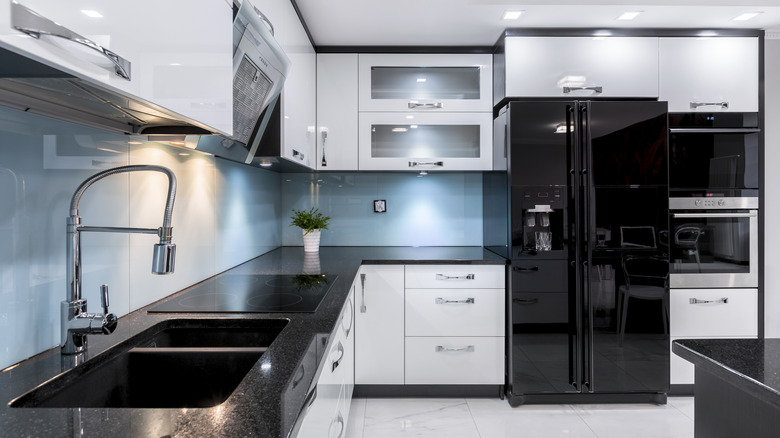
Black fridges and washers were tres chic during the decade of "Dallas" and "Lifestyles of the Rich and Famous" (as were black toilets). They should be left in the past. Rather than working as neutral, black appliances tend to draw undo attention and can make small kitchens look even smaller. Plus, the enamel finish feels quite dated. Black stainless steel appliances are a small improvement, but work best in larger spaces.
Tile countertops
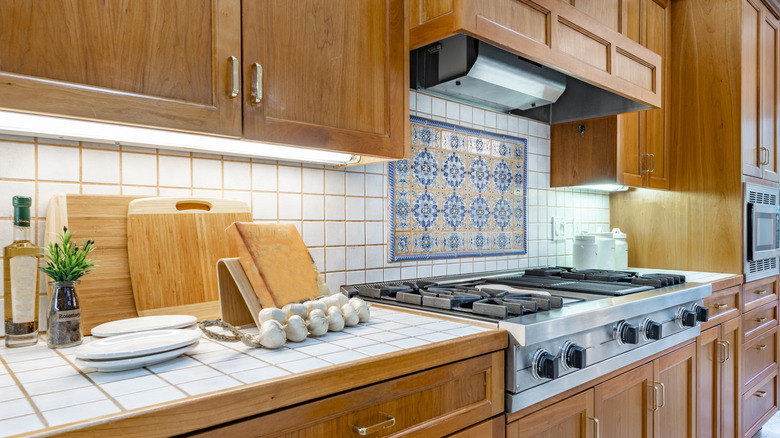
Unlike some 1980s trends, tiled counters are rather dynamic (at least from an aesthetic perspective), though some still view tile counters as dated. However, they're also incredibly impractical and come with some pretty intensive upkeep since the grout used for tile counters is ripe for catching any and every stray crumb. Plus, tile is more likely to break or come loose than a solid counter material. This chic counter might soon turn into the bane of your kitchen.
Melamine cabinets

Did you live in a rental property at any point during the 1980s and 1990s? If so, you're probably familiar with melamine (essentially particle board coated in a layer of plastic resin) cabinets, which had quite the moment in the 1980s. However, their tendency to swell when exposed to moisture makes them less than ideal for kitchens. Let's leave these in the past.
Mirrored walls
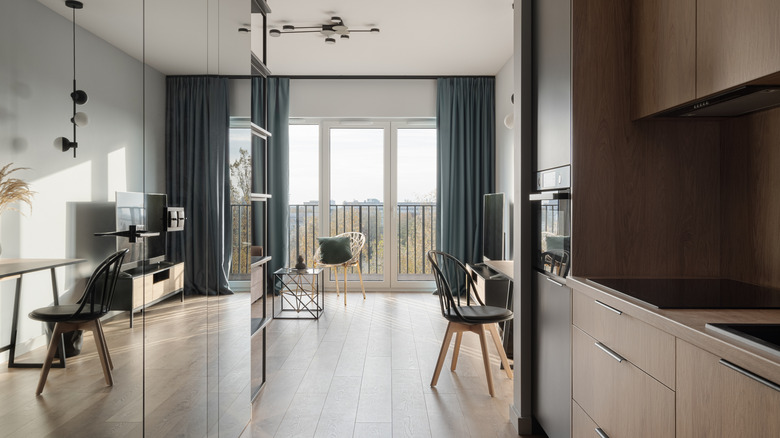
Mirror mirror on the wall — please come down, you're dating the whole space. Mirrored walls, furniture, and basically everything else mirrored were incredibly popular in the 1980s. How else could you fully appreciate your bedazzled dress? While mirrored walls aren't a total no-no, mirrored walls in kitchens, and mirrored dining room sets, should probably stay in the past. These glass accents can be difficult to clean and maintain, and may crack. Plus, does anyone really care to see what they look like in the middle of making dinner (or grabbing a midnight snack)?
Brass finishes and fixtures
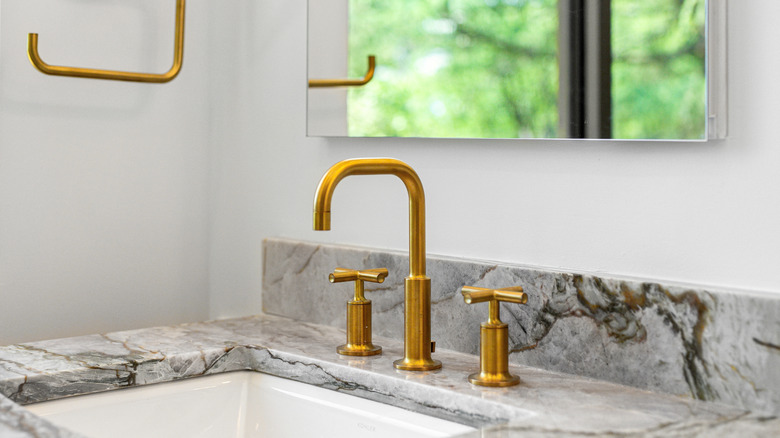
Brass fixtures were all the rage in the opulent '80s. The shiny, warm, gold-toned material could be found on everything from chandeliers to door handles to faucets. It was, at one point, a glossy and fashionable interior accessory. But it's just plain dated now. If you must try brass fixtures, you could modernize the look by going for a brushed finish (rather than glossy) to add some contemporary charm.
Laminate countertops
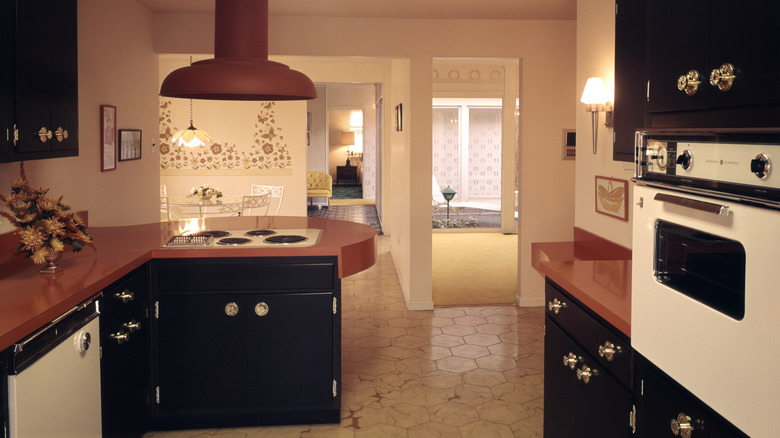
Laminate countertops are made using particle board, paper, resin, and sealing agents. You may know laminate counters as Formica countertops, though that is simply a brand name for the building material. In the 1980s, Formica counters were a fun, colorful callback to many boomers' 1950's childhoods, which were chock full of the stuff. While laminate is still an inexpensive option, it isn't the most practical. It's prone to water damage and heat damage, neither of which are ideal for a kitchen.