

The Restaurant Price Trick That Gets You To Spend More Money
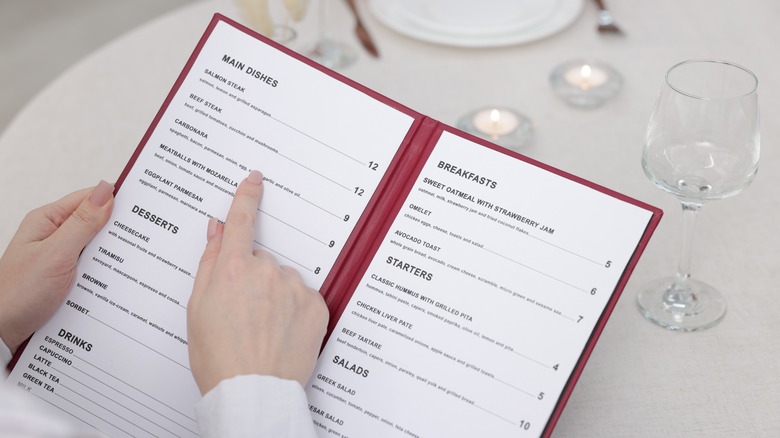
We've all been there: you go out to a top-of-your-price range restaurant, and you have a budget in mind. You know what you want to spend, and you plan to keep an eye on menu prices in an attempt to keep your tab in check. Despite your best efforts, you end up spending significantly more than you intended. What gives?
As it turns out, restaurants use several sneaky tricks to try to get you to boost your check's total, and understanding the psychological tricks meant to increase your spending can help you stick to your spending plan. One of the most common tricks: leaving dollar signs off of the menu. A 2009 study from Cornell University's Center for Hospitality Research showed that diners spend about 8% more when dollar signs are left off of the menu (for example, simply listing a price as "8" instead of "$8"). While it's tough to pinpoint exactly why this strategy works in a restaurant's favor, researchers hypothesize that leaving currency symbols off of the menu may help people forget that they'll be parting with actual, hard-earned cash at the end of their meal.
More sneaky ways restaurants use menu design to ramp up your spending
The lack of dollar signs on a menu isn't the only trick restaurants use to get you to spend more than you originally intended. Color choice is often intentional on menus. For example, the color red has been shown to increase appetite — and orange has been shown to boost happiness, which can make the pang of ordering pricey dishes less painful. Including a red or orange font or embellishment on a menu may encourage diners to spend more than they would otherwise.
Details are everything when it comes to menu psychology, and the difference of a single penny can create serious shifts in diner behavior. Charm pricing, a sneaky pricing tactic used by fast food and quick service restaurants to get you to spend more, is simply offering a dish for $9.99 as opposed to $10. While diners logically know that both amounts are essentially the same, the brain pays attention to the first number in the pricing sequence — the rest of the numbers, not so much.
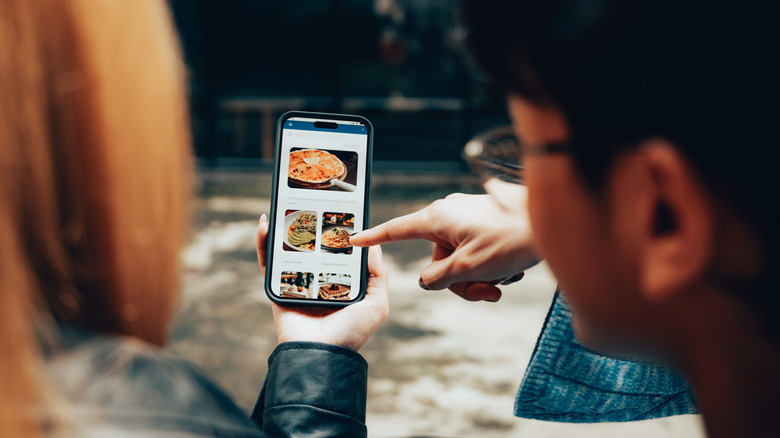
Finally, in a world where more and more of us are ordering through apps and digital delivery services, it's important to be wary of the online upsell. It's super-simple to click the "add to order" button when you're ordering through an app. Since tons of restaurants now require diners to use kiosks or QR code menus with attached apps, being wary of sneaky digital add-ons can help you keep your bill low.