

Two-Thirds Of America's Salmon Comes From These 3 Countries: Can You Guess Which?
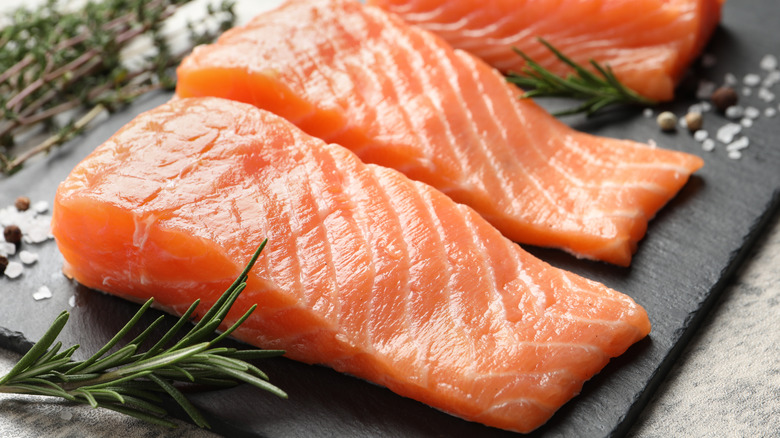
Salmon is a super popular seafood in the U.S., just behind shrimp as consumers' top choice. At least two-thirds of all that salmon comes from other countries. If you're wondering just how much salmon we're talking about, the U.S. imported $5.88 billion worth of the pink-hued fish in 2024 alone. One country in particular is responsible for nearly 50% of that haul. If you guessed Canada or Norway you'd be close, since both are in the top three, but it's Chile that tops the list.
If Chile seems a bit surprising as the leader in providing the U.S. with salmon — it doesn't even have a native salmon population — we need to dig down into the type of fish most Americans eat in order to find that answer. By far, U.S. consumers eat way more farmed Atlantic salmon since it tends to be cheaper (although it's often worth splurging on expensive salmon) and more readily available than wild-caught Pacific varieties (such as coho or Chinook). Chile is the second-largest producer of farmed Atlantic salmon in the world. Again, price plays a part: Chile's salmon is cheaper than that of other countries.
Cost is king when it comes to salmon
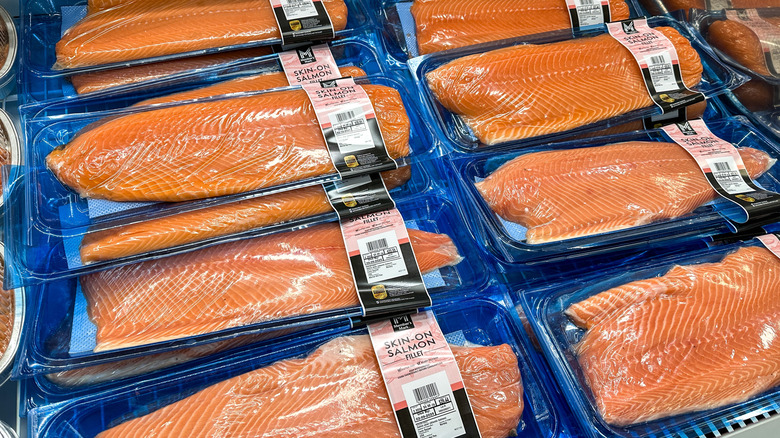
With farmed Atlantic salmon so popular in the U.S., it makes sense that some of the largest producers of this type of fish would supply the country with the product. However, there are other factors, such as proximity and retail price, that play a part. Norway is actually the largest producer of farmed Atlantic salmon in the world, having pioneered the practice in the 1960s. But, due to factors such as climatic conditions and price controls, Chile has been able to get its product to American consumers at a lower price than Norway can. In the case of Canada, proximity also plays a part. It's the fourth-largest producer of farmed salmon in the world, just behind the U.K., but it comes in third place as an exporter to the U.S.
While farmed salmon may be king in the U.S., its lower cost may come with some potential problems from salmon farming, including the overuse of antibiotics (a problem in Chile). These get released into the environment and can remain in the fish's flesh. Farmed salmon can also be exposed to other contaminants, such as dioxins (chemicals associated with various negative health impacts). Other differences between farmed and wild-caught salmon include farmed salmon being higher in fat and lower in certain minerals than wild-caught salmon. Still, fish farming is on the rise, as is the taste for salmon. Chile, Norway, and Canada should continue to feed consumers' desire.