

8 Mistakes Everyone Makes When Cooking Pot Roast For The First Time
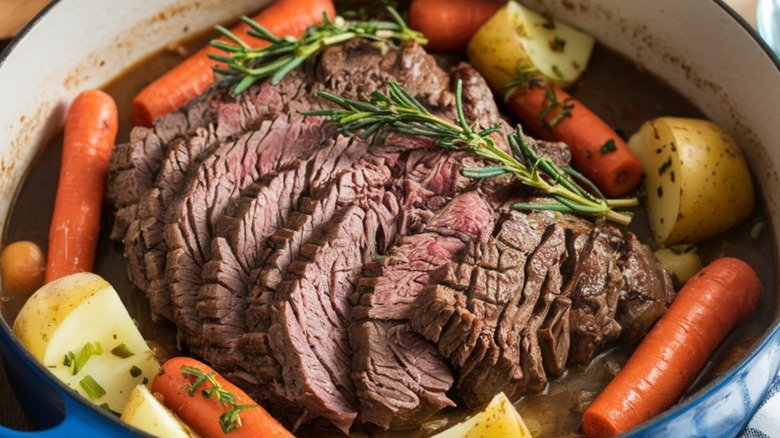
The holiday season brings a craving for cozy, warm meals: homey casseroles, steaming soups, and delectable pot roasts. While these meals may take a little bit of time to prepare, they're always worth it in the end, especially when they're enjoyed by the fire with a nice scented candle burning.
Some people may not like making pot roasts for dinner because of the amount of time they take to prepare and cook, or simply because they never meet expectations after all the work put into them. But like most meals, this hearty dish is quite customizable. Don't be overwhelmed by the steps and list of ingredients; once you take a moment to learn about the few small nuances that come along with the process, you'll become an expert, and this classic meal will become a staple in your rotation for chilly evenings.
Pot roasts are perfect for winter, but are they being prepared to reach their full potential? Here are some tips to make sure all of that time and work doesn't go to waste.
1. Mistake: Choosing a roast that's too big
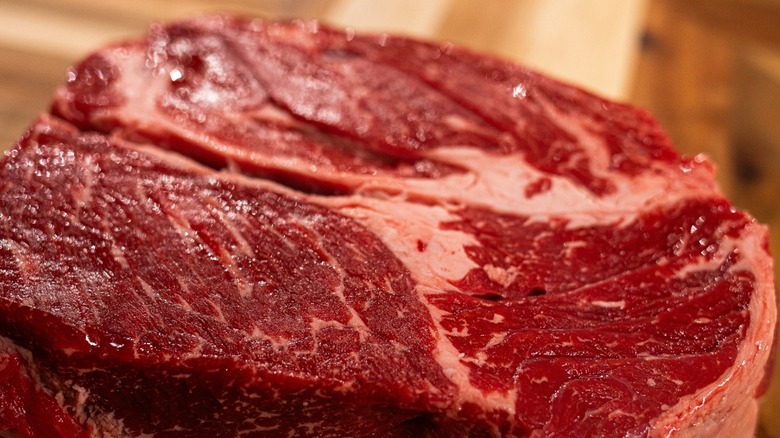
The first part of the pot roast cooking process is gathering the necessary ingredients at the grocery store. While you're collecting your veggies, seasonings, and liquids, your mind might be on the most important item — the meat.
While the specific cut itself is crucial (to get the best results for your roast dinner, use a bottom round or chuck roast), one factor you may not be considering is the size of the roast itself. You actually may be overestimating the amount that you need; using a slab of meat that's too large could lead to pulling an undercooked roast out of the oven after hours of anticipation. This also leads to a cut that's not so easy to shred, and one of the best parts about a pot roast is this tender, falling-apart reward.
For a normal family dinner, a 2-3 pound roast should be more than enough. This amount will go quite a long way, but if you're feeding a crowd, it's smart to size up. Just be sure you adjust the cooking time accordingly.
2. Mistake: Peeling your vegetables
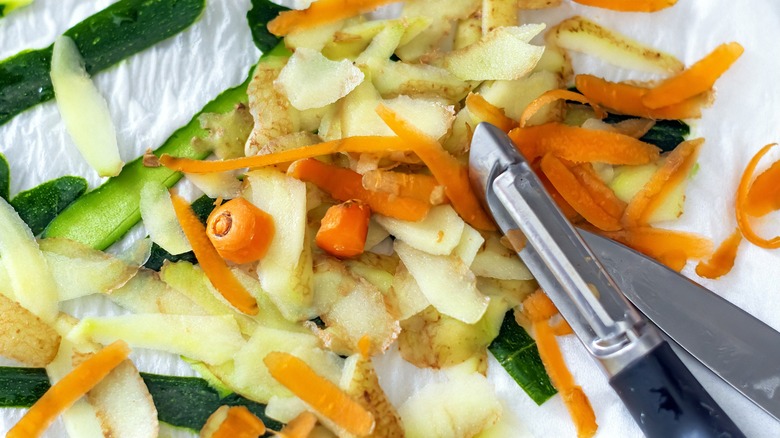
Prepping is the most time-consuming part (that's done by hand) of making a pot roast. There are several vegetables to get ready for cooking, such as onions, potatoes, garlic, and carrots. Although many cooks' first instinct can be to peel the skin off of the carrots and potatoes, it's actually not necessary.
If it's your preference, there's no harm in peeling these vegetables. But like many rules in cooking, this isn't set in stone. The outer layer can be an extra source of nutrients, containing multiple different vitamins, and it's also one less step in your prep. So basically, if you're in a rush or just simply can't be bothered, it's totally fine to leave the skins and merely chop your carrots and potatoes into bite-sized chunks before cooking.
Like always, however, be sure to thoroughly wash your vegetables before cooking if you choose this method. It's recommended to gently scrub them with a brush and be careful to keep your workstation sanitized to avoid pollution from other ingredients.
3. Mistake: Omitting liquid if you're using an Instant Pot
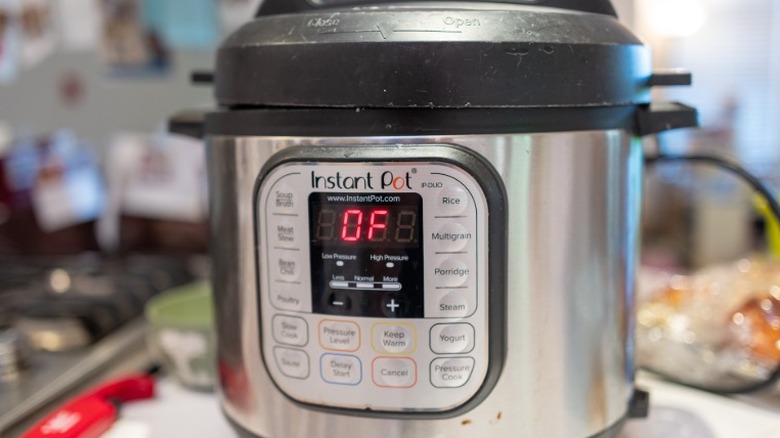
There are many tried-and-true ways to achieve a great pot roast, such as utilizing Crock-Pots and Dutch ovens. One method that's great in a pinch and still produces excellent results is using a pressure cooker or Instant Pot.
Anyone who frequents pressure cookers is familiar with the heart-stopping "BURN" sign. Adding liquid is essential because not only does it create an environment that allows the device to produce adequate steam, which is required for a pressure cooker to function, but it also helps to avoid any unfortunate charring at the bottom of the pot. Many pot roast recipes don't require extra liquids, but it is absolutely vital when using an Instant Pot.
This part doesn't have to be boring or bland. You can use water, broths, or even something more adventurous like alcohol; the latter of these provides a nice boost to the seasonings you've already added. These extra liquids aren't to a dish's detriment, but instead can provide moisture and extra flavor to the final product.
4. Mistake: Forgetting to season the meat
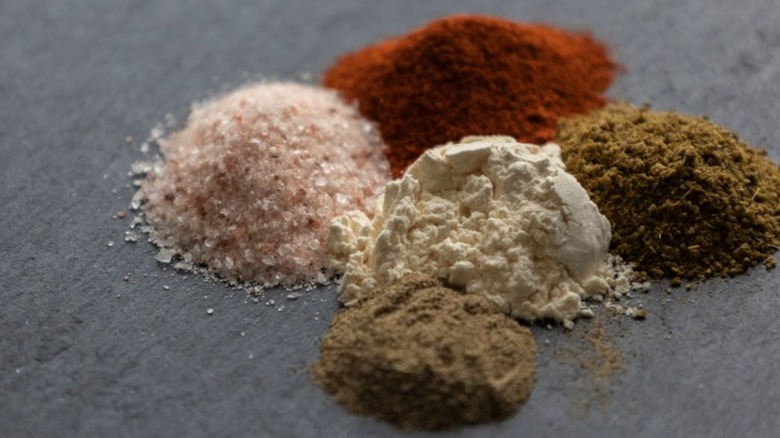
You've got plenty of ingredients in your pot, so you'd think that surely all of these flavors working together will be enough for the final product. But in reality, you might be forgoing a very important part of the process.
You may be familiar with the technique of seasoning each step while making a meal, and the same thing applies here. In order to seamlessly incorporate many great flavors into the dish, you should make sure to season the raw meat before cooking. You're eating every part of the dish, so why wouldn't you want it all to taste great?
It's best to be simple with this step — use basic seasonings such as salt, pepper, garlic, onion powder, and paprika. These flavorings provide a good base to accompany the delicious natural flavors that come with the vegetables and broth. You can also add extra pops of flavor, such as a splash of Worcestershire sauce just before placing the roast in the oven.
5. Mistake: Not searing the roast before cooking
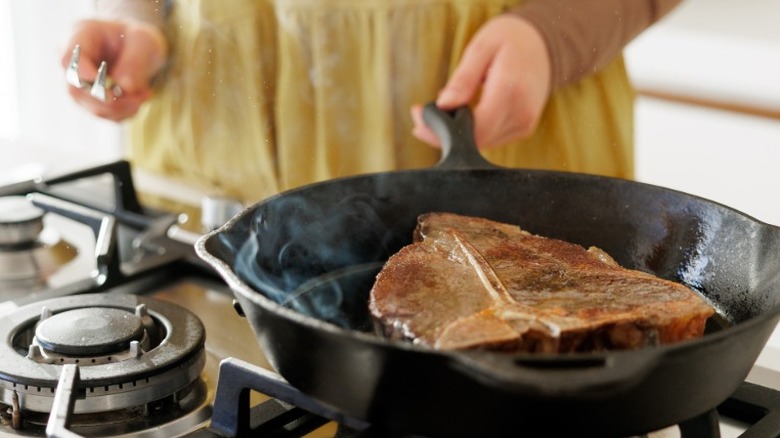
You're nearly at the finish line — you've prepped all ingredients, you've gathered all necessary kitchen items, and you've preheated the oven. All you've got to do now is assemble everything.
But wait! Before you put all of your lovingly prepared foods together to roast, it's important to incorporate one crucial step. Although it may seem unnecessary, thoroughly searing the meat before putting it in the oven (or other apparatus) is a vital phase in the cooking process. This helps to lock in all those flavors before cooking the dish low and slow in order to produce a tender, juicy pot roast. It may take a few extra minutes, but searing the meat is incredibly beneficial to the end result.
Make sure you've blotted the cut dry before adding anything to ensure a nice crust in the end. This is an important part of braising, which is the most well-known and commonly used method for pot roasts.
6. Mistake: Not utilizing the leftover juices
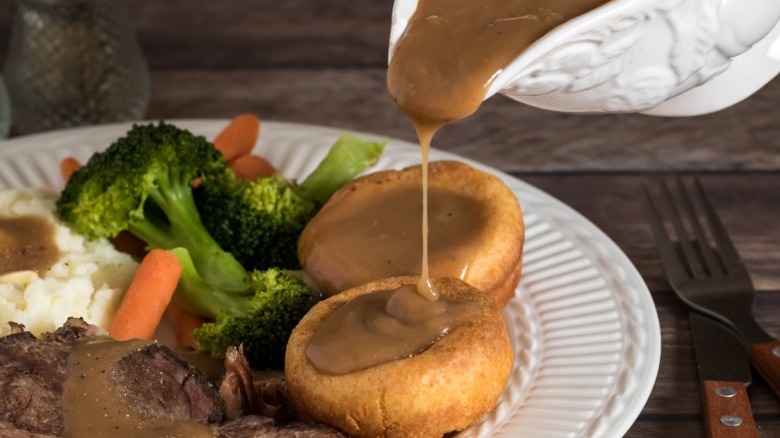
Once the meal has reached the end of the cooking process, you'll find plenty of juices left over. However, try not to be distracted by the perfectly cooked solid ingredients. One of the most rewarding aspects of a pot roast is the remaining goodness found underneath. The liquid in the bottom of the pot is pure flavor — don't get rid of it! Thicken it up, season it, and make a delicious gravy for your meal.
It's not likely that you'll need to add more broth at the end; instead, you'll want to add thickening agents to create a thick, tasty, and smooth finishing product. Create a slurry using one part cornstarch and one part water to add to that extra liquid. Once you've added your extra seasonings such as salt, pepper, and garlic powder, you should turn the heat down to low and simmer for a bit until the mixture has gotten slightly thicker (it will get even more so after cooling). It's best to use a whisk for this process in order to remove any clumps and ensure you end up with a silky gravy.
7. Mistake: Forgetting to trim the fat enough
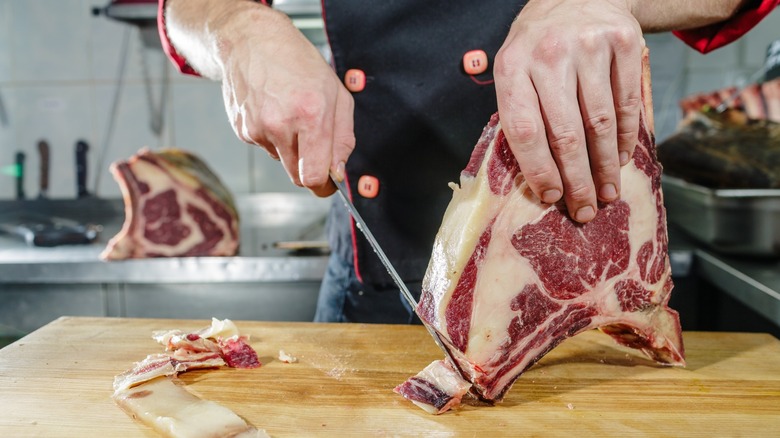
Once this delicious meal is finished, and it's time to shred the meat, cooks should be mindful about which parts of the roast they allow to make it to the plate. Many meats have leftover fat after cooking, and chuck roasts are no exception. While the fat does provide that deep flavor, you probably don't want to bite into it, so be sure to discard it before serving.
One way to help with this process is to trim any excess fat from the roast before starting. There is typically quite a bit on the surface to begin with, and it's easy to use a knife to trim it off while the meat is still raw. If you'd prefer to wait until after cooking to remove the fat, shred the meat completely and separate the bits of fat from the good, tender meat that you'll serve with the vegetables.
If you want to avoid dealing with this extra step altogether, you can choose a cut that's less fatty. Bottom round and brisket tend to have less fat content than a chuck roast, so shop according to your preferences.
8. Mistake: Making it more complicated than it needs to be
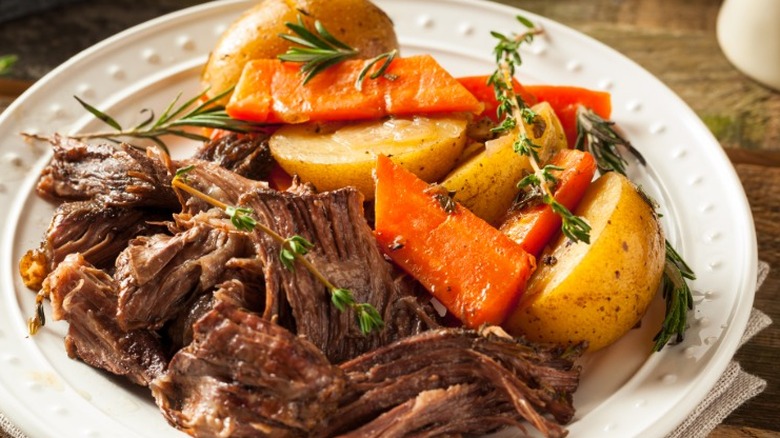
The best pot roasts are filling, delicious, and straightforward. They don't need to be complex or overly expensive, as the classic methods and ingredients are excellent on their own. The results are just as tasty when you keep the recipe simple, so it's not necessary to spend a fortune on extras or add stress to dinnertime.
Like most pot roast recipes, including the Yankee pot roast, you can complete nearly every step in the process using just one apparatus (Dutch oven, Crock-Pot, etc.). Once you've prepared all of the ingredients, they can soon be added to the pot and left to work their magic in the oven. You don't even have to use a separate dish for the gravy — just add heat accordingly to the leftover liquids once everything is done and continue the steps like the ones outlined above. At the end of the day, creating a delectable and easy dinner for the chilly winter weather is actually quite straightforward (and enjoyable).