

Butter Or Oil: Which Fat Gives You The Best Cookies?
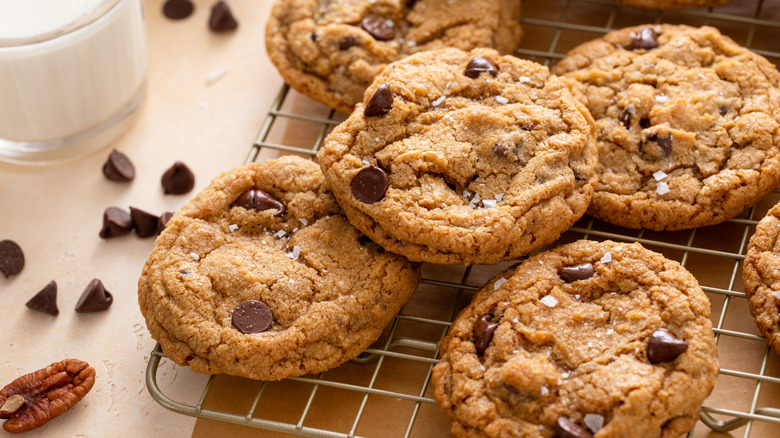
Whether you prefer chocolate chip cookies over snickerdoodles, or crisp crinkle biscuits over gingerbread men, one thing is certain: cookies are delicious. What's far less certain is the process of making them. Preparing a batch of cookies often involves a seemingly endless list of choices. Chef Jacques Torres, for example, swears by blending bread and cake flour for his sweets. Other bakers mix an extra egg yolk into their dough, a step that leads to the chewiest, gooiest cookies. Among all these cookie quandaries, one question remains surprisingly unsolved. Butter or oil: Which fat gives you the best cookies?
For most cookie recipes, you can use either butter or oil as the primary fat component, and both will yield a good result. However, there are some clear differences between the two, and, depending on your preference in taste and texture, you might prefer one over the other. Butter will generally yield richer-tasting cookies with a fluffier texture, while oil tends to produce moister cookies that have a flatter structure. To better under which fat works best for your baking needs, let's explore the full differences between oil and butter.
What butter brings to your recipe
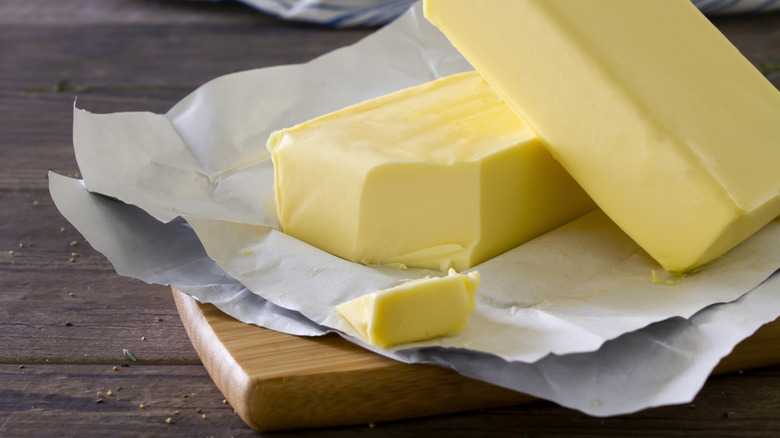
There are almost as many cookie recipes out there as there are grains of sand, ranging from crispy to chewy, cream-filled to powdered sugar-tossed. One ingredient nearly every one of these recipes has in common is fat. (With the exception of meringue, which is naturally fat-free, and easy to mess up while baking).
Fat plays a crucial role in baking. It keeps baked goods moist, adds flavor, and serves as a barrier to prevent gluten from forming in flour-based recipes, which in turn, keeps your cookies tender. So, how does butter hold up to these tasks? It passes with flying colors. Not only does butter bring a kick of flavor to cookie recipes, but it also gives cookies a great texture.
Butter is the backbone of many classic recipes, such as shortbread, which derives most of its flavor from butter. Unlike oil, which is pure fat, butter also contains water. The amount varies, but butter is usually about 16% to 18% water). That liquid turns to steam as butter melts, which helps cookies rise. So, if you want a fluffy, leavened cookie, butter gives you a clear advantage.
How oil stacks up

Unlike butter, cooking oils come from a variety of sources, including coconuts, olives, and rapeseed, to name a few. These oils have different components and vary in flavor. Oils are also made up entirely of fat. For this reason, they can help you make dense, moist cookies, but may also produce flatter results. Oils such as olive oil and vegetable oil are unable to "cream" with sugar, which is an essential part of cookie making. This process brings in air bubbles that give cookies volume. Without this, your sweets may fall flat or have issues with texture.
Additionally, oil will lack the signature taste of butter. Neutral oils, such as vegetable or canola oil, will bring little to no flavor to your cookie, which can be a positive or negative depending on your recipe. Other oils, such as coconut and olive oil, can give your cookies a unique flavor that isn't the same as butter, but can be equally delicious. Olive oil will give a floral note to your cookies, while coconut oil will give a slightly sweet taste.
If that is something you're looking for in a cookie, then oil might just work better than butter in your recipe. Oil is also a great choice for anyone who is lactose intolerant, vegan, or simply trying to avoid dairy. When thoughtfully matched to a recipe, oil can create a cookie that's perfectly tailored to your own personal palate.