

Why You Might Want To Inspect Raw Fish In Front Of A Light Before Making Sushi At Home
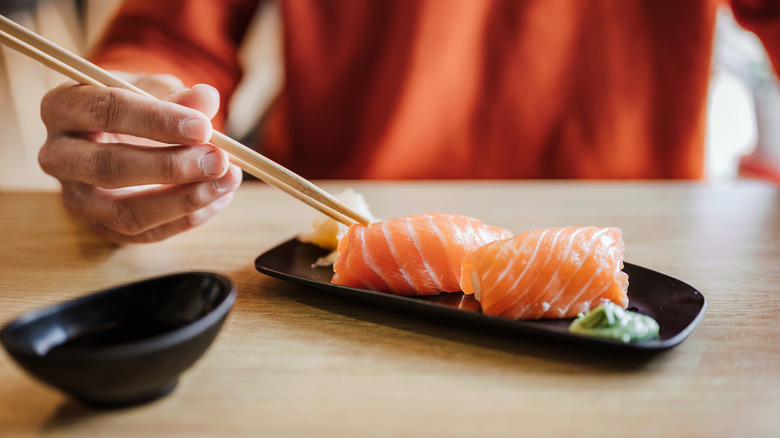
Choosing the wrong rice, overdoing the wasabi, using day-old nori... there are plenty of common mistakes that will ruin homemade sushi, but there's one that takes the cake. Before you start slicing up raw fish for sushi or sashimi at home, it's a smart move to shed some literal light on your dinner (queasy readers, you might want to brace yourselves here). Sushi parasites are an unfortunate reality, and it's important to check that your fish is parasite free before you start making spicy salmon rolls at home (pro tip: "sushi grade" isn't an officially regulated food safety category, so you'll want to double-check your fish no matter how high-quality it may be). Thankfully, checking for parasites is as simple as taking a moment to glance "through" the fish while holding it up to a light source.
Sushi worms — also known as herring worms or Anisakis — are increasingly abundant in fish sold for sushi. To make sure the fish you're using to prepare at-home sushi is safe, you'll need to "candle" it. This term simply means to hold each piece of fish up to a bright light. This allows you to look for herring worms in the fish, as the light shines through the slightly-translucent flesh. You'll know a herring worm when you see one — they're small, colorless worms that are often in a coil shape. They're small, but not so small that you'll struggle to see them. If you develop anisakiasis — meaning, you ingest the Anisakis parasite and become sick — your symptoms may vary in intensity (though they are usually similar to those of food poisoning), but the parasite can't survive in the human body for long.
More tips for making safe sushi at home
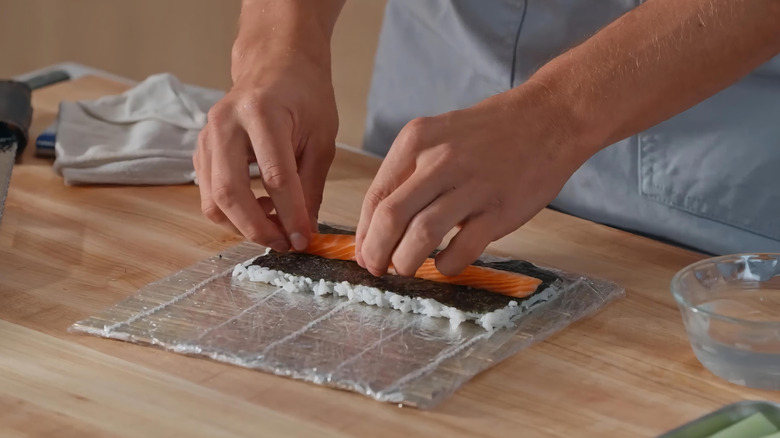
Checking fish for worms isn't the only thing you'll need to keep in mind when it comes to preparing safe sushi. Making sushi at home is a great way to unleash your culinary creativity, but it's important to keep safety first. You'll want to be sure to keep your fish in the fridge right until it's ready to be prepped and consumed, as this will keep bacteria from spreading through it (you can also freeze the fish at minus 4 degrees Fahrenheit for a week or so to kill any unseen parasites).
Fish isn't the only safety concern when it comes to sushi — you'll also want to make sure you're preparing your rice in a way that inhibits the growth of pathogens. Using vinegar to prepare your rice — as is recommended in many traditional sushi recipes — can help. Be sure to refrigerate any unused rice promptly, and use it up within a couple of days. After you've made your sushi and eaten your fill, you'll want to be sure you don't let any leftovers hang around too long. Sushi made with raw fish can sit out for an hour or two, then you'll need to put it in the fridge, where it can sit for about a day. Making sushi at home can be well worth the effort, and following proper food safety tips can help ensure you get to enjoy the fruits of your sushi-rolling labor.