

Using Meat You Haven't Drained Can Ruin Soup Texture But Luckily There's A Fix
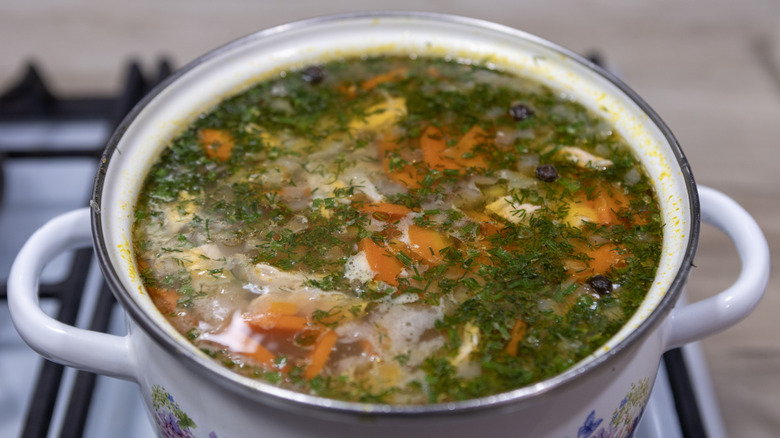
Starting with the first chilly breeze in September, many home cooks rely on the warm, flavorful comfort of soup to stay toasty inside and out. Plus, with recipes like four-ingredient slow cooker potato soup and tomato bisque made with jarred marinara sauce, soup becomes an easy and delicious weeknight go-to meal that's also incredibly nutrient dense. Many parents know that little ones who usually reject their veggies won't hesitate to scarf down carrots and celery in a hearty bowl of homemade chicken noodle.
That is, of course, as long as this dish is made properly. Making soup is something of an art, and one of the most common mistakes you can make when cooking soup is to skip draining your meat after it's roasted or browned. In a slow-simmered stew, the fat from undrained meat has time to emulsify and sink into the thick sauce. In a thinner, brothy soup, however, the fat has nothing to sink into. Instead, it rises to the surface of your dish to create a greasy film that's not only unpleasant to eat, but it sucks much of the flavor and seasoning from your soup as well.
To remedy this without wasting all that luscious, flavorful fat, reserve the drippings when you drain your meat and use it to saute your soup veggies — which is a crucial step in the soup-making process. There's also a handy way to remove excess fat from your soup if you forget. All you need is ice and a metal ladle.
Skimming excess grease from your soup without sacrificing flavor
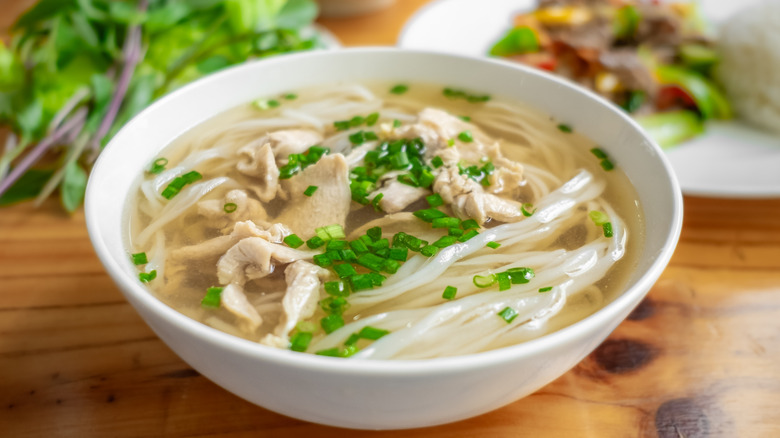
Though you can remove some excess fat from your soup with paper towels or by skimming with a spoon, the most effective method uses a little bit of science. Putting a few ice cubes into the bowl of a metal ladle makes that ladle very cold. When you skim the bottom of the ladle over the surface of the soup, the fat cools to solid form very quickly and clings to the metal. Be sure to clean the ladle with a paper towel between skims, replacing the ice with fresh cubes if it starts to melt. You should only need to pass the ladle over your soup a few times to pick up all the excess grease.
Of course, as mentioned, fat carries flavor, meaning skimming off the excess grease also removes a good amount of seasoning from your food. After you've removed the oil slick from the top of your soup, taste it to see what flavors need to be enhanced. An additional shake of salt and pepper alone can do wonders, as can a touch of heat or acid, such as a sprinkle of hot paprika, a squeeze of lemon, some ACV, or red pepper flakes. All of these things will brighten your soup's flavor almost instantly. Flavor bomb ingredients like bullion cubes or miso paste can also bring your dish back to life by infusing it with the rich umami you had to remove with the excess grease.