

The French Cooking Method For The Hands-Down Best Meatballs

Meatballs are extremely versatile. But whether or not these meaty snacks are subpar or rave-worthy usually comes down to two determining factors: taste and texture. If you're looking to swap the best frozen meatballs for homemade, there's one crucial technique you should follow when preparing your own signature recipe. Beyond mixing your meat-of-choice with raw egg and classic seasonings like onion, garlic, and parsley, try incorporating a panade for ultra-tender results.
If you don't have milk to make your meatballs, there's an easy fix: A panade is made of bread and water, and may be more effective. Originating from France, the word panade translates to a mashed, bread-like substance. The mixture can be used to make a simple casserole-style meal similar to stuffing, or work as a binding agent in recipes where retaining moisture is key. In meatballs, a panade is kneaded into the meat to keep it from drying out while cooking. The starch from soaked bread or breadcrumbs holds onto any moisture that would otherwise cook off. The result is juicy meatballs that are soft and easy to cut through with just a fork. And fortunately, making panade is super simple and customizable, so you can make your meatballs just the way you like.
Making panade for the best meatballs at home
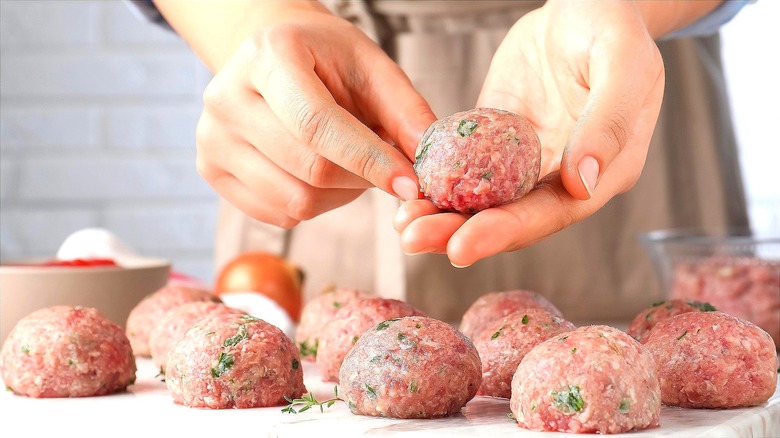
To successfully apply this French technique to your meatball recipe, start by combining your preferred starch with a small amount of liquid. You can certainly use conventional bread crumbs, or swap out panko breadcrumbs for a lighter, crisper alternative. For added flavor, use seasoned breadcrumbs or tear up a slice of your favorite bread. When it comes to choosing the right liquid, broth, water, buttermilk, and even red wine are all solid options, depending on the flavor profile you're going for.
While there are several variations, the key to making panade is getting the ratio of ingredients right in your meatballs. Many chefs suggest starting with roughly equal parts bread and milk or broth, though some recipes use more starch for a heartier texture. Ultimately, the mixture should form a spoonable paste. If it's too firm or soft, you can always adjust with a little extra liquid or bread as needed.
Once you incorporate the paste into your meat, it's important to avoid a common mistake that can ruin meatballs by over-mixing. This can lead to an unappetizing, tough, and dense texture. There are also a few different ways to prepare and serve meatballs. While pan-frying or roasting works, the best way to enjoy meatballs made with a panade is to simmer them gently in a sauce on the stove. Cooking them low and slow brings out their tender texture. The sauce will seep into the crevices, giving you moist and flavorful meatballs every time.