

The Dead Giveaways Your Overripe Bananas Are No Longer Safe To Eat
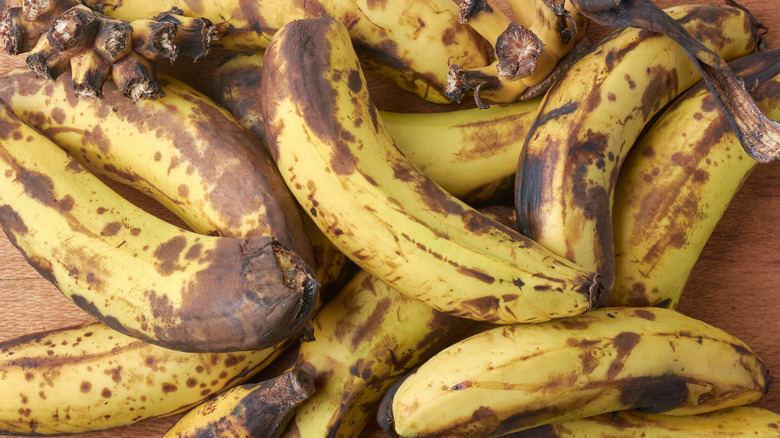
Shopping for produce can often be a prime example of the adage "don't judge a book by its cover." What appears blemished and bruised on the outside may harbor a perfectly ripened inside, and bananas are no exception. There are a number of ways to use overripe bananas, and as a matter of fact, overripe bananas are actually the trick to better-tasting banana bread. However, there is a distinct line between a banana being overripe and mushy versus it being unsafe to eat. To provide insight into what to look for when distinguishing between the two, we spoke to Megan McCarthy, chef at Atlanta Botanical Garden's Edible Garden. She is also the force behind Healthy Eating 101, and is a Have A Plant ambassador for The Foundation for Fresh Produce, a resource promoting fresh fruit and vegetable consumption for all.
According to McCarthy, there are some telltale signs that clearly indicate that your overripe bananas are no longer safe for consumption. "If you notice mold, a sour or fermented odor, or a banana that's leaking liquid, it's time to toss it," she informs, while emphasizing the importance of letting your senses guide you when deciphering if any food is safe to eat. Just like how you should avoid strawberries with a notable, off-putting odor, she advises steering clear of bananas with any funky smells, which should be sent straight to the trash or a compost bin if you have one. To avoid throwing out bananas that don't have these signs and are safe but too ripe to snack on, channel your inner baker or freeze the peeled bananas and blend them into smoothies.
Pay attention to external cues
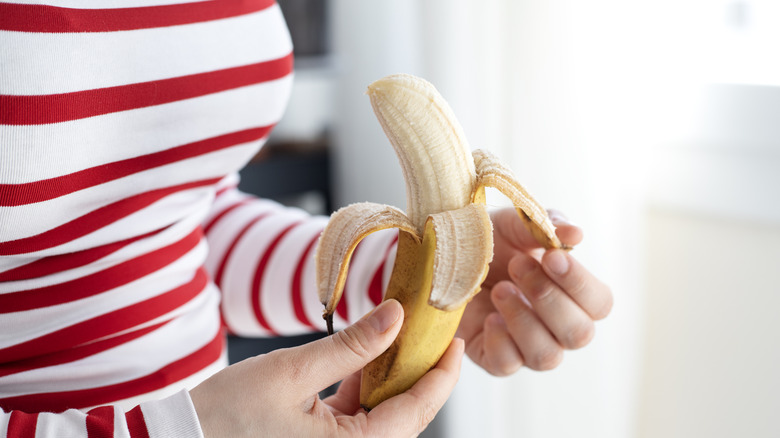
Produce with even the slightest bruise or blemish often gets tossed into the "do not sell" pile at grocery stores, even if it's still safe for consumption. Plus, picking these so-called "ugly foods" can be a handy money-saving hack when shopping for groceries. Bananas are high among this list of fruits and vegetables that are commonly wasted, sometimes because of just a few extra speckles and markings on the peel's surface. Just because the fruit isn't necessarily scoring points for visual aesthetics, it can still make for a perfectly fine inclusion in a fruit salad, snack, or however you choose to enjoy it. Laying to rest any concerns about eating bruised bananas, Megan McCarthy says, "Bruises are just bananas being bananas. They bruise easily because the cells are delicate, and when those cells break, the flesh turns soft and brown. It's harmless and totally safe." That said, some might still be averse to the texture of the bruised portions. If that sounds like you, just scoop out the bruised part and enjoy the rest.
Sometimes, you may also notice little white spots on the stems of the banana. McCarthy explains that these specks tend to be dried sap or just natural sugars that crystallize during the ripening process — aka they are entirely normal and the fruit is safe to eat. On the other hand, if these spots appear fuzzy or dust-like, it is likely mold. Does that mean you should toss out the whole banana? You could just remove the affected area and eat the rest if your senses approve. Otherwise, definitely err on the side of caution and toss it or send it to compost.