

Cut The Richness Of Baked Treats By Adding This Sweet-And-Sour Condiment

Have you ever been in a position where, once you've successfully baked up a delicious treat, a taste test reveals that the result is a tad too rich to taste? It could be too sweet, dense, and decadent that more than a couple of tiny bites could be overwhelming. While that's not the worst thing to happen to your baked goods, you may want something lighter on the palate. Tamarind paste is sweet and tangy, and it's the same pantry ingredient that's key to making the best pad Thai and great, flavorful marinades. Owing to its high tartaric acid content, tamarind paste brings a sharp acidity that balances out the fat — the part that creates richness — in baked goods. Similarly, its sour flavor complements the sugary sweetness of desserts.
Tamarind is a popular ingredient in South and Southeast Asian as well as Caribbean cuisines, featured in the likes of soups, stews, curries, and more. It is also a prominent flavor in unique Mexican candies and desserts. You can typically find tamarind in a number of forms, especially in Asian grocery stores, including whole pods, a compressed block of pulp, jars, or packets of tamarind concentrate. The issue with whole dried pods or blocks of pulp is that they contain fibrous chunks and pieces of seeds, so once reconstituted in hot water, you need to strain them before using in your recipe. For easier, more versatile applications, tamarind paste is an ideal choice for your baked goods.
How to incorporate tamarind paste into your desserts
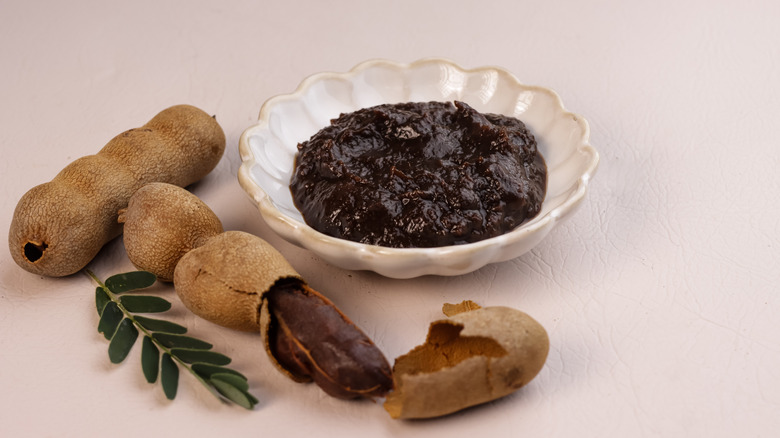
When turning to tamarind to help bring more balance to baked treats, there are a few important things to keep in mind. For starters, the flavor and ripeness of the tamarind paste will vary depending on the brand you use. Make sure to taste as you go, so that its sourness doesn't completely overpower the dish. The tasting notes of tamarind offer a complex combination of sweet, sour, fruity, and earthy undertones that can help impart depths of nuanced flavors to the likes of caramel sauces and cut through the heaviness of dense desserts like brownies.
In order to achieve a perfect balance of flavors for a tamarind-based glaze, consider starting with 2 tablespoons of tamarind paste per cup of confectioners' sugar (or another sweetener). Tamarind paste can be incredibly viscous, so if you're making a glaze, it helps to thin down the consistency with a hot liquid like water or milk and sweeten accordingly. You can then drizzle the finished glaze over cakes or blend it into a frosting. Alternatively, you can bake tamarind paste directly into the dessert by combining it into batters for cakes and sticky puddings, or into the fillings for tarts and pies.