

The Temperature Trick You're Overlooking For The Perfect Pie
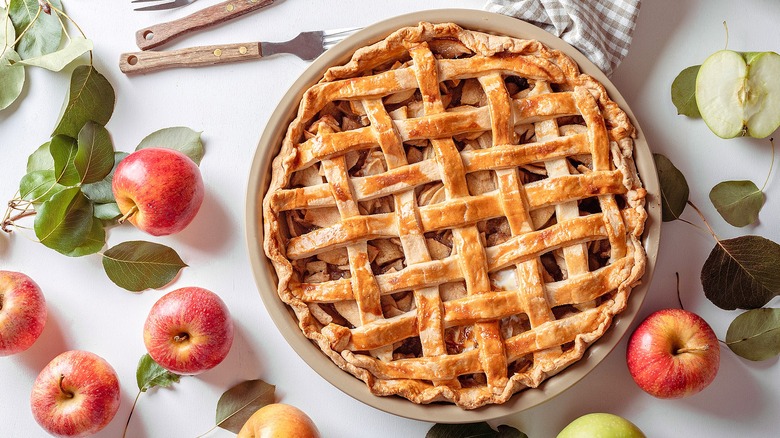
When you make a homemade pie, the goal is to create a delicious-tasting confection with a perfectly flaky crust. Since you know preparing this dessert from scratch takes a concerted amount of effort, why not follow one crucial tip to ensure you get quality results every time? Keeping your butter cold during preparation is one of the most important pie-making steps you can take.
As a matter of fact, among the many expert tips every baker needs for perfect pie dough, maintaining the temperature of your ingredients and your environment always leads to better results. Assembling your pie dough with cold butter, as opposed to room temperature, leads to an ultra-tender crumb.
During baking, cold butter doesn't just melt; it steams to create perfectly flaky pastry. That's because bits of cold butter stay suspended in your dough before baking, and as they heat, they release steam rather than simply melting. This steam forms air pockets, which puff up the dough and create distinguishable layers of crust.
To ensure your butter stays cold every time, prepare your ingredients in advance — one of many baking tips Ina Garten swears by. Before assembling your pie dough, pre-dice or grate your chilled butter and keep it stored on a plate in your fridge. This way, your butter is extra cold during preparation, helping your dough layer perfectly.
More ways to maintain the temperature of pie dough
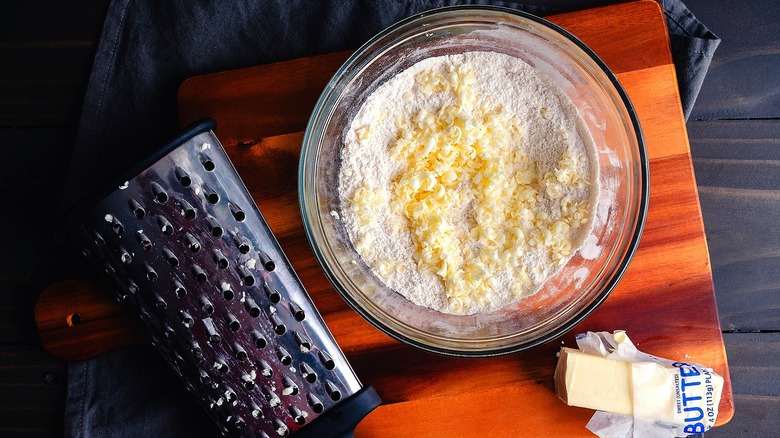
To further ward off the butter mistake that's keeping you from the flakiest pie crust, there are a few additional steps you can take. For starters, don't remove the butter from your refrigerator until all other ingredients in your recipe have been pre-measured. You can go one step further and pre-chill your hardware. A day before mixing, place your mixing bowl, rolling pin, and even measuring cups in your refrigerator or freezer. This way, your pie dough has a greater chance of staying cold in the midst of all the forming and rolling.
It's also important to pay attention to the temperature of your home. If you're making a pie in the summer, crank up the air conditioning. In the winter, keep the heat low or turn it off the night before baking. Once you've successfully prepped your kitchen, you can then shift your efforts to ensure your dough stays nice and cold during preparation.
When you're ready to incorporate the cold butter into the dry ingredients, work quickly and try not to over-handle your dough when mixing. If at any point you feel like your pastry is becoming too warm, place your dough back in the refrigerator or freezer for 15 to 20 minutes. To ensure the butter in your recipe stays cold from start to finish, once your pastry has been mixed, rolled, and fitted into your pie pan, cover your crust and place it in your refrigerator or freezer before baking. Keeping your kitchen and ingredients cold is a key factor in making a show-stopping pie with a tender and flaky crust.