

Why Thrifted Dishware Could Actually Be Dangerous To Use (If It Was Made Before 1971)
We may receive a commission on purchases made from links.
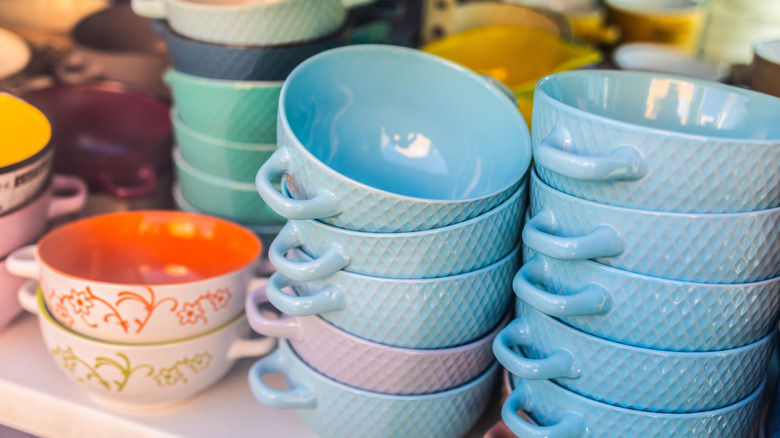
Whether it's to try and save money or find unique vintage treasures, everyone's about thrift shopping these days. For savvy shoppers, dishware and cookware is ripe for thrifting, especially when you score a "holy grail" find like jadeite dishes. However, some vintage items that look beautiful and inviting are unfortunately unsafe to use in the kitchen. That's because much of the dishware made before 1971 contained dangerous levels of lead via paint.
In 1971, the Food and Drug Administration (FDA) set out to reduce lead poisoning incidents by greatly restricting the amount of lead allowed in paints that children could conceivably come into contact with — paints for items like pencils, toys, interior walls, and, of course, dishes. By 1978, the federal agency had officially banned lead-based paint in homes. But prior to those restrictions, it was common for dishware to be decorated with lead-based paints or glazes, including pieces made by some of the most beloved vintage brands (yes, even the sought-after vintage kitchenware brand everyone loves to thrift, Pyrex).
If you do end up thrifting a beautiful set of mid-century ceramic plates, you should probably pause before integrating them into your regular dish rotation. Lead exposure is caused by ingesting or inhaling the toxic metal, and microscopic amounts can still be dangerous to ingest, especially to children. Lead from dishware is known to "leach" into food, even if its surface isn't cracked or chipped, though worn dishes leach more.
How to know if your thrifted dishes are safe to use
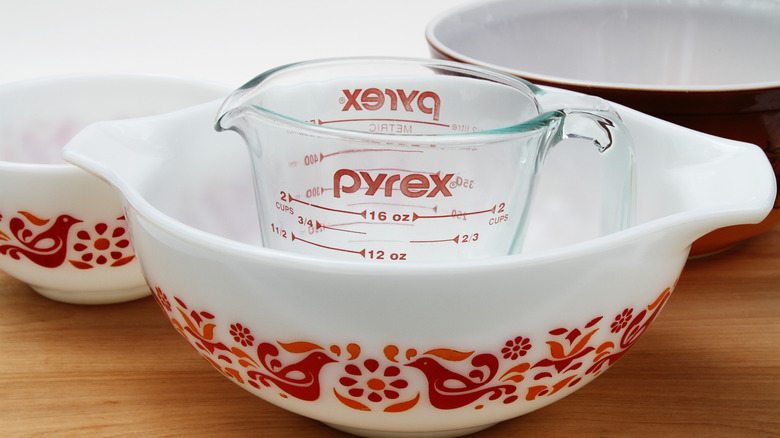
Can't bear to part with the gorgeous '60s-era dish set you found at the thrift store? We understand. Fortunately, there are a few ways to check if your vintage dishes are safe to eat off of, or if they should be relegated to decorative use only. First, keep some general guidelines in mind. Brightly colored paints, especially yellows, oranges, and reds, are known to typically have cadmium and lead. Externally decorated glassware made outside the U.S. has also been found to have high concentrations of the toxic metals. Homemade dishware and any items that are visibly cracked, chipped, or worn are big thrifting no-no's as well, since they can be less regulated or more prone to leaching.
Many buyers would love to skip the guess work and actually test their vintage dishes for lead. You can do so using a home testing kit like this one from AssuTest, but bear in mind that the reliability of the results is extremely limited. Home testing kits only test for the presence of lead, not the concentration, and are usually designed to test house paint, not dishware. They're also prone to false results. The only truly accurate way to test your thrifted dishes for lead is to use a professional lab, a costly and time-consuming process that undermines the point of thrifting in the first place. If you're concerned about lead in your vintage kitchenware, the safest choice is to use it as a creative way to decorate your kitchen shelves — not as a functional dish.