

The Types Of Fish You Shouldn't Buy To Avoid Mercury
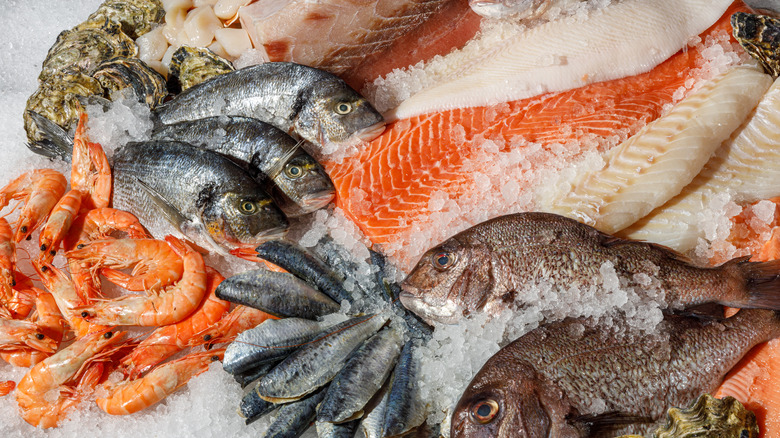
Seafood can be an incredibly healthy choice. Packed with protein and healthy fats, many types of saltwater and freshwater seafood can support a healthy lifestyle without requiring you to sacrifice taste. That being said, it's important to watch out for mercury levels in seafood. While all fish contain some level of mercury, predatory fish like tilefish (which is the common fish with the highest consumable mercury levels), swordfish, king mackerel, and shark (it's a super controversial food that's banned in many countries, anyway) are loaded with the stuff, and it's best to avoid them altogether.
While enjoying seafood in moderation is unlikely to cause problems, eating it in excess may lead to mercury poisoning in some individuals. Signs of mercury poisoning in adults can include hearing issues, vision changes, and muscle weakness. Excessive mercury intake from eating seafood can be especially harmful for the neurological systems of developing fetuses and young children. The FDA recommends no more than three servings of low-mercury seafood per week for pregnant women, and kids aged 11 and under should stick to two low-mercury servings of seafood per week.
Why certain fish have sky-high levels of mercury

If you love seafood, it's normal to be nervous about your mercury intake. Understanding why certain varieties of fish have higher mercury levels than others can help you make smart choices. Mercury builds up in our bodies over time, and the same thing happens with fish. Predatory fish eat a diet heavy in their smaller seafaring friends, resulting in an increase of mercury in their bodies. When you eat predatory fish, you're not just getting the mercury that exists in that fish — you're also getting the mercury that existed in all of the fish that predator has ever eaten.
Thankfully, there are steps you can take to continue enjoying your favorite from-the-sea dishes while still being mindful of your mercury intake. First, you may want to consider choosing farm-raised options. Farm-raised fish typically have lower levels of mercury than wild-caught fish, making it a good choice if you're concerned about mercury. The type of seafood you choose matters. Sea creatures that don't eat other fish — like shellfish — generally have lower mercury levels than other types of seafood, as well. You can also reach out to your doctor for guidance on mercury intake.