

What Makes A Seafood Market Display High Quality
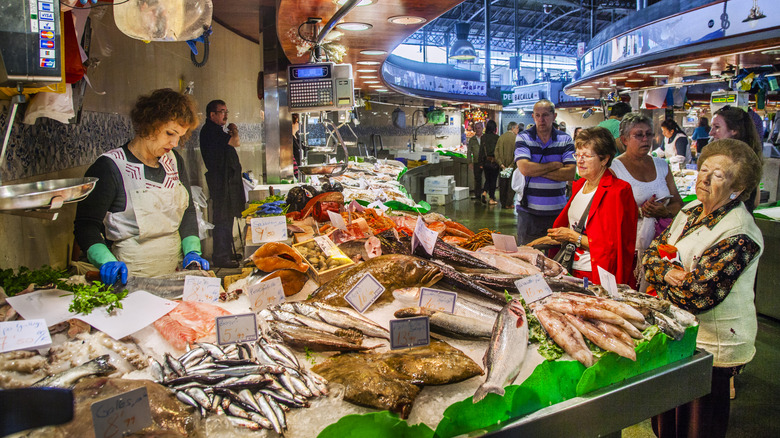
Buying seafood from a dedicated fish market has its merits, like being able to procure great, fresh buys from a plethora of options, which have typically been sourced locally through ethical means. But just as with striding towards the seafood aisle at the grocery store, there are things to consider — like how to tell if a seafood market display is high quality. Chowhound asked two experts, Dora Swan and Peter Kenyon, who are co-founders of fin – your fishmonger, what separates a top-notch seafood display from the competition. "A quality seafood display is all about how the seafood is treated when the customers are not around," they told us exclusively, adding,"Is it taken from the display and placed into 34-degree refrigeration, separated by fish type, during the overnight period? Is the display cooler at an appropriate temperature?" Asking the sellers might clue you in to how they do things behind the scenes, and they might even share more details about their practices.
When in doubt, you can avoid the biggest mistake while buying seafood — aka buying something that's way past its prime freshness — by taking a quick sniff. "The seafood display area should not smell like old fish. The area should smell like the ocean. After all, seafood is seafood and not roses!" Swan and Kenyon said. Contrary to popular belief, fresh fish shouldn't smell fishy at all. For peace of mind, you could always take your investigative hunt even further by developing a keen eye and, perhaps, getting your hands just a bit dirty.
Shopping at the seafood market
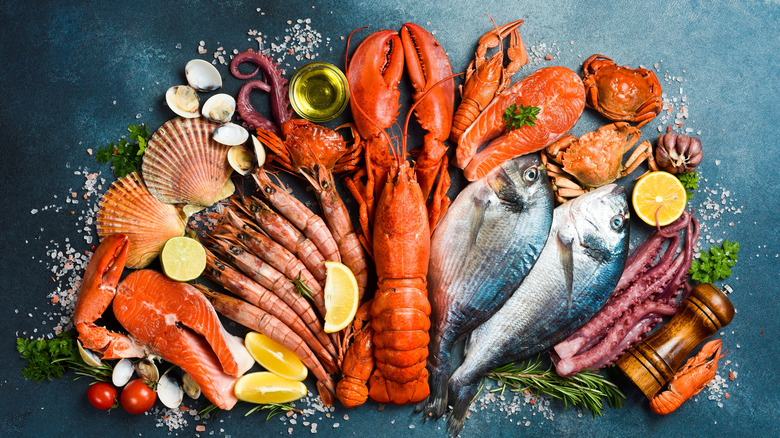
Another major indicator that you should pass on buying seafood at a market is the appearance of the fish. Dora Swan and Peter Kenyon have a simple way to determine whether it's fresh. "With whole fish, one should look for clear eyes and shiny skin," they advised. There's also a way to know when it hasn't been properly stored. "I've walked into seafood markets and have seen displays that include fish that appear to have an opaque film over the tray of fish," they added, which possibly shows that the fish is old and has been there for some time. This is one of the reasons why frozen fish can be superior to fresh. Meanwhile, shellfish are best bought when they're still alive and kicking, which indicates their freshness. Give them a light tap and they should quickly respond by snapping shut. For shrimp, on the other hand, their legs and heads should still be intact, with some springiness to their flesh.
Surprisingly, placing the seafood atop a blanket of ice isn't a must, so it's not an automatic red flag if you don't see that, but it remains helpful to keep the temperature stable. Swan and Kenyon note that a variety of seafood is a plus, though the offerings will largely depend on what's available regionally and seasonally. Aim to shop from Thursday to Sunday — while the market may be more crowded, this is when you're likeliest to encounter the widest selection of seafood.