

How Disposable Pie Pans Could Be Ruining Your Bake
We may receive a commission on purchases made from links.
Holidays often mean lots of parties, which also means plenty of baked treats, from cakes and cookies to pies of all sorts. But all that baking takes time, something we are all short on during the holidays. Many cooks turn to disposable pie pans thanks to their convenience — no cleaning up certainly sounds like a blessing — but if your concern is baking perfect pies, are disposable pie pans really the best option?
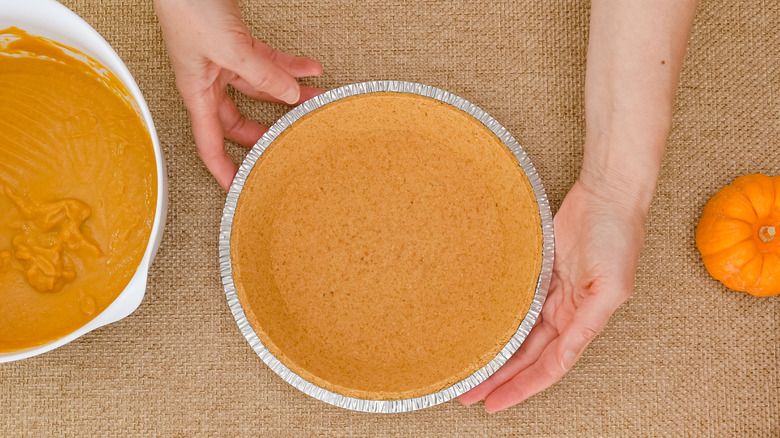
Before you decide if you're going to use a disposable pie pan or just buy a store-bought pumpkin pie and pass it off as homemade, consider the two biggest problems with using these convenient bakeware options — other than the fact that they aren't exactly pretty for gifting a pie or serving one to company. To begin with, disposable pie pans are typically lightweight and not very durable, which is fine when they're empty. But fill them with a pie crust and heavy fillings, and you've got a potential disaster waiting to happen. There is a risk of them buckling under the weight of the pie, which means at the very least that your crust could crack, and at worst, the whole pie could end up on the floor if you aren't careful.
The other issue comes down to how the pan conducts heat, which ultimately affects the bake on your pie. While disposable metal pans conduct heat well, they don't always do it evenly. This could leave you with pie that's overcooked around the edges and soupy in the middle, or has a crust that's burned in certain spots and raw in others. Luckily, there are ways to make your disposable pie tins work for you.
Tips for saving your disposable pie tin desserts
If convenience wins out, there is nothing wrong with using disposable pans as long as you know how to work around their shortcomings. You can solve the durability issue by baking your pie on top of another pan to keep it well supported when you transfer it in and out of the oven. Using a dark pan is a big help since the dark color will actually help attract and distribute the heat, giving you a better chance of a nicely cooked bottom crust. Another option is a pizza stone, a kitchen tool with many surprising uses thanks to its ability to evenly distribute heat, giving you that well-cooked bottom crust you want.
Speaking of an evenly cooked crust, when it comes to the top of the pie, keep a close eye on it while it bakes. You want a nice, golden tone. Too much browning will not only be unsightly, it will also affect the flavor if it gets too dark. If you notice your pie crust getting too dark before the pie is finished cooking, you can solve the problem with a pie shield, a device that is designed to be placed over the edge of the pie crust partway through cooking and protects it by slowing down the browning process. You can easily make one yourself using aluminum foil, or you can buy a QUWOLACE two-pack silicone crust shield online if you want to avoid using aluminum.
Armed with the knowledge of what might go wrong, you won't have to worry about disposable pie tins ruining your bakes. Simply use your baking skills to work around the problems, and you'll have beautiful pies every time.