

The Importance Of Using A Bamboo Whisk For Matcha
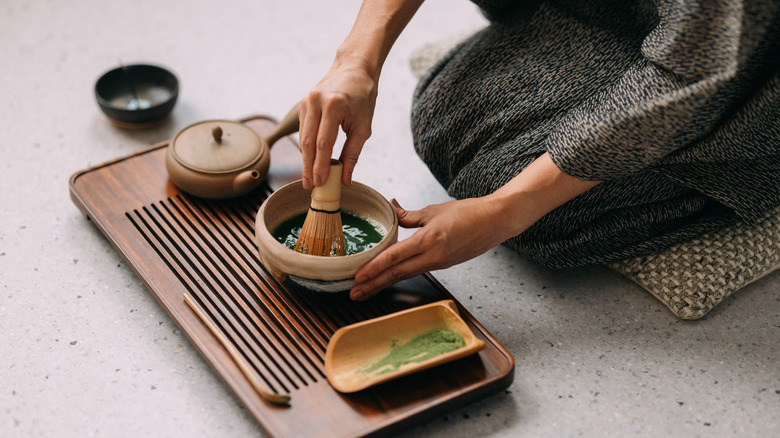
Avid matcha aficionados are very aware of the importance of having the appropriate equipment to make the perfect pour. The imagery of whisking matcha typically comprises two main accessories: A bowl, called a chawan (which translates to tea bowl), and a bamboo whisk, called a chasen. The bamboo whisk is valued for being an indispensable tool for preparing clump-free matcha. (If you don't have one on hand, an electric frother can serve as a decent alternative in a pinch.) Among the mistakes that can yield clumpy matcha, using the wrong whisk and incorrect techniques are usual suspects. Here, we will delve deeper into the importance of using a proper bamboo whisk to prepare this traditional Japanese tea.
The chasen is specifically designed for the task of whisking matcha for a smooth blend and frothy texture. The structure of the prongs, called tines, helps eliminate any clumps in the tea powder when whisked. Any other reported functions are just happenstance. Since the whisk is made from a delicate type of bamboo, its upkeep and maintenance require as much tender loving care as the actual tea preparation. If you decide to invest in a good-quality bamboo whisk, make sure to soak it in warm water before using. This helps soften the tines of the whisk, keeping them from breaking and allowing them to properly aerate the mixture for the desired frothy consistency. Interestingly, not all bamboo whisks are the same: There are different types with varied tine counts and shapes that can actually impact the final taste and texture of the matcha.
Exploring different types of bamboo whisks
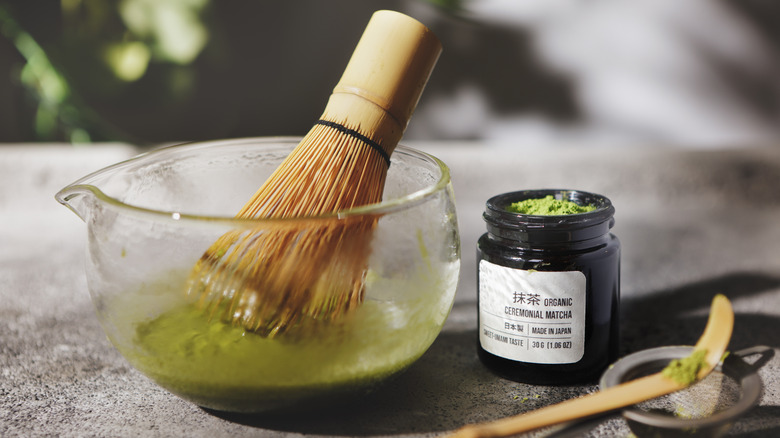
The beauty of bamboo whisks is that they don't impart any distinct taste to the matcha, meaning you will experience the true, unadulterated flavors of the tea as intended. That said, the chasen is more than just a piece of equipment to make matcha. It signifies the intricate craft of Japanese tea-making and the deep-rooted history behind it. A matcha whisk is not a one-size-fits-all creation; rather, there are believed to be over 60 different types of whisks, each with some subtle (and some obvious) variations. They are prized as works of art — and rightfully so considering the craftsmanship that is required to make an authentic bamboo whisk of superior quality. Chasens can be made from different types of bamboo, such as smoked bamboo (susutake), white bamboo (shiratake), and black bamboo (kurotake).
Smoked bamboo whisks have historically been valued for their durability and high quality, and are extremely rare. They are made from bamboo exposed to smoke from a stove or fireplace for several years, even decades and centuries, which imparts a characteristic dark brown hue. As a result, they are incredibly unique, rare, and quite expensive. These days, you're more likely to find smoked bamboo whisks made by smoking the bamboo in kilns to create a similar color. White and black bamboo whisks, on the other hand, tend to be easier to come by as they are made from naturally occurring bamboo.
Choosing the right whisk for your matcha
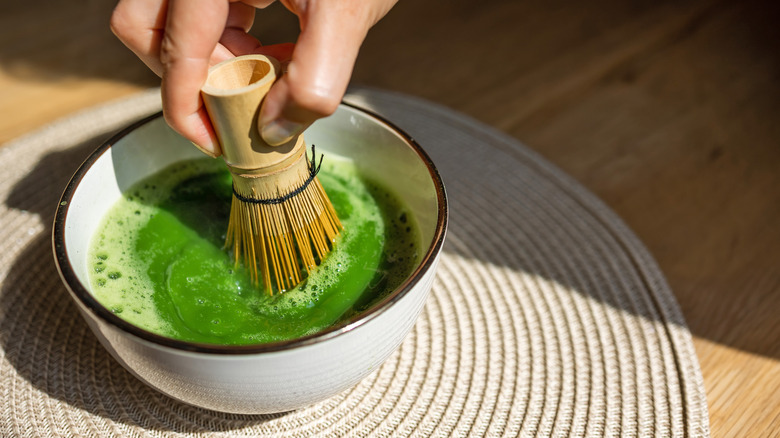
Two of the primary ways to categorize bamboo whisks are by their shape and prong count. The standard shape is the more familiar style wherein the straight tines curve toward the tip, forming a loop. The shin shape displays a gradual curve of the tines from the base to the tip, and sometimes without the loops at the ends. Compared to the standard shape, there is not much of a difference in how well either can froth matcha, so the choice between the two comes down to personal preference. Straight-shaped whisks, another style, feature straight tines and are actually among the oldest styles of whisks. They can be more challenging to use and work better with wider chawans (the tea-mixing bowls), and aren't particularly known for their frothing potential.
Whisks also vary in their prong count. The higher the prong count, the greater the frothing potential. Lower prong counts, such as 32 prongs or 60 prongs, are better suited for thicker teas called koicha, which are made with less water and more matcha powder to yield a thick, paste-like consistency. Higher prong counts ranging over 100 prongs are great for thin teas, or usucha. Depending on your preferred tea consistency, it's important to choose the appropriate type of whisk. This not only ensures the optimal matcha experience but also helps with the whisk's maintenance and longevity.