

Why Chopping Your Broccoli Can Actually Make It More Nutritious

It shouldn't come as news that broccoli is a powerhouse of nutrients. This cruciferous vegetable is packed with antioxidants and a number of vital health-promoting compounds that make it a prized culinary ingredient to work with. Plus, its unexpectedly high protein content makes broccoli one of many high-protein vegetables that you might be overlooking as you explore more satiating, nutrient-rich, plant-forward meals. While you might be aware of several delicious ways to prepare broccoli, did you know that the way the broccoli is cut plays a significant role when it comes to how nutritious your chosen preparation turns out? According to a study that was published in the Journal of Agricultural and Food Chemistry, chopping your broccoli makes a notable difference in its nutrient profile, and it has to do with the concentration of antioxidants.
Broccoli, like other cruciferous vegetables, contains a compound called sulforaphane. It is a key driver that stimulates the production of antioxidants, which have several protective properties in the body, ranging from liver detoxification, boosting cardiovascular health, anti-cancer traits, and much more. The study reported that when the broccoli was chopped into florets approximately 90 minutes before gently stir-frying, it contained the highest levels of sulforaphane. It is posited that the reason behind this is likely that when the broccoli is chopped, an enzyme called myrosinase is activated. This converts sulforaphane's precursor, glucoraphanin, into sulforaphane. Interestingly, beyond how the broccoli is cut, the cooking method also matters for maximizing how nutritious the prepared broccoli is.
Tips for cooking chopped broccoli
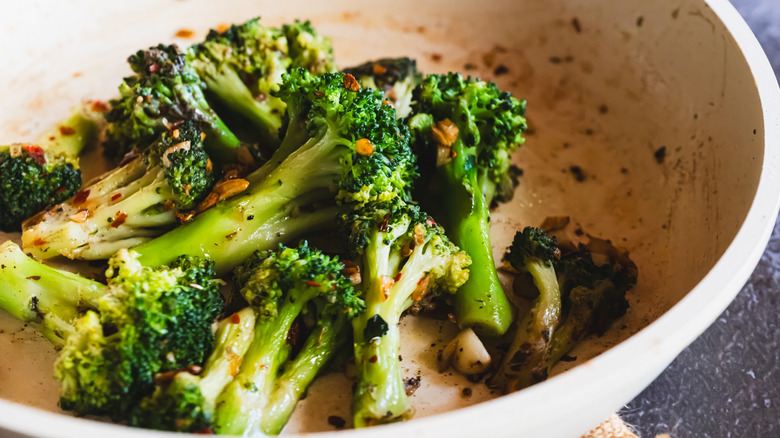
Once the broccoli is chopped into florets, there are several ways to cook it — including the techniques mentioned above that often require high heat, which is necessary for charring or roasting broccoli. However, while these methods do yield delicious broccoli, they might not be best suited for retaining the increased concentration of antioxidants. Heat deactivates myrosinase, meaning it can no longer convert glucoraphanin into sulforaphane; and as a result, higher cooking methods would yield broccoli with lowered antioxidant levels. In fact, just after three minutes of stir-frying broccoli, researchers observed an 80% decline in myrosinase activity. Because the myrosinase was inactivated by the heat, the sulforaphane content decreased over the course of stir-frying.
Some vegetables, like carrots and potatoes, become more nutritious when cooked. Unfortunately, that isn't the case for broccoli. Does that mean one needs to munch on raw, uncooked broccoli florets? Well, that might not be entirely true. Sure, while some enjoy fresh, uncooked broccoli with a dip of choice as a snack, cooking it also makes it more enjoyable and easier to eat. You can give the chopped broccoli a light stir fry with your preferred aromatics and seasonings, such that you get the flavor boost, improved texture, while retaining a sizable amount of antioxidants. The 90-minute resting period, instead of immediately stir-frying the florets, allows the myrosinase to stimulate sulforaphane production. The effects of other cooking methods like microwaving or steaming are currently unclear, but at the end of the day, whatever cooking method introduces broccoli into your meals is always a better option than leaving it off your plate altogether.