

How Turkey Becomes Bacon: What Really Happens Behind The Scenes
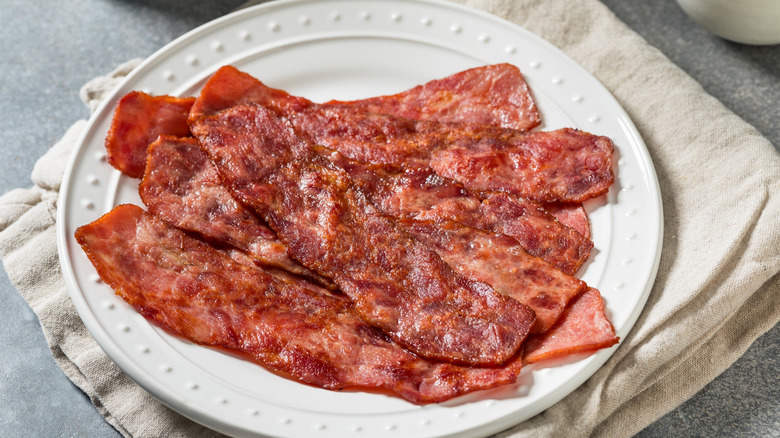
Let's talk about turkey bacon. Chances are you've had a slice of this beguilingly smoky, meaty, pork-product impersonator — even if you question its place in the bacon section of the grocery store. This tasty, lower-fat breakfast meat staple is more than a crunchy, salty egg accompaniment. It's also a bit of a mystery; after all, there is no fatty belly of turkey from which you can pull a perfectly streaked cut of bacon. In fact, there is no single part of the turkey that remotely resembles the pork cut. Then how is turkey bacon made?
Unlike pork or beef bacon, which come from a specific cut of meat (around the belly, but not to be confused with actual pork belly) that has been smoked or otherwise flavored, turkey bacon is made from a paste of dark and white meat that's broken down into an emulsion, flavored, cured, then pressed together to form a large piece of meat. This is then sliced into "bacon" strips. Usually, white meat stands in for the fatty strips in regular bacon, and dark meat plays the meaty part of bacon. Though there are some big differences in texture and flavor, both bacons do tend to be cured (or treated with sodium nitrates) and fortified with flavorings that give them a similar taste profile. Of course, this doesn't mean they're identical; there are more key differences between these two bacons.
A tale of two bacons
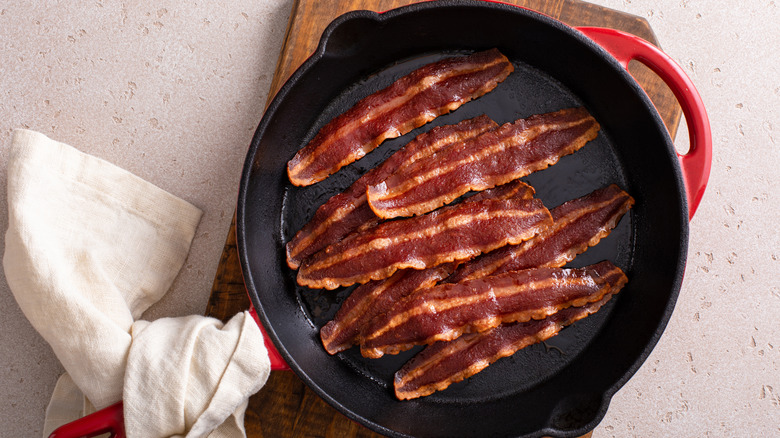
Though turkey and pork bacon have a similarly savory, smoky flavor profile and crispy texture, they are by no means identical. Let's start with nutrition since this is often a major factor in people's decision to switch to turkey bacon. The flat fowl breakfast meat is lower in cholesterol and fat than pork bacon, though the exact fat level varies based on brand. However, turkey bacon also tends to have higher sodium content and more carbs. Since bacon is also high in sodium, you might want to skip bacon altogether, or try making carrot bacon, if you need to lower your sodium intake.
In terms of taste, while both bacons are savory and smoky, pork bacon tends to have a richer pork taste (obviously) and is easier to crisp. Turkey bacon tends to be a bit less complex and has a chewy texture. This isn't to say there aren't ways to crisp up turkey bacon. It just needs more effort to achieve a crispy (but not burnt) bite. Additionally, since pork bacon is largely fat, it tends to shrink significantly during cooking as fat renders out while turkey bacon tends to keep most of its size.
How to cook turkey bacon
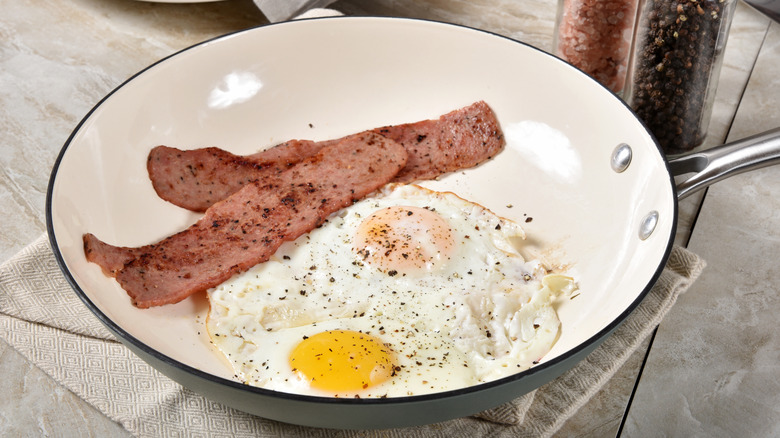
If you want turkey bacon that mimics the true crunch of well-cooked pork bacon (all respect to soft bacon enjoyers out there), there are a few ways to go about making it. Cooking in an air fryer, for example, can help make turkey bacon extra-crunchy. Since air fryers cook by circulating hot air around the entire cooking chamber, turkey bacon achieves an even crisp. Plus, since turkey bacon has a low fat content, it doesn't boil in its own fat run off as regular bacon can. To prepare, simply spray the interior of your air fryer with oil (to keep your bacon from sticking) and cook at 350 degrees Fahrenheit for about 10 minutes, flipping halfway through.
You can also cook your turkey bacon in the oven. For a more even cook, place your bacon on a wire rack over a parchment-lined pan. The wire rack helps circulate heat more evenly. Pre-heat the oven to 400 degrees Fahrenheit and bake for 10 minutes (or until crunchy enough for your liking). Be sure to pat your bacon dry with a paper towel, and enjoy! Just make sure your turkey bacon is all the way cooked through; undercooked turkey bacon isn't just chewy, it's unsafe to eat.