

One Of The Worst Vegetable Recalls In US History Sent Hundreds To The Hospital In 26 States
Food recalls are an inevitable part of our food system. As long as crops are harvested and meat is processed, pesky and dangerous bacteria inevitably make their way into our food. Luckily, thanks to regulatory bodies such as the U.S. Food and Drug Administration, many contaminants are caught in the early stages before anyone can become ill. However, this isn't always the case; sometimes, contaminated food can cause outbreaks of foodborne illness that range from mild to severe. Many cautious diners remember the worst recalls in recent history with a clutch of fear and anxiety — one recall in particular remains one of the most severe and frightening.
An E. coli outbreak tied to contaminated spinach was first reported by the FDA in September 2006. It caused a recall that impacted people in 26 states across the U.S. Ultimately, 204 people were reported to have been infected. 104 people were hospitalized with 31 developing hemolytic-uremic syndrome, a severe complication of E. coli infection. Three people died as a result of the outbreak. Though brief, it was one of the more severe instances of bacterial contamination in recent years. It ultimately changed the way many looked at, and ate, their greens.
When greens go bad
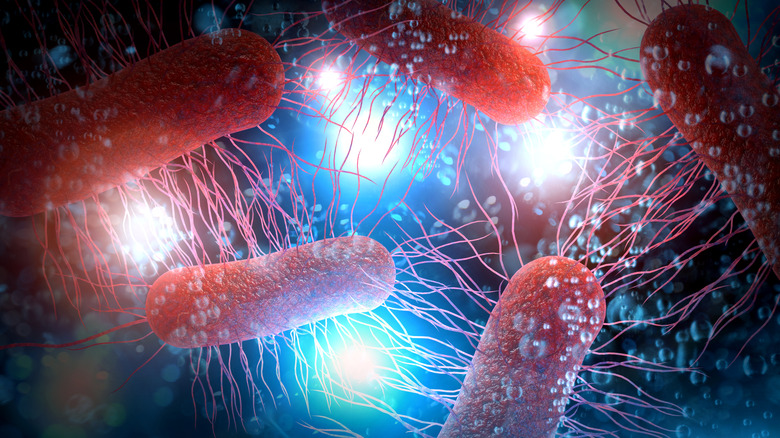
For many, the most surprising aspect of the 2006 recall wasn't that an E. coli outbreak of that scale took place — it was the fact it originated in something as seemingly benign as spinach. After all, some of the most notorious E. coli outbreaks have been tied to beef; perhaps the most infamous of which was the 1993 Jack in the Box outbreak, which also resulted in several deaths.
But how does spinach become contaminated with bacteria, and what makes the bacteria so dangerous? The root cause, literally, of E. coli infection in spinach, lettuce, and other fruits and veggies is that E. coli usually makes its way into plants via soil. If soil is exposed to animal excrement or water that has been contaminated with bacteria, the plant absorbs the bacteria and becomes unsafe to eat. Now, most strains of E. coli aren't all that dangerous, but there are a few strains that can — and do — cause severe illness.
Shiga toxin-producing E. coli (STEC) are more severe. Shiga toxins can cause bleeding, harm the body's vascular system, and can damage the kidneys. The strain of E. coli found in the 2006 spinach recall was O157:H7, a STEC strain behind both the Jack in the Box recall and the 2024 McDonald's E. coli outbreak (which was caused by onions and not beef, by the way).
How to handle your greens safely
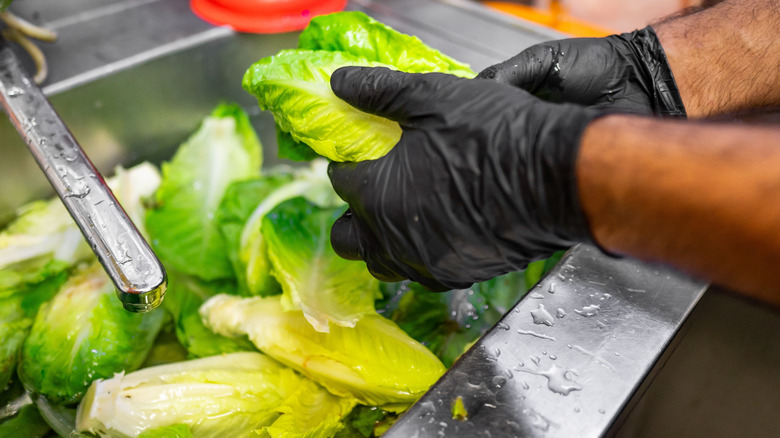
What should you do if you're concerned about that bag of greens in your crisper drawer? The most important step in avoiding contaminated greens is to keep abreast of any ongoing recalls. The FDA has a list of ongoing food recalls that you can check. If you have any recalled greens, dispose of them immediately. If there are no current recalls but you're still concerned about E. coli in your spinach, we've got bad news for your salad: You can't simply wash E. coli off your greens. Because the bacteria infects greens through soil and water, it's likely in all parts of the plant. The only way to fully kill E. coli is to cook it to 160 degrees Fahrenheit. You can pan fry or boil your spinach until fully cooked. This doesn't help anyone looking to consume spinach raw, however.
Still, spinach salads must be eaten (they're really quite tasty), so there are a few ways to help mitigate the risk of illness. For one, wash your greens before consuming. Also, prevent cross contamination by cleaning cooking surfaces. If you're cooking your spinach, wash your hands after handling and don't reuse knives or cutting boards without washing. Additionally, never use spinach beyond its expiration date; you shouldn't consume spinach that has a foul smell or is slimy, moldy, or otherwise off in appearance.