

You've Been Cooking Your Pork Chops Wrong This Entire Time
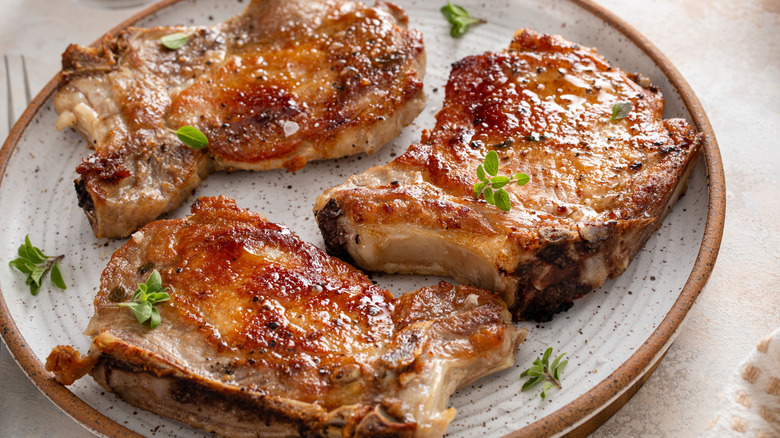
Pork chops are one of those classic Boomer dinners that we still love today, especially when served with applesauce, peach compote, or a cherry chutney. Their mild, earthy flavor makes them the perfect protein to pair with almost any kind of fruit, but you can just as easily serve them with brown gravy or barbecue sauce for a satisfying main dish. Pork chops are also typically cheaper than other proteins, making them a budget-friendly freezer staple.
However, there's a somewhat insidious reason why we love aromatic smothered pork chops or pork chops glazed in tangy honey mustard — these sauces not only give your chops flavor, they also keep the chops from drying out into the texture of shoe leather. Since they're a relatively lean cut of meat, pork chops have a well-earned reputation for quickly turning from succulent and perfectly cooked to dry and hard as a rock in approximately three seconds. The good news is that avoiding this literally tasteless faux pas is as simple as buying a reliable meat thermometer.
Unlike other proteins, it's not easy to tell when pork is done by its appearance. Instead, chefs recommend inserting a digital meat thermometer into the thickest part of the chop. Once the meat hits 145 degrees Fahrenheit, you're good to go — even if it's still a little pink in the middle. Pink pork used to be an issue when trichinosis parasites were more common, but modern farming and food processing standards have basically eliminated it from all pork products.
More ways to ensure moist and succulent chops
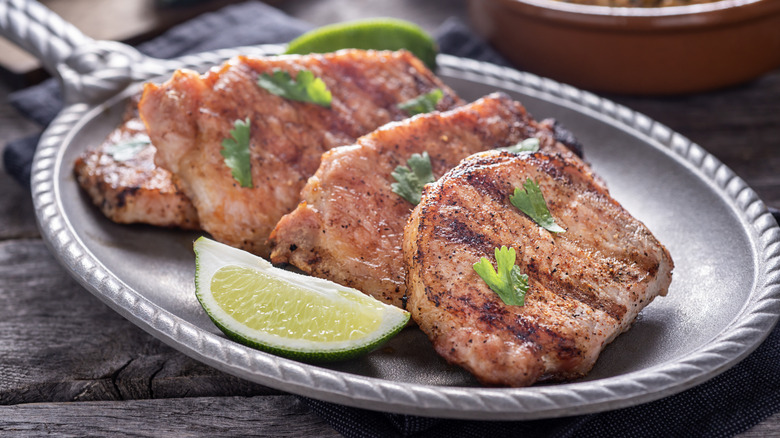
Though cooking your chops to the right temperature is the best way to ensure they're tender and delicious, there are plenty more clever tips for making the juiciest baked pork chops ever. It starts with purchasing the right cut. Though it's tempting to get that package of beautiful, thin-sliced boneless chops, it's better to skip right past them for a thicker, bone-in cut instead. Logically speaking, a thicker cut doesn't dry out as quickly. The bone also holds both moisture and flavor, infusing your chops with more juicy goodness than the boneless variety. This is especially true if you let them come to room temperature before chucking them in the oven, air fryer, or frying pan. Cold chops may seize and get tough before they even cook through, while room temp meat is fully relaxed and much less likely to seize.
Since pork is naturally lean (hence its famous nickname "the other white meat"), there's also no need to remove the fat cap before your pork chops hit the grill. Trimming the fat in this case doesn't make the meat a ton healthier, but it does remove protection against drying out. Instead, wait until the pork is on your plate to remove any excess fat. Another crucial step is to let the chops rest on a warm, covered plate for a few minutes after they reach the desired internal temperature. This lets the juices fully soak back into the meat fibers.