

8 Discontinued Pillsbury Products We Wish Would Make A Comeback
We may receive a commission on purchases made from links.
Sad truths we must all one day make peace with: A batch of brownies never lasts as long as you want it to, and those nostalgic treats from your childhood will one day walk the same path as the 8-track tape and the floppy disk: irrelevant, discontinued, footnotes of history.
For many of us, the cakes, brownies, and random other gluten-based sweet treats of our childhoods were made by Pillsbury, a company with a very long history of making it possible for people who don't bake to bake things. Pillsbury was founded in 1869, so it has had more than a century and a half to invent products, market them to the general public, and then withdraw them when they become unprofitable, leaving those of us who loved them with a hole in our hearts where Weiner Wraps, breadsticks, and Tunnel of Fudge Cake used to be.
Pillsbury is always turning out new products, but time has a way of making some things seem a lot more delicious than they probably were, so those new products, no matter how tasty, can never replace the ones we lost. And though you can usually find recipes to stand in for the baked goods of the past, the results won't ever be quite the same as cracking open a box of brownie mix or some frozen breakfast items and knowing that they will taste exactly the way they always have with little to no effort from you. Here are some discontinued Pillsbury products we miss the most.
1. Pudding Pockets
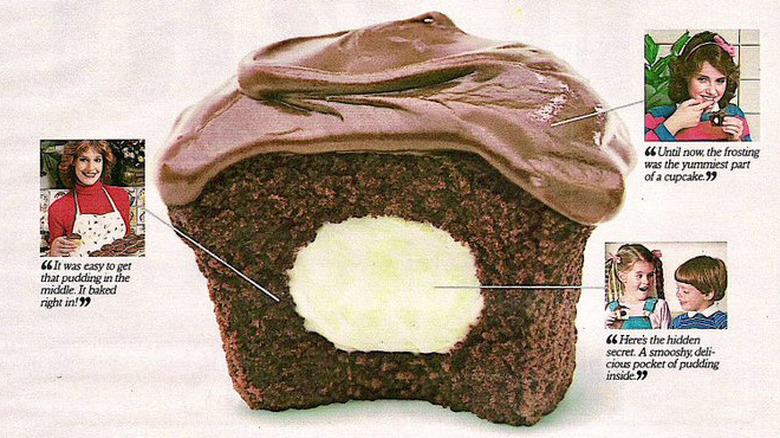
What sounds at first like an unfortunate thing you found in your toddler's laundry basket is actually the name of a 1980s Pillsbury product that was essentially the answer to every American child's wish for a cupcake that is less cake and more frosting.
Okay, yes, it wasn't frosting inside these Hostess Cupcakes copycats (not a confirmed accusation, but they did look suspiciously similar), it was pudding, which at least feels a little less like a sugar bomb and probably soothed many a frazzled parent into believing that Pudding Pockets weren't SO bad. If you were too little to bake these yourself, you might not recall how they were made. Perhaps you even thought it took some magic to get the pudding into the center of the cupcake. Pudding Pockets may have seemed borderline magical, but the instructions were actually pretty dull and unmagical: You poured half the batter into your cupcake pan, added a dollop of pudding, then topped it off with the rest of the batter. The pudding was just thick enough to not seep into the batter. (The next time you bake cupcakes, try it yourself with this classic vanilla pudding recipe.)
If you were an '80s kid and your parents bought and baked Pudding Pockets for you, count yourself lucky. Social media is full of comments from those deprived of the wonders of Pudding Pockets who will never have a chance to live the way the finer people did. "Mam wouldn't let us have these and now they don't make them anymore. Jip," lamented one YouTube viewer.
2. Wiener Wraps
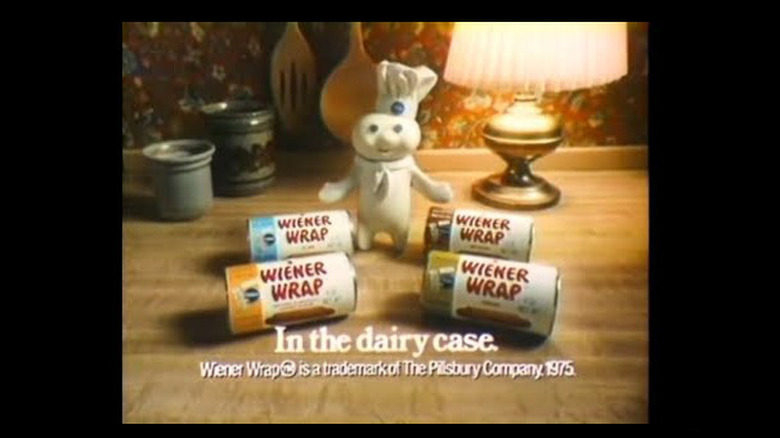
The unfortunately named "Wiener Wraps" were a sensation of the 1970s, a favorite for parents who wanted to at least sort of seem like they put some thought and effort into dinner but really just wanted to make hot dogs (see which brands are worth buying from the grocery store) and be done with it. Though to be fair, the commercial implies that Mom was totally coerced into making these things by the not-at-all-creepy little man who for some reason was standing on her countertop.
Those who remember Wiener Wraps seem to be a bit torn on whether there was something special about the dough or whether it was actually just crescent dough packaged for a super specific purpose. If you wanted to recreate these today, you could almost certainly get away with buying a roll of Pillsbury Crescents and wrapping them around your hot dogs, but not everyone thinks that's an honest approximation of the 1970s classic. Crescents aren't the right shape, for a start, so that hack kind of flies in the face of the Wiener Wraps' "easy dinner" promise. And some people — like this Facebook user — insist that "Crescent rolls don't taste the same as the original wiener wraps," though it's hard to know if that's just nostalgia talking. It's not like your brain remembers the particulars of things you tasted 50 years ago, does it?
Rumor has it you can still get Wiener Wraps in Canada; if that's true, someone out there should do a taste test and get back to us.
3. Tunnel of Fudge Cake Frosting Mix
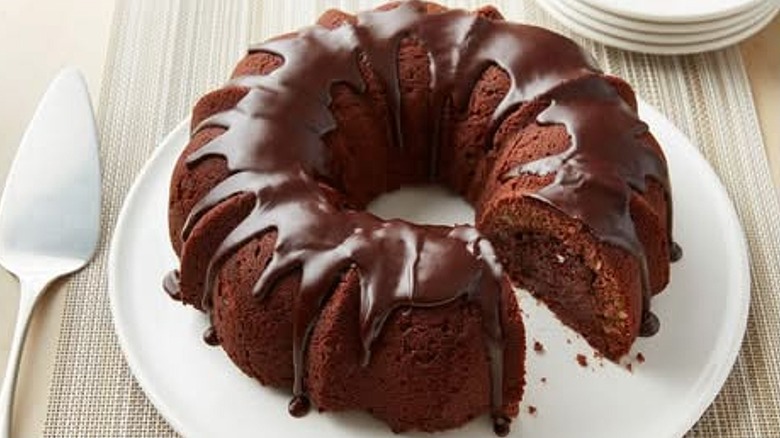
Here's another unfortunately named favorite that is further proof of the bygone obsession with cake that's short on cake and long on frosting. Or possibly not completely bygone, given the number of people who remember this Pillsbury product fondly and are seeking to recreate it. Tunnel of Fudge Cake began life as second prize at the 1966 Pillsbury Bake-Off and was single-handedly responsible for saving the Bundt pan (which, by the way, has plenty of uses beyond cake). This odd-shaped pan was evidently facing discontinuation but after the recipe came out, it was on everyone's wish list to the tune of 30,000 sales a week.
A recipe similar to the original Tunnel of Fudge Cake still exists on Pillsbury's website, rather cruelly, it seems, since the company also discontinued the dry frosting mix that made the fudge tunnel in the center of the cake possible. Anyone who hopes to recreate the original favorite is usually thwarted by the absence of a decent substitute. Jiffy supposedly made something workable until 2017, when it decided to axe the product and send Tunnel of Fudge Cake lovers everywhere back to the drawing board.
Website visitors have literally begged Pillsbury to make the recipe's existence no longer stupid and pointless by bringing back the dry frosting mix. Pillsbury's typical reply: "While we can't promise that we will bring it back, we do appreciate it when consumers let us know that they are missing a product. We will let our team know that you would like to see this return to the shelves." Yeah, that sounds not disingenuous at all.
4. Space Food Sticks
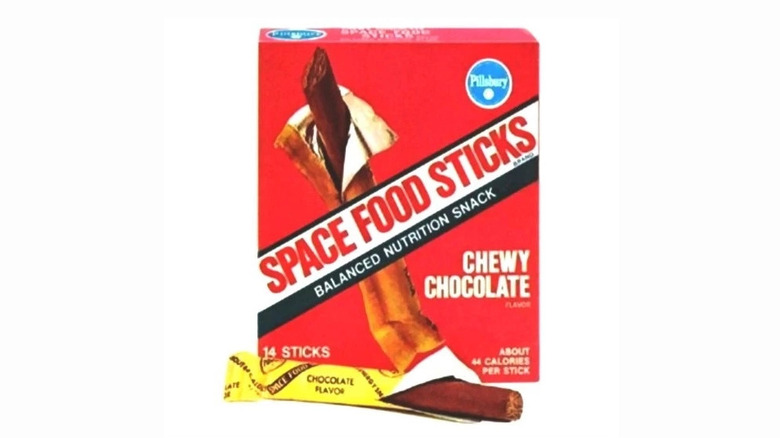
Once, long ago, space travel was not mostly an Elon Musk thing, and everyone thought it was cool. So cool, that being able to say your product went to space was great for marketing, thus proving that capitalism can transcend gravity and exist without oxygen. Remember Tang, the orange-flavored whatever-that-was famously picked for the Gemini astronauts in 1966? Everyone wanted to drink Tang, not because Tang was delicious (it wasn't) but because the astronauts drank it, and astronauts are cool.
Pillsbury jumped on that bandwagon even earlier than Tang. In fact, the company claims to have created the first solid food consumed by a NASA astronaut (while in space, obviously), the very delicious-sounding "compressed food cubes." A few years later, Space Food Sticks were invented as a slim snack that astronauts could eat without taking their helmets off. Let the marketing commence! Shortly thereafter, Pillsbury boxed and advertised them to the general public, even though there was not similar need for a snack that could be eaten while wearing a space helmet. A few years later, the company dropped the word "space" from the name because it feared people might think the sticks were dehydrated and yucky (like real space food tends to be). They were rebranded as "Food Sticks" because apparently "food" does not at all imply you will be eating something boring.
Shockingly, Pillsbury no longer makes "Food Sticks," though those who looked past the dull name do still remember them fondly.
5. Waffle Sticks
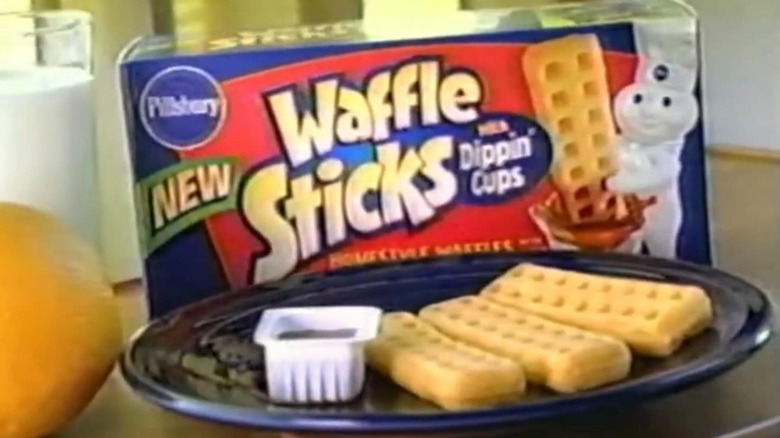
Because sticks were evidently a sticky trend (see what we did there?), Pillsbury reinvented the stick in the early 2000s, when Waffle Sticks replaced Lucky Charms as the Millennial go-to for an unwholesome breakfast. Parents liked Waffle Sticks because on paper they looked like a fairly innocuous way to start the day, and they could just pretend their kids didn't use all of the syrup in the included "Dippin' Cups" in like two bites and weren't saturating the rest of the things with a side bottle of syrup.
Waffle Sticks were so beloved that some Redditors have fond memories: "I remember getting into fights with siblings if they took the last." Another Redditor remembers the "f****n chokehold" Waffle Sticks had on the family freezer.
Waffle Sticks came in multiple flavors such as cinnamon and chocolate chip, and Pillsbury also had a French toast version. If you miss the latter, there's an Eggo branded French toast stick and a myriad of store brand knockoffs. Eggo does frozen mini-waffles, too, which are probably close to the original Pillsbury Waffle Stick. You can also make your own homemade waffles and follow our easy tips for freezing them. For its part, Pillsbury has an absolutely baffling Waffle Stick recipe on its website that basically calls for toasting frozen buttermilk waffles, putting preserves on them, and cutting them in half. Um, half is not quite a stick, Pillsbury, and most of us could have figured that out without a recipe.
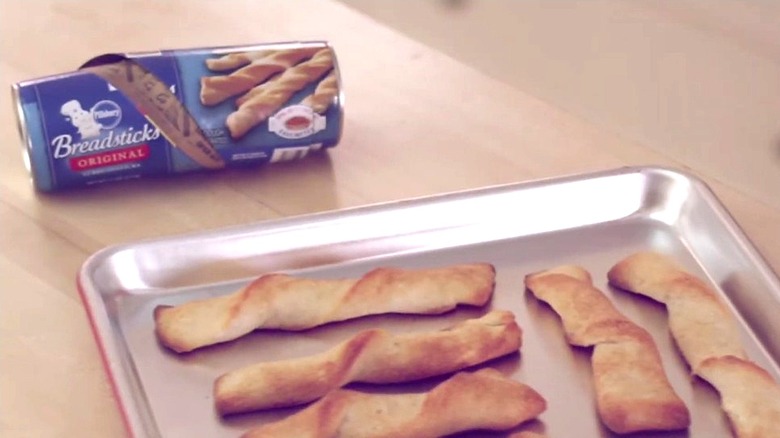
6. Pillsbury Original Breadsticks
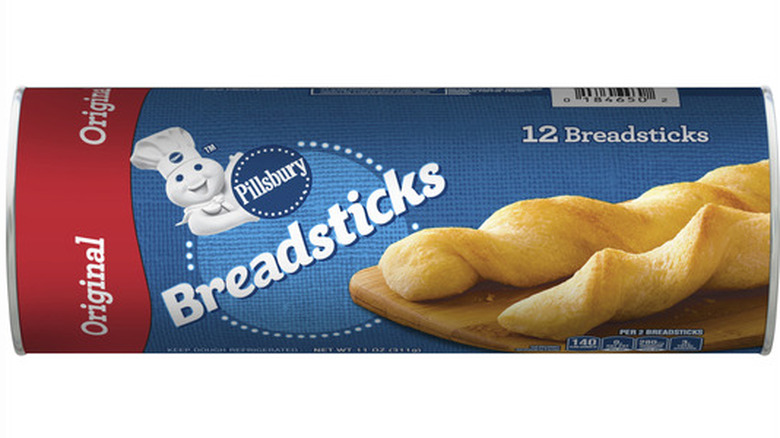
Breadsticks are fantastic no matter where they come from or who makes them as long as they're coated with garlic butter, and there are seemingly millions of varieties. Pillsbury used to have a refrigerated version of the breadsticks similar to what you can get from a pizza restaurant or a chain Italian place like Olive Garden, and people loved them. But in its infinite wisdom, the company yanked this product from the refrigerator sections of grocery stores everywhere pretty recently, much to the very great dismay of many fans.
You can find people complaining about the untimely demise of Pillsbury Breadsticks all over the internet, including a long string of laments and pleas for mercy in Kroger's Pillsbury Breadsticks comments and replication attempts on Reddit (one commenter suggested just cutting up Pillsbury's ready-made pizza dough, which is likely a close facsimile).
And here's another unhappy customer from the Pillsbury website: "BREADSTICKS!!!!!! I have not been able to enjoy my spaghetti since you stopped making them. I am 63 and want to enjoy a plate of spaghetti with pillsbury bread sticks and american cheese melted on top again before i die." Whoa. Heartfelt plea, there. Pillsbury's response to similar comments: "While we can't promise that we will bring it back, we do appreciate it when consumers let us know that they are missing a product. We will let our team know that you would like to see this make a comeback. Have a great day." Eye roll.
7. Microwave Fudge Brownies
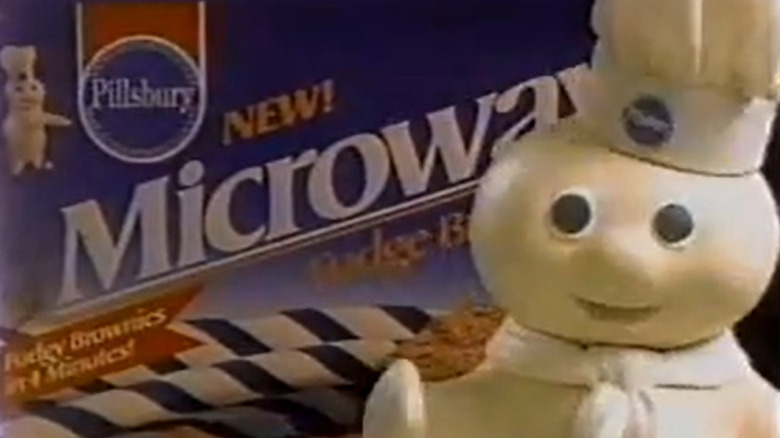
Remember when microwaves first became a thing and the myriad insane things that our parents would try to make in them? Microwaved steak? Yes, people tried that. Some early microwaves also came with a cone-shaped popcorn popper that would melt in the microwave when hot kernels contacted it so, you know, it was a brave new world.
Still, the promise of quick and easy cooking was enormously seductive, and nothing could slow the innovations of the early microwave user. In the 1980s, Pillsbury sold a brownie mix that was literally meant to be baked in the microwave, and based on the old TV commercial, the company implied it was something kids could make in a hurry with little to no parental supervision, so yeah, brave new world. Microwave baking isn't a totally crazy idea, as anyone who's ever made a mug cake will tell you (try our Oreo mug cake with just two ingredients). And some of us still grieve Pillsbury's microwave brownie mix and its uber convenience (it baked in its own plastic pan, which made it not only super easy to make but also super easy to clean up).
Pillsbury does have a newer product that makes supposedly more convenient brownies. It is basically a refrigerated tube of brownie mix that you are supposed to squirt into a prepared pan and bake in the oven. How these are somehow more convenient than just preparing a boxed brownie mix and baking it is a question still waiting for an answer.
8. Toaster Muffins
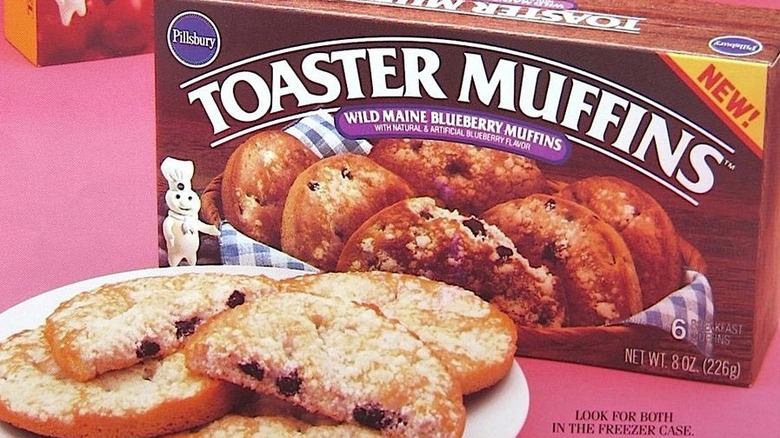
Pillsbury still makes its popular line of Toaster Strudel pastries, but you might not remember the companion product it used to make back in the 1980s called Toaster Muffins. Toaster Strudel pastries are a little easier to get your head around because they're more or less strudel-shaped, that is, flat and therefore easy to picture putting into a toaster. Toaster muffins, on the other hand, well, an American style muffin is not really the sort of thing you might look at and think, "I wonder if I could put that in my toaster." Also, isn't the point of toasting to make things crispy? American muffins are fine warmed in a microwave; toasting is a bit of an unconventional request.
That may explain why Toaster Muffins aren't a thing anymore, but that doesn't mean they weren't a good idea — they just maybe needed to be branded a little differently. They weren't true muffins (obviously) but rather sort of flat muffin tops in a muffin-like "Wild Maine Blueberry" flavor (some people also recall an apple cinnamon flavor). And despite their admitted weirdness and poor execution, people still pine for them, like one Redditor who called them "fluffy, muffin-y wonderfulness."
If you haven't heard of these and you think it was a wild idea, know that Pillsbury wasn't the only one that made toaster muffins. There was a Howard Johnson's version, and Thomas makes something that's kind of sort of like the Pillsbury Toaster Muffins only it's more like a flat cornbread muffin.