

The Cut Of Beef You Have To Try When You're At A Brazilian Steakhouse

If you walk into a Brazilian steakhouse (called a churrascaria in Brazil) and see someone cutting into a long skewer of meat folded like a crescent, there's a good chance it's picanha — and it's worth ordering. Picanha comes from the rump cap (also called the sirloin cap), located on the top of the cow's rear, above the round. Because it's a muscle that is barely worked out, it stays relatively tender, and the cut retains a sizable fat cap on top, a distinctive feature of a picanha cut.
It's that fat layer combined with the lean meat below that makes picanha special. As the fat renders during grilling or roasting, it effectively bastes the meat, helping it stay juicy and giving a rich, beefy flavor. It's arguably closest to a standard sirloin steak as it doesn't have much marbling within the meat, although that fat layer may help keep it juicier than a sirloin. That said, both of these cuts require some careful cooking to not make them tough. Picanha isn't quite as soft and uniformly tender as a cut like a ribeye, which has fat marbled throughout the meat, rather than mainly on top like picanha. (For those who are trying to cram protein into their diet, picanha has more of it thanks to this lack of marbling.)
How is picanha cooked and served?
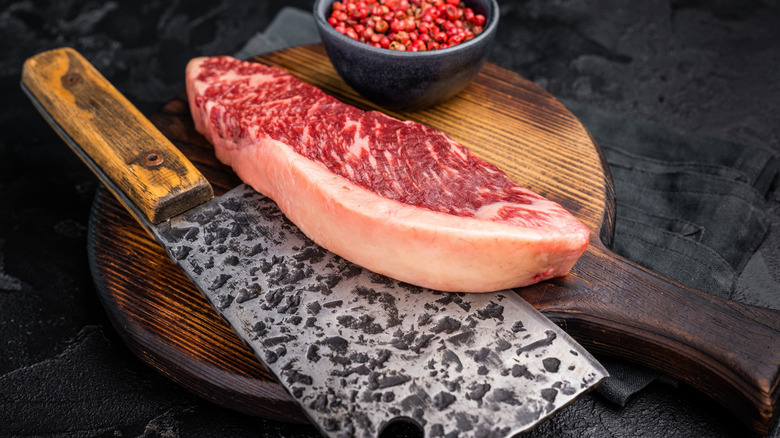
At a Brazilian steakhouse, you'll often see picanha sliced and skewered in that crescent shape, seasoned with coarse salt, and grilled over hot coals or a wood fire. Stick to medium or medium-rare so it doesn't get tough. For the seasoning, you can throw in some pepper and herbs if you prefer a bit of extra flavor. In its larger, unsliced form, it can also be roasted. Once cooked, a server slices off pieces tableside. The exterior from the fat cap is crisp and gently caramelized while the inside stays juicy.
You can also cook picanha yourself at home without too much fuss. The key rule is to keep that fat cap intact for the flavor (beware: Some American butchers may try to cut it off). Once it's seasoned, sear it in a hot pan, fat side first, to render the cap and create a crust, and flip it and cook it a little less on the other side. When it's done, let it rest as you would any steak fresh off the grill, and slice the meat against the grain. Because picanha doesn't have much marbling, be careful not to overcook it as it'll dry out. The classic sides at a Brazilian churrascaria lean simple with options like rice and beans, a tomato-onion-pepper salad, and farofa (a toasted cassava flour dish), but they're only there to support the star of the show, which is the meat itself.