

How To Choose A Kitchen Rug That's Both Stylish And Practical
We may receive a commission on purchases made from links.
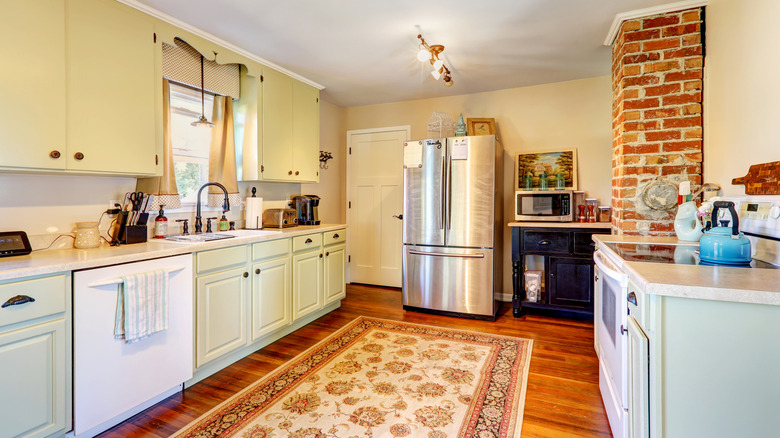
Utilitarian rooms like kitchens might not seem like a place for a rug. But when chosen wisely, it's one of the simplest ways to give a kitchen new life — or for renters, cover up floors you don't love. They're also functional, making hard floors more comfortable and keeping porous and nightmarish kitchen floors clean from spills and traffic. All you have to do is choose the right rug.
Consider how you use each section of your kitchen, and choose your rug accordingly, prioritizing practicality as much as style. Scooting a runner rug under barstools at your island? Make sure the rug won't bunch up when you push a chair back. In the key "triangle" kitchen design, you don't want a tripping or slipping hazard as you move around. Be sure to choose a rug with some grip — add a no-slip mat underneath it if it doesn't come with one.
In addition to a good grip, you'll want a rug that doesn't collect crumbs and trap water — this isn't the place for a tall, fluffy fabric. Low-pile rugs are your best bet. In terms of material, cotton can survive a trip through the washer, but materials such as sisal, jute, and wool can be spot-cleaned with ease. Indoor-outdoor polypropylene rugs are built to last and typically have a synthetic woven texture that also suits spot-cleaning. For rugs that will keep you comfortable without sacrificing style, choose a cushioned mat labelled "anti-fatigue," like the ComfiLife anti-fatigue floor mat.
Consider material, but also aesthetics
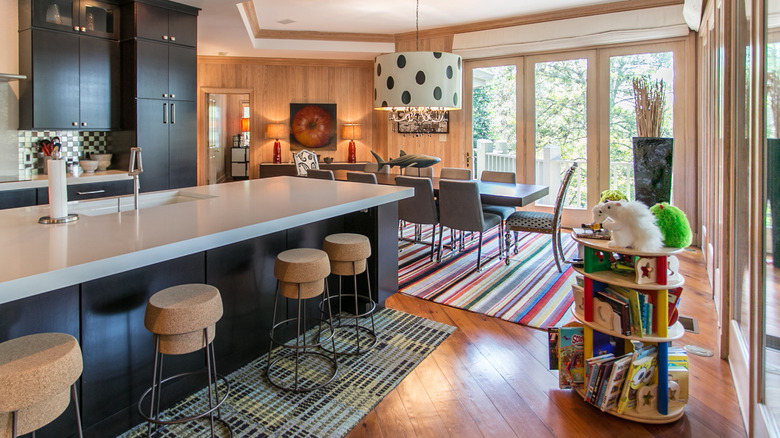
While you wouldn't put the same Persian rug in a kitchen as you would in a living room, you do have options. And especially in outer areas of your kitchen — away from bustling work stations or under a dining table — you have more choices. Here, you can get away with a more traditional rug option rather than a polypropylene, anti-fatigue mat or an indoor-outdoor variety.
Whichever fabric you choose, do your future self a favor and opt for a darker color or pattern — anything too light or monochromatic will show every drip and crumb. While we'd steer clear of minimalist, stark white, brighter colors, a checkered gingham in cheery butter yellow, or a colorful floral design, can add whimsy and charm to a plain room. Roll out sophisticated earthy tones or classic antique rug patterns to ground or elevate a kitchen. Or, swap rugs in and out whenever you get the itch to redo the space!
Consider dimensions too. Long runners can emphasize a narrow galley aisle or space in front of an island, and round rugs can add a geometric touch and fill glaring, empty floor spaces. Reserve larger area rugs for under dining tables, where they can help separate a kitchen from the dining area, while adding color and pop. With the right material and design, a rug can be the final element that pulls your kitchen aesthetic together.