

Don't Just Focus On The Whiskey For Your Pickleback — Choosing The Right Pickle Brine Matters Too
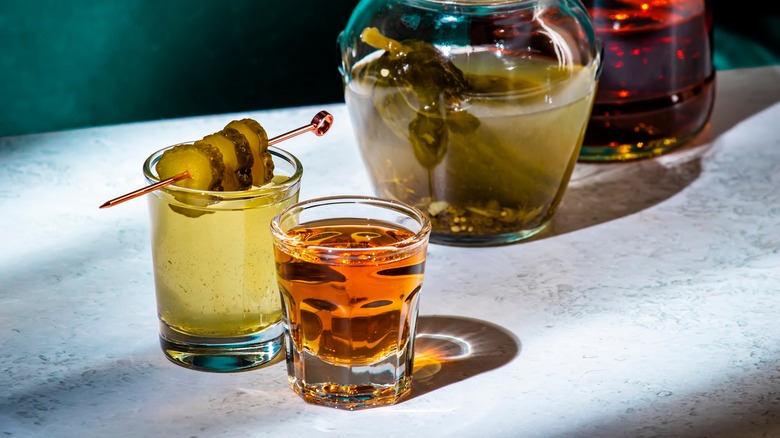
Have you ever, on a night out with your squad, ended up doing a shot of whiskey or bourbon that was immediately followed by a shot of pickle juice? This is what is called a pickleback, which is a term coined back in 2006 by a bartender named Reggie Cunningham, who at the time was working at the Bushwick Country Club in Brooklyn. The original pickleback featured a specific brand of pickle juice (McClure's), and since its inception, it has graced bars across the United States and beyond. There is science behind why pickle juice is the perfect chaser for whiskey: The vinegar and salt from the pickle brine help neutralize the astringency from the whiskey. Often, a lot of emphasis is put on choosing the best whiskey for a pickleback shot; however, according to seasoned bartender, educator, and mixologist, Tiffanie Barriere, aka the Drinking Coach, the type of pickle brine is also important.
When we think of pickle brine, the first thing that comes to mind is pickled cucumbers, but according to Barriere, this is where you can play around with the brine from other pickled produce. For instance, pickled beet brine brings an earthy sweetness that can take the edge off whiskey's heat. The same is the case for brines of pickled fruits like peaches and strawberries that particularly pair well with a light bourbon or mild rye, respectively. The adventurous palate may savor the funk from kimchi brine, while pickled okra brine can bring a subtle touch of Southern heat. Overall, as a general guide, Barriere advises that "anything that has good acid and intentional seasoning can make a beautiful chase."
Pairings to pursue and avoid
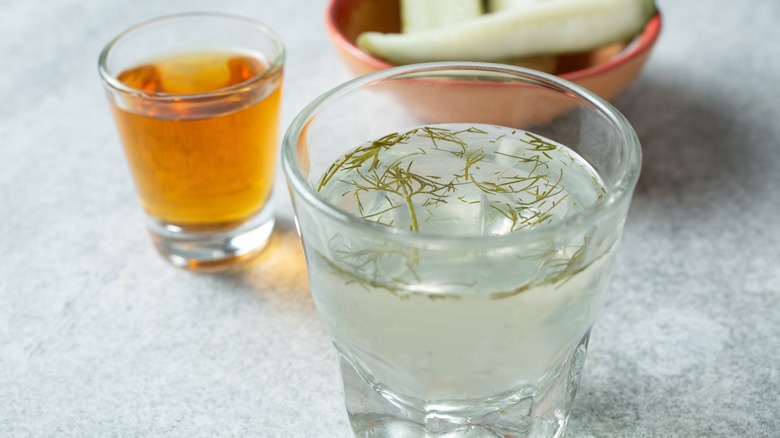
For those always up for trying something new and different, Tiffanie Barriere recommends unique flavor pairings like garlic or peppercorn-forward brine with soft wheat bourbons. This combination works well as the savory notes from the brine help balance out the bourbon's sweetness.
Furthermore, depending on the type of whiskey, your choice of brine may vary. Take bourbon, for instance, its tasting notes are typically sweet, with hints of caramel. That's why whiskey is added to decadent desserts like bananas foster for a depth of flavor. It's also why Barriere recommends pairing it with brines that have "salt, heat, and a little funk" for a nice contrast. "Think dill, garlic, mustard seed, okra, jalapeño," she suggests. Whiskeys like rye, however, have undertones of herbaceous spice. As a result, bright, crisp brines that complement rye's natural notes without adding much of their own flavor are best. Some options include the brines of pickled green beans and pearl onions, or any citrus-forward ingredients.
Now that you have a sense of what whiskey and brine combinations work, there are also some that don't. "I usually avoid brines that are overly sweet or heavy with sugar — they can muddy the whiskey and leave a syrupy finish that isn't pleasant," Barriere explains. She also advises steering clear of any brine with too much turmeric as its taste can overwhelm the palate. Furthermore, any overly fermented brine that is too heavy on the funk scale can ruin the experience of a pickleback shot. "At the end of the day, the brine should lift the whiskey, not fight it or mask it," she emphasizes. "The chase should make the spirit shine."