

How To Tell When Sweet Potatoes Are Ready To Harvest Without Digging Too Soon
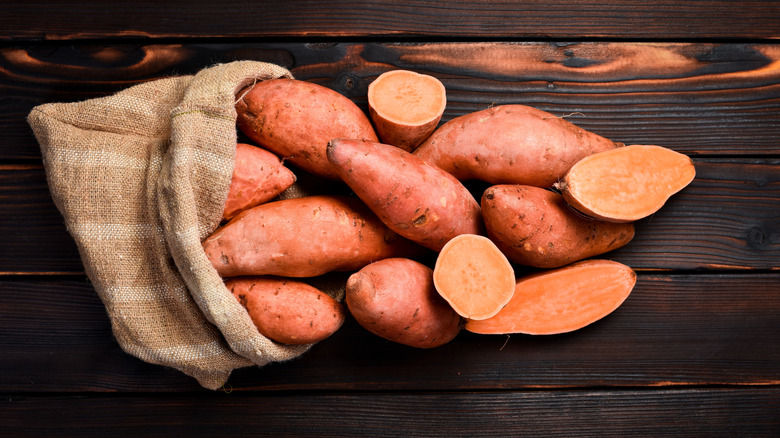
The satisfaction of eating produce from your home garden is unparalleled. After all, you're quite literally consuming the fruits (or vegetables) of your labor, which makes the culinary experience all the more rewarding. If you're curious about starting your own fruit and vegetable garden at home, there are a handful of produce that are perfect for beginners, and among them is the hearty sweet potato. You don't need to live in the state that grows the most sweet potatoes to grow your own bounty in your backyard, and as is the case with any type of produce, you always want to schedule your harvest at the right time: not too early, and not too late. To walk us through how to identify the sweet Goldilocks spot of when to dig out this coveted root vegetable, Chowhound spoke to backyard homesteader Philip Longo, owner and creator of Earth, Nails & Tails.
For starters, there are several sweet potato varieties, like the classic American sweet potato and Japanese sweet potato. They all offer a range of colors, flavors, and textures. Longo advises that the key to determining readiness without disturbing the soil is having knowledge of your chosen variety of sweet potato, the typical size that they grow into, and the recommended number of days until they mature. "It's really hard to tell how large they will be because normally it's a game of treasure hunt. Some years, I find myself digging and digging and just find more and more," he tells us. The appearance of flowers like morning glory is a visual cue of impending readiness (they indicate that the roots have developed and are growing), but still, knowing when you planted the crop is the key thing.
How timing of harvest affects taste and size
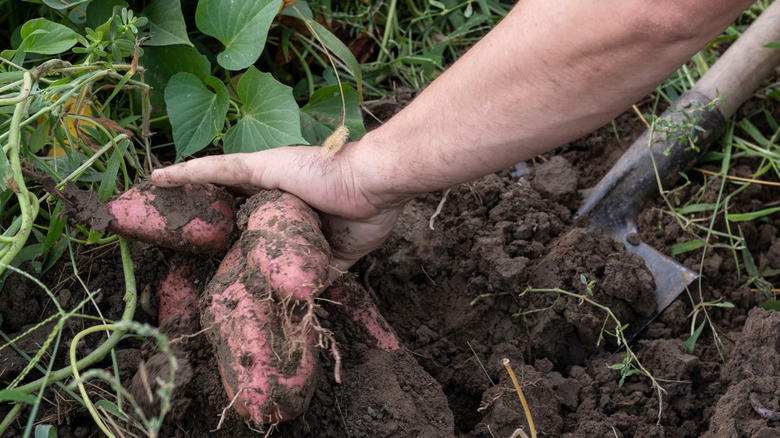
Through his years of gardening and growing different sweet potato varieties, Philip Longo has determined that the "sweet spot" for digging them up is about 140 days from the time of planting; however, this may vary depending on the type. "[Around 140 days] is where you get a good variety of sizes — some for baking, some for single portions, and others for making pies," he adds.
Longo emphasizes the importance of understanding how long the sweet potatoes have been planted and their preferred growing conditions. As he describes, picking them early will have a notable effect on the size of the harvest, and if you're patient enough to allow the sweet potatoes to mature properly, you might be as lucky as him and dig up substantial spuds that weigh over 7 pounds! Dig them out too early, and you'll end up with smaller results that are overly starchy and not as sweet. On the other hand, if they are left underground for too long, they become unpleasantly fibrous, with a shorter shelf life.
Since sweet potatoes require warm weather and humid conditions, it's also important to schedule your harvest such that you can dig them out before the temperatures drop and the first frost fumbles your meticulous gardening efforts. Once that's done, you can bake with your starchy harvest, or try out the many other ways to cook sweet potatoes that deserve more airtime in the culinary space.