

The Staggering Amount Of Money Kirkland's 300+ Products Make Per Year
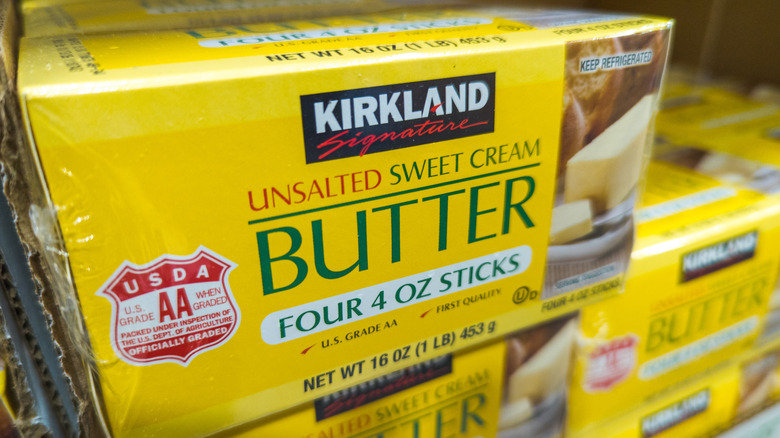
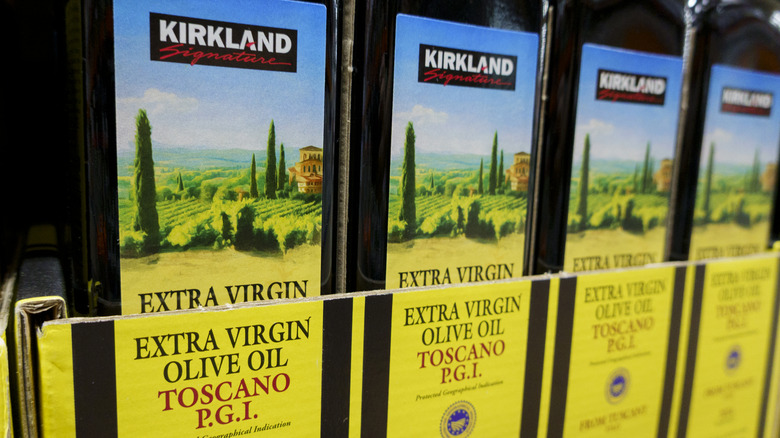
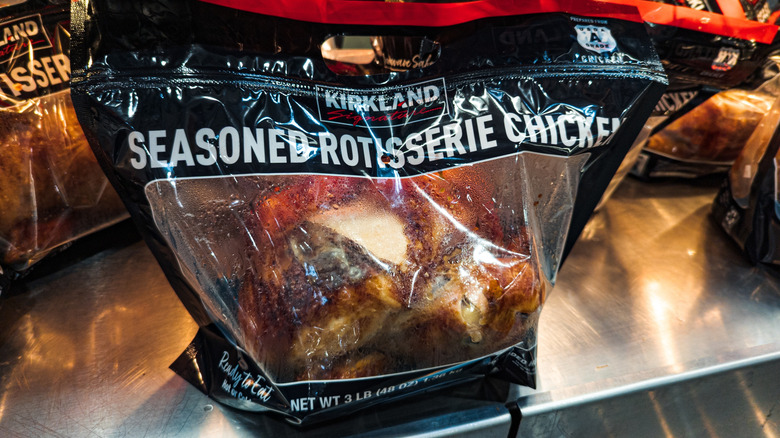
Costco members know when it comes to Kirkland products, you don't just buy them, you swear by them. From the fan-favorite olive oil to its beloved rotisserie chicken, the big box warehouse giant has built a massive following thanks to its private label, which has expanded to include everything from toilet paper to hair growth products and even hearing aids. But for a brand that exists pretty much only within the confines of the warehouse walls and website, Kirkland's 300+ products make a staggering amount of money — around $56 billion each year, in fact.
Now, you might be staring at your tub of peanut butter-filled pretzel nuggets and thinking, "Are people really buying that many of these?" The answer is no, but also yes. While the Kirkland brand does, in fact, sell a lot of said pretzels (they're one of our top 12 grab-and-go snacks at Costco), the real secret behind the billions isn't any one singular product. Costco has a well-calculated marketing and sales formula that includes finding space in the market where big brands overcharge, allowing the Kirkland line to expand with a diverse range of products while building the kind of trust and brand loyalty that most companies spend millions to cultivate.
Costco is good at identifying pain points
It may seem like you've always bought Kirkland brand batteries, but that product is actually a perfect example of how Costco zeroes in on overpriced everyday products and then rolls out a cheaper Kirkland alternative. Instead of paying the higher price for a brand name, Costco shoppers are happy to save a few dollars for the same type of product with a generic name. Now multiply that formula across hundreds of other household staples like dishwasher detergent, trash bags, milk, bread, and peanut butter, and you can see how Kirkland has built a billion-dollar brand.
So how does Costco make cheaper products that customers like? It's pretty simple: Most of the time, the company doesn't actually make the products, it buys them in bulk at a discounted price and repackages them under the Kirkland brand. This is a system known as white labeling, and it saves you money. It is a bit of an open secret for Costco and other stores with large private labels, like Trader Joe's. In fact, in the case of batteries, Duracell is actually the well-known supplier of Kirkland batteries, which was revealed in 2016 by Craig Jelinek, who was the CEO of Costco at the time.
Kirkland's brand is built on trust
White labeling is a win-win for Costco because not only does it save the company a ton of money on manufacturing, but it also gets high-quality products that customers want to buy. Instead of trying to develop the best bag of tortilla chips on the market, Costco approaches a company that already makes tortilla chips everyone likes (in this case, the brand that makes Costco tortilla chips is likely Mission Foods). When customers buy Kirkland chips, they get a premium product for less, which makes them more likely to trust Kirkland for their next purchase.
Kirkland also piggybacks on Costco, which is consistently rated as one of the top five most trustworthy companies in America. When people trust Costco, they, in turn, trust Kirkland, which means customers are more likely to load up on cases of house-brand wine, giant jugs of maple syrup, and oversized containers of Kirkland spices and seasonings (check out our five favorites). In fact, for many Costco members, finding a new favorite Kirkland product is a big part of the shopping experience. Many shoppers love uncovering which big brands are behind the label, swapping reviews online, and sharing the latest finds on social media. With loyalty like that, it's not hard to understand how Kirkland has developed a cult-like following, with massive revenue numbers to back it up.