

The Japanese Method Of Handling Fish Right As It's Caught That Makes Your Sushi So Delicious
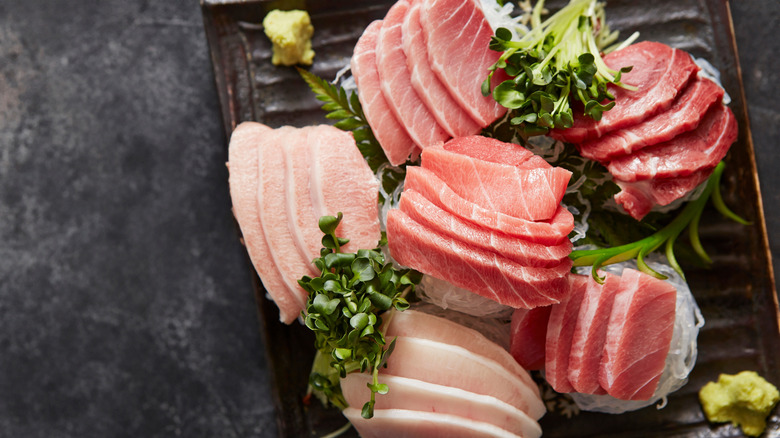
A great deal of attention to detail goes into preparing raw seafood for sushi and sashimi, which is why many sushi restaurants serve fish that are broken down using ikejime. This process involves sending a quick, accurate spike through the fish's brain right after it's caught to dispatch it, so it won't die from suffocation. To help explain this process and why it's so effective, we reached out to Takayuki Uehara, a Japanese chef at Park Hyatt Niseko Hanazono.
Uehara says that ikejime (nerve spiking) helps keep the fish flesh fresher longer because it prevents the muscles from stiffening, resulting in better texture. "When you perform ikejime, it suppresses muscle contraction and helps maintain better flesh quality," he says. Ikejime prevents the fish from discharging cortisol and adrenaline, which negatively affects the meat's quality and flavor.
Upon death, the fish is then cut behind the gills and hosed with or submerged in water to drain its blood. Next, a wire or spike is inserted along the fish's spinal cord to ensure it's fully severed, discontinuing any residual communication between the spinal cord and the muscles. "The texture is improved, making the sashimi more delicious," says Uehara. "Furthermore, freshness is maintained for a longer period after the fish has been processed." If the spinal cord isn't disconnected immediately, it makes the fish's muscles contract, which leads to much tougher meat.
Finding high-quality fish for sushi and sashimi
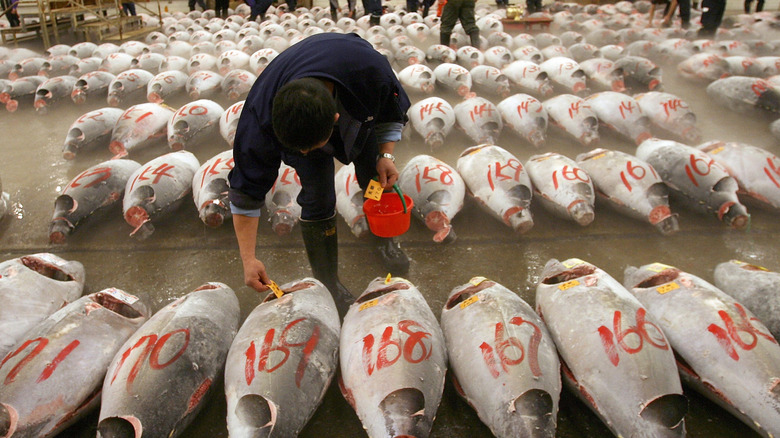
Ikejime is one indicator when it comes to selecting sushi-grade fish, but you should consider the skin as well. "Fresh fish skin is glossy and has scales firmly attached," says Takayuki Uehara. "If the skin appears dry or has a dull color, this indicates that time has passed since the fish was caught. Examine whether the eyes are clear and bright."
The freshest fish at the grocery store will have fully transparent eyes and bright, black pupils. "Fish with cloudy white eyes or sunken eyes likely have deteriorated freshness," he says. He notes that firmness and elasticity are important. If you press the flesh lightly, it should bounce back easily. "Fish that retain the pressed indentation or have mushy flesh likely have poor freshness," says Uehara.
Specifically for tuna, the flesh should be bright pink or red and have only a mild, ocean-like smell — definitely nothing leaning toward the scent of ammonia. The flesh should be bright and shiny, and if it breaks apart easily, it should be avoided. Uehara says that fish at the supermarket that have gone through the ikejime process will be labeled "ikejime (活〆)" on the label. "At sushi restaurants, ikejime is typically indicated on the menu," he says. "If it is not listed, there is no problem with asking the sushi chef directly."