

Add Warmth To A Cool-Toned Kitchen With A Feature That Quietly Impacts The Room
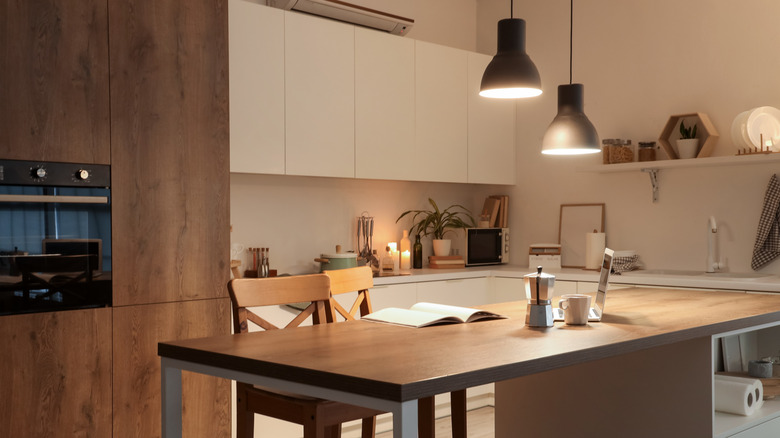
Coziness is an art. Making one's space comfortable, inviting, and relaxing requires vision, creativity, and some DIY know-how. From incorporating plants and greenery into your living space to using specific paint colors for your walls, there are many ways to make your home more inviting. This applies to your kitchen just as much as it does your living room.
The kitchen is a spot where you can unwind and let your cooking artistry take over. This might be difficult, however, if your kitchen is, well, a bit cold (and no, we don't mean in temperature). Cool-toned spaces (kitchen included) are great for keeping one alert, but they might not fit that oh-so comfy kitchen vibe you're after. So, how can you fix a cool-toned kitchen on a short time frame and tiny budget? To get answers to this quandary, we spoke to Cristiana Crin, the founder of Perpetuum Designs, an interior design studio located in both Chicago and London.
According to Crin, the best way to cozy up a cool-toned kitchen is by bringing in some warm light. Crin notes that "warm light is a must." Beyond using warm light, Crin specifically suggests lights that are dimmable with a soft white color, which tends to have a yellow tinge rather than a blue cast. Crin suggests looking for bulbs that are 3,000 degrees Kelvin. Lightbulbs usually fall between 2,200 Kelvin and 5,000 Kelvin. The lower the Kelvin degree, the warmer the light is, so a 3,000 Kelvin bulb produces a warm, yellowish light without being orange or overpowering. As Crin says, "by changing the light temperature, the entire atmosphere will already be different."
More tips for warming your kitchen with lighting
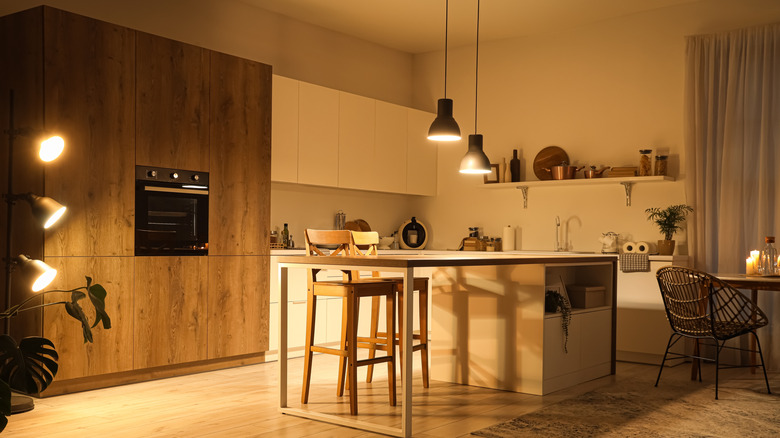
It's not just about adding warm lightbulbs to your kitchen. There are a few key tips to keep in mind when lighting up your space. According to Cristiana Crin, you should look for fixtures that use "natural materials, unique in shape, and generous with abundance." Look out for lamps and fixtures that use materials such as wood, bamboo, or wicker. She also recommends the use of distinctive light designs that tend toward "clusters of threes or fives for a more emphasized look." Clustering lights and using natural materials can create an organic sense of warmth that can bring the space together.
To create an even cozier feel to your kitchen, place warm lightbulbs on floor lamps or in countertop level light fixtures rather than overhead. This helps to better mimic the warm light found in the natural world. By mirroring natural sources of warm light, you can further reap its relaxing benefits (and there are many). Yellow-tinged lights may actually promote relaxation, spur inventive thinking, and even encourage socialization. That sounds like a recipe for a great cooking space. You can also use lamp shade diffusers, which can help soften harsh lights.