

What Freeze Drying Does To The Texture Of Your Food
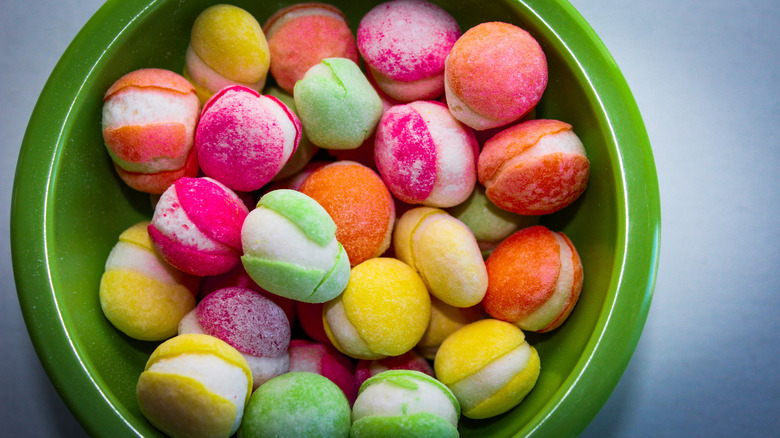
Walk into any specialty grocery or gift shop, and you're sure to spy a display of brightly colored (if pricey) freeze-dried candy. But while freeze-dried candy is a fairly recent trend, freeze drying has long had a variety of practical applications, from feeding soldiers to extending the shelf life of your favorite foods. Freeze-dried fruit, in particular, yields bright colors and rich fruit flavors in baking: Not only does it minimize the risk that your fresh fruit will mold before you get around to using it, but it can be easier to use due to the lack of moisture. But how does freeze drying change the texture of your food? Chowhound spoke exclusively with food scientist Britt, @theblackfoodscientist on Instagram and TikTok, to learn more.
In general, when foods are freeze dried, there's quite a dramatic change to their texture. "They become light and airy — keeping a similar shape as the original food," Britt tells us. In contrast, when foods are dehydrated via heat, they typically become chewier, in part because they retain some of their original moisture; that moisture makes all the difference in freeze-dried vs. dehydrated foods. "In freeze drying," she elaborates, "the food is frozen to very low temperatures and then put into a vacuum where the ice is turned immediately into vapor (a process called sublimation), removing all the water. Since the water in the food didn't go to its liquid state, the structure of the food is maintained." According to Britt, the airy, light texture you get from freeze drying is due to the fact that the food's moisture is removed in the process.
Using and storing freeze-dried food
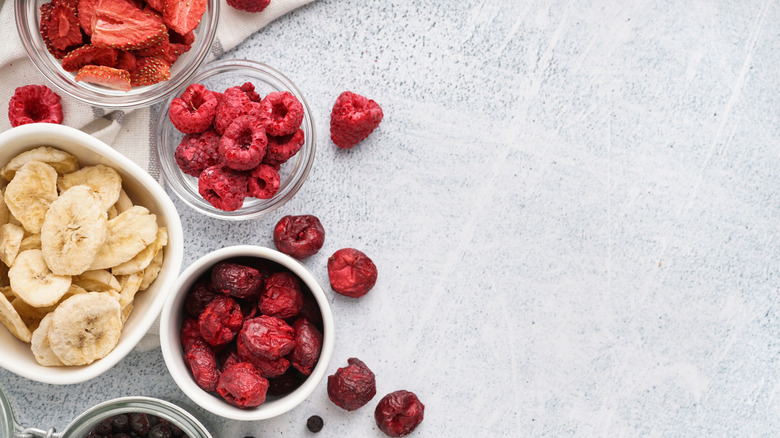
If you're interested in freeze drying your own food, you'll need to purchase a freeze dryer. For a quality machine, expect to pay between $1,500 to $3,000. Once you have that piece of equipment, however, you can get started. "Fruits, vegetables, and some meats hold up quite well to freeze drying," says Britt. On the other hand, she recommends staying away from liquids or foods with a high fat content (she cites peanut butter and butter as examples), because the fat can cause it to spoil more quickly.
As stated, freeze drying your food can vastly extend its shelf life, with many freeze-dried foods lasting close to 30 years. (In contrast, many dehydrated foods still have a shelf life of just about six months to a year.) But of course, this can depend on whether it's stored properly. "As long as the product is stored away from moisture, light, and oxygen, freeze-dried foods can last quite a long time," says Britt. "The absence of water helps prolong the shelf life."
You will likely need to rehydrate your freeze-dried food before using it. There are a few ways to do this, from simply spraying it with water to cooking it in hot water — which method you use will largely depend on what type of food you're rehydrating. However, in terms of texture, Britt said that the consistency of freeze-dried foods is typically close to that of their original form once they're rehydrated. Just make sure not to add too much water, she warns, as the food can become "waterlogged."